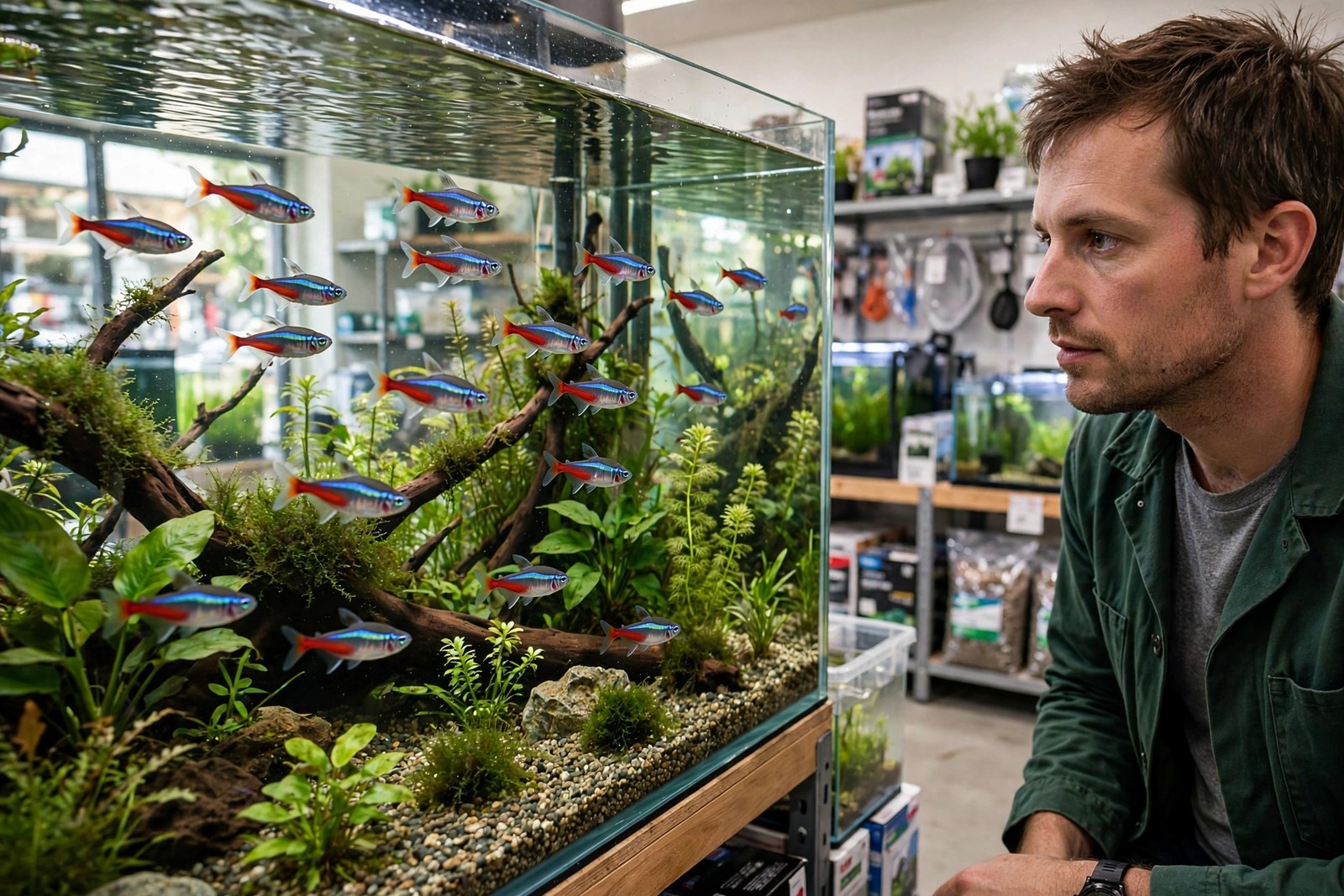
Shops and breeders both produce healthy fish and both produce disasters; the label on the door tells you far less than what is happening in the tanks. What differs is the shape of the offer — breadth and convenience on one side, depth and provenance on the other — and knowing those trade-offs lets you choose the right source for the particular fish you want.
What a Good Shop Offers
A well-run aquarium shop is hard to beat for common community fish. You see the actual fish before money changes hands: swimming level, feeding eagerly, fins open, no spots, no gasping at the surface, in a clean tank with no dead tankmates. Staff in a good shop will ask about your tank size, water, and existing stock before selling, and will refuse a sale that cannot work — that refusal is the sound of a shop worth keeping. Range is the other strength: dozens of species, foods, and equipment under one roof, fish you can collect the same day with no shipping stress, and an easy conversation if something goes wrong. The weakness is turnover: shop tanks receive new stock constantly, which is exactly how disease arrives, so even good shops are only as safe as their quarantine discipline — ask how long new arrivals are held before sale.
What a Good Breeder Offers
A breeder — hobbyist or professional — usually works deep rather than wide: a handful of species or strains raised carefully in stable water, often the fish's own home water rather than a wholesaler's holding system. You can learn the parents, the age, the foods the fish are raised on, and the water parameters they are used to, which makes matching your tank straightforward. Breeders are where unusual colour forms, local strains, and less commercial species live, and homegrown youngsters often reach you hardier than fish that have passed through several holding tanks. The trade-offs are narrow choice, waiting for a batch to grow, and delivery: shipped fish travel well when packed properly by someone experienced, but it adds cost and a stressful day, and you are buying from photographs rather than watching the fish swim.
Red Flags at Either Source
Some warnings apply identically in both settings. Dead fish in a tank, cloudy or smelly water, fish clamped, scratching, or hanging at the surface, and tanks crammed beyond sense all say leave without buying, however much you wanted that fish — disease in a shared system rarely confines itself to the fish that looks ill. Be equally wary of vague answers about where stock came from or how long it has been held, pressure to buy tank and fish on the same day before the tank is cycled, and prices far below everywhere else. A seller who asks about your setup, your water readings, and your other fish is screening for your fish's survival, not being difficult.
Quarantine: Wherever Your Fish Came From
The source matters less if your home routine is sound, and the cornerstone is quarantine: new fish spend their first weeks in a separate small tank under daily observation, so any disease shows itself there rather than in your main aquarium. Feed lightly, test the water, and only move fish across once they have eaten well and stayed clean and active through the quarantine period. Those daily checks are easy to drop in a busy week, which is where KinsLe's Care Teams earns its keep — assign the quarantine observations, water tests, and feeds as dated duties shared between household members, each one ticked off with a timestamp, so a new arrival's critical first fortnight never depends on one person remembering.