
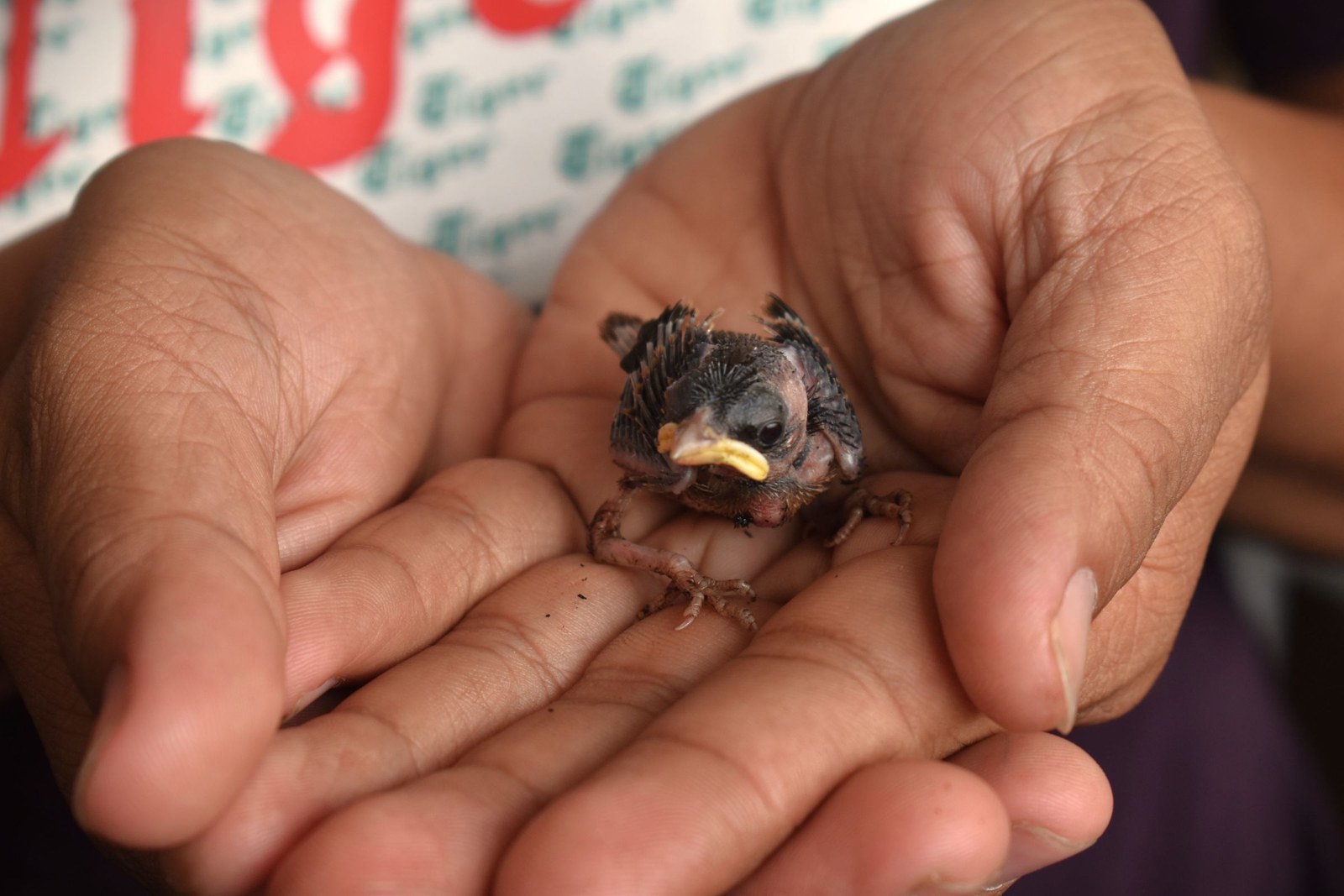
In almost every case, no — you should not hand-raise a baby bird yourself. Hand-raising is demanding, round-the-clock work with real risks around feeding technique, temperature, and hygiene, and it is best left to experienced breeders and avian professionals. Unless you are being directly coached, hands-on, by one of those experts, the kindest and safest choice for the baby is to get professional help involved right away.
What Hand-Raising Actually Involves
A baby bird is not a small version of an adult. Depending on age and species, a chick may need carefully prepared formula at exactly the right temperature and consistency, fed at frequent intervals through the day and sometimes the night. The crop — the pouch where food is held before digestion — must fill and empty properly. Feeding too fast, too cold, too hot, or with poor hygiene can cause serious harm, and problems can develop quickly in a tiny body.
Warmth, humidity, a clean brooder environment, and careful weight tracking all matter at the same time. Experienced raisers read subtle cues — crop movement, begging behavior, droppings, alertness — that a first-timer simply has not learned to see yet.
The Risks of Getting It Wrong
Well-meaning mistakes carry heavy consequences. Aspiration, where food enters the airway, can happen in a moment. Formula at the wrong temperature can burn or chill a chick. Gaps in hygiene can introduce infection to an immune system that is barely started. Even when a chick survives imperfect raising, poor nutrition or handling during key weeks can affect development and behavior in ways that are hard to undo.
There is also the question of social development. How a young bird is raised shapes how it learns to be a bird — feeding independently, interacting appropriately, and eventually weaning. Professionals manage that whole arc, not just the next feeding.
If a Baby Bird Lands in Your Care Unexpectedly
Sometimes there is no choice in the moment — a chick is surrendered, found, or a situation changes suddenly. If that happens:
- Keep the baby warm, quiet, and safely contained; warmth comes before food.
- Do not attempt to feed or give water until you have species-specific guidance — the wrong first feed can do harm.
- Contact an avian vet, experienced breeder, or licensed wildlife rehabilitator immediately and follow their instructions for your bird's age and species.
- Write down anything you know — species, estimated age, how long since it last ate, where it came from.
For a wild baby bird, a licensed rehabilitator is the right call, and in many places keeping a wild bird is restricted by law. Do not let good intentions turn into a long delay — hours matter at this age.
A Better Way to Be Involved
If you dream of a close bond with a young bird, reputable breeders welcome future owners who visit, learn, and bring home a properly weaned bird. That bond builds beautifully after weaning, through training, play, and daily life together — without gambling on the most fragile weeks.
Find Avian Help Fast
KinsLe's Pet Services Directory can help you locate local groomers, vets, sitters, and trainers — including the avian vet you need for urgent advice when a baby bird's care is suddenly in question. Save those contacts before you ever need them. When hours matter for a chick this fragile, open KinsLe and search the Pet Services Directory to reach a licensed wildlife rehabilitator or avian veterinarian without delay.