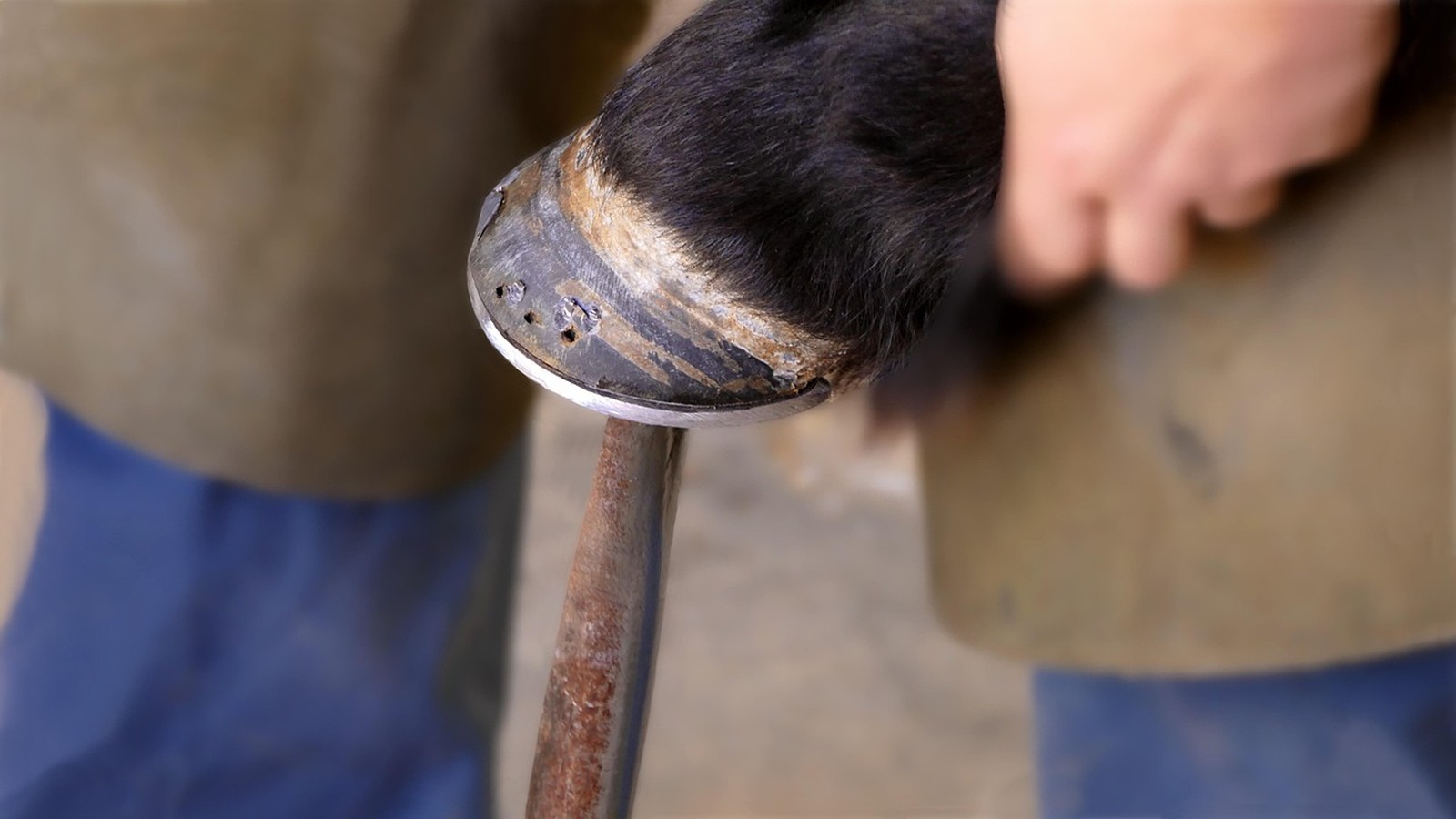
Yes, and it earns its keep quickly. A horse's feet change slowly and then suddenly: a crack that seemed trivial in spring becomes a problem by autumn, one front foot quietly grows more upright than the other, and nobody can quite remember whether the farrier mentioned bruising last visit or the visit before. A farrier log turns those half-memories into a record you can act on, and it takes about two minutes to complete while the farrier is packing up.
What Each Entry Should Contain
Record the date of the visit and who did the work. Note plainly whether the horse was trimmed only or shod, and if shod, what was fitted: a full set or fronts only, any pads, studs, or remedial shoes, and whether old shoes were refitted or replaced. Write down the farrier's findings in their own terms — balance corrections made, toe length taken back, heels lowered, a crack opened or stapled, thrush in a frog, a bruise in a sole, a loose nail pattern, anything they flag for next time.
Add the cost of the visit and, especially, the date the next appointment is due. Hooves are worked on a cycle that is often every six to eight weeks, and a horse who drifts two weeks past his due date in hard ground season is a horse whose angles, and sometimes whose soundness, drift with him. Booking the next visit before the farrier leaves, and logging that date, is the single habit that keeps the cycle honest.
What the Log Shows You Over Time
Across a year of entries, patterns emerge that no single visit reveals. A crack that appears in the same quarter of the same foot three times is a conversation to have with both farrier and vet, not a coincidence. A horse who is always more uneven after a long interval is telling you his cycle should shorten. Lameness that starts two days after a shoeing change reads very differently once the log lets you line the dates up precisely.
The log also protects continuity. If your regular farrier retires, is ill, or hands a round to a colleague, the incoming farrier inherits the whole story: what has been tried, what worked, and which foot needs watching. The same applies at a new yard, where a yard manager asked to book and supervise visits can work from your record instead of guessing. For horses in shared ownership or on loan, the log settles who paid for what, and when, without argument.
Keeping It Where It Will Be Used
A log kept in a drawer at home fails at the yard. Keep it with the horse's other records, update it on the day, and add a dated photograph of each foot from the front and side every few visits if you want growth and balance changes to be visible rather than debatable. For a shod horse, note also how the shoes wore between visits: uneven wear across a pair is useful farrier information, and it belongs in the same entry as the date it was first seen. Note any lost shoe between visits, with the date it came off and when it was replaced, because repeated losses on one foot belong in the same pattern file as cracks and bruises.
KinsLe Pet Passport suits this record well, because it keeps a horse's farrier history in one portable packet with vet visits, worming notes, and feeding details, so the full picture travels with the horse to a new yard, a covering farrier, or a vet appointment.