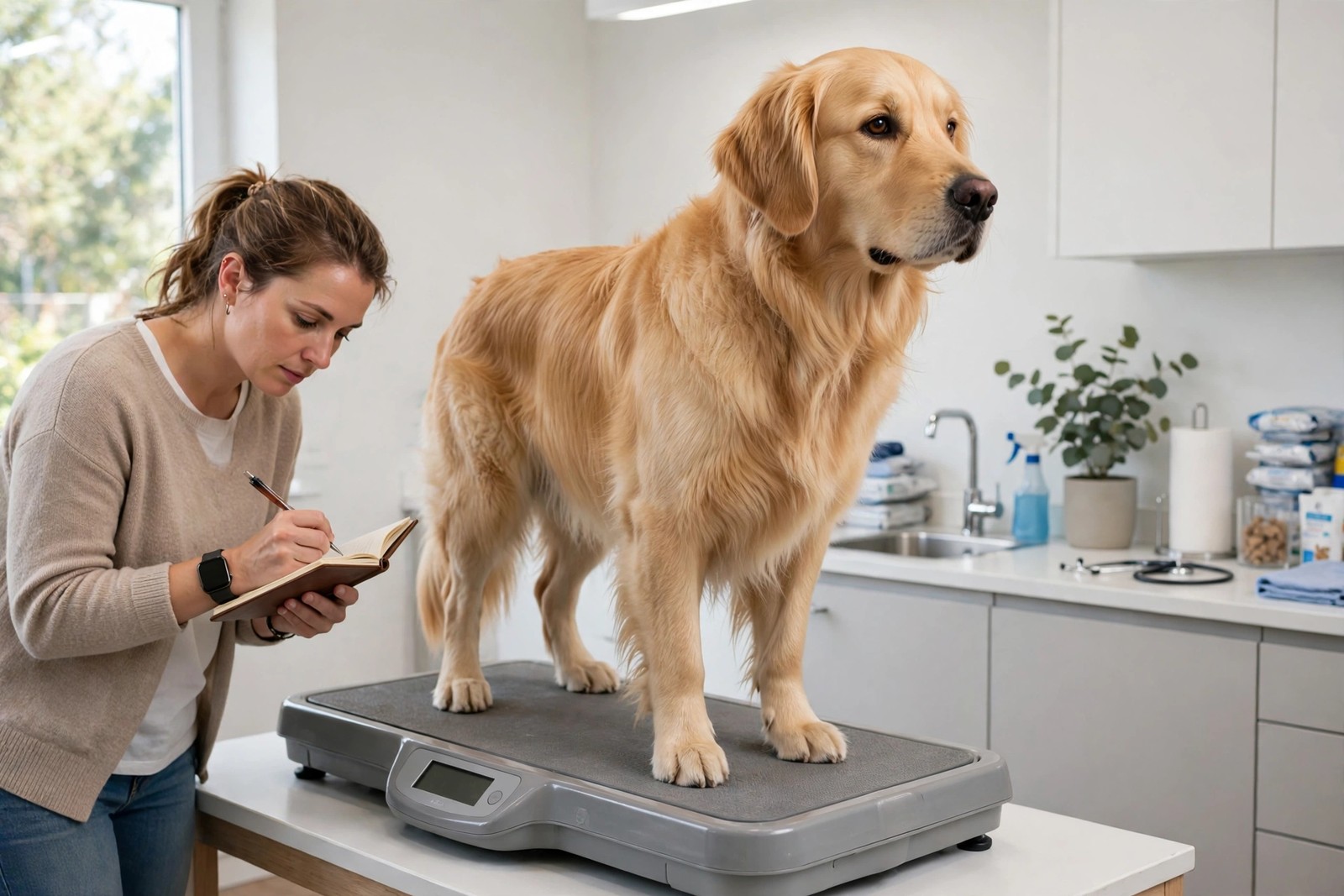
Yes, keep a log of your dog's weight. Weight changes in dogs are usually slow, and slow is exactly what human eyes are bad at noticing — you see your dog every day, so a kilo gained over six months is invisible until the harness is tighter, the ribs have vanished, or a vet breaks the news. A dated log replaces impressions with a trend line, and it flags both directions that matter: gradual gain that ends in obesity, and unexplained loss, which in a senior dog can be among the first signs of kidney disease, dental pain, thyroid problems, or other illness worth catching early.
How and How Often to Weigh
Monthly suits most adult dogs; every few weeks is better for seniors, dogs on a weight-loss plan, and dogs recovering from illness or surgery. Puppies need weighing far more often — weekly in the early months — because their growth curve is itself a health check, and a puppy who stops gaining needs a vet conversation. Weigh on the same scales each time, at a similar time of day, ideally before a meal, and write the number down immediately with the date.
Small dogs can be weighed on bathroom scales by holding them and subtracting your own weight. Large dogs are best weighed on the vet practice's walk-on scales — most practices are happy for you to pop in for a weigh-in, which doubles as a friendly, treat-filled visit that builds positive feelings about the building. Pet shop scales work too, as long as you use the same one consistently, since different scales can disagree by enough to fake a trend.
Pair Weight With Body Condition
A number alone does not say whether your dog is at the right weight, because frames differ. Add a hands-on body condition check each time you weigh: ribs should be easy to feel under a thin layer of fat but not visible, the waist should tuck in when viewed from above and the side, and a covering of fat over the hips or a swinging belly means the trend needs action. Many vets score condition on a nine-point scale and will happily show you where your dog sits and what target weight to aim for — record that target in the log so everyone feeding the dog shares it.
Using the Log to Act Early
Review the trend every few months rather than reacting to single readings, which wobble with water, coat, and a big breakfast. A steady climb means slightly smaller portions, measured meals rather than eyeballed scoops, and an honest audit of treats and table extras — treats count toward the day's food. A steady unexplained fall in a dog eating normally should never be dieted away or waited out for months; book the vet, and take the log, because the dates and rate of loss genuinely help the examination. Diet changes made from the log work best gradually, adjusting food by small steps and rechecking in a month rather than overhauling everything at once.
A weight log only helps if it survives busy life, so keep it with the rest of your dog's paperwork rather than on loose scraps, and KinsLe's Pet Passport holds the weight history together with vaccination and vet records in one packet, so the trend is in front of any vet, sitter, or boarder who needs it.