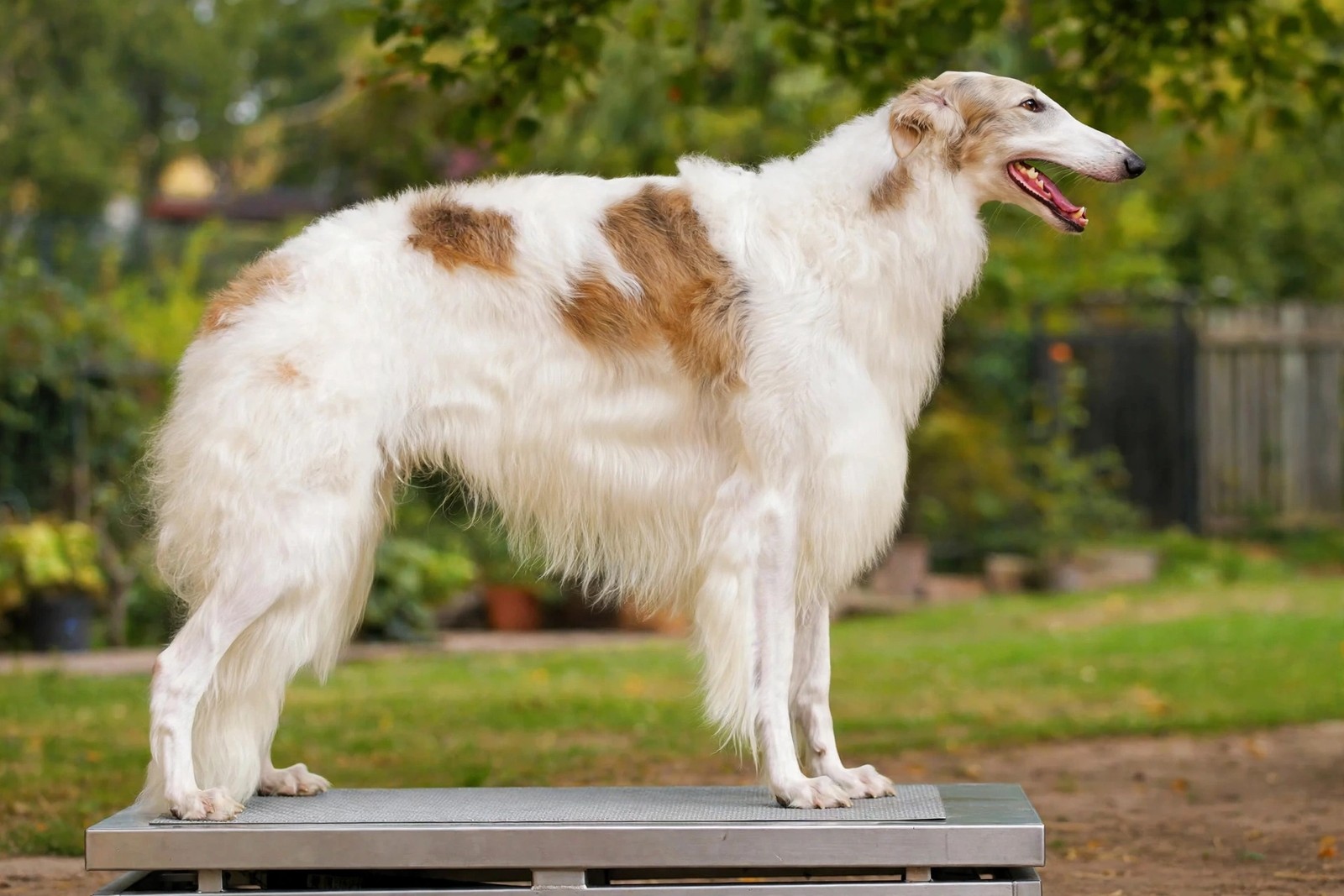
The sighthound problem: lean is normal, until it is not
Yes — few breeds need a written record more than the Borzoi, because the correct Borzoi shape confuses almost everyone. A healthy Borzoi is a tall, narrow, deep-chested sighthound with visible tuck, easily felt ribs, and an elegant spareness that visitors often mistake for underfeeding. A Borzoi who is genuinely losing condition looks, to an untrained eye, only slightly more of the same. Without dated weights, owners can be talked out of a real problem — or into overfeeding a perfectly healthy dog.
A log settles the argument with your own dog's history. If the number is stable and the dog is bright, running well, and eating consistently, the lean look is simply the breed. If the number has slid across three weigh-ins, that is a fact no silhouette debate can dismiss.
What to capture for a tall, sensitive breed
Weigh every two weeks through the tall growth phase, then monthly for adults, on a large platform scale. Record height at the shoulder monthly in a young dog, because Borzoi gain inches well before they gain fill, and a weight that looks flat beside two new inches of height is not a stall at all. Note rib and hip feel honestly: ribs easy under a thin cover and hip points present but not sharp is the healthy zone for this breed.
Add appetite and temperament notes, because Borzoi are often sensitive, routine-loving eaters who go off food with travel, household change, heat, or stress. Pairing a small dip with a noted disruption tells a very different story from the same dip with no explanation. Record running and free-play sessions too, since condition in a sighthound follows opportunity to stretch out and gallop.
Growth: height first, fill much later
Expect a young Borzoi to look unfinished for a long time — all legs, narrow chest still deepening, and a silky coat that adds no illusion of bulk. Slow, continued filling into the second and third years is normal. The log should show height rising, weight following in its own slower rhythm, and condition holding steady in that lean-but-covered zone.
Seek veterinary advice if weight actually falls during growth, appetite stays poor beyond a brief stress spell, stools are persistently loose, or the dog loses interest in running and play. In a deep-chested breed, also learn the emergency signs — a tight, swollen-looking abdomen, unproductive retching, pacing, and drooling require immediate emergency care. A growing Borzoi who limps persistently or develops an uneven stance should be seen promptly as well, with growth entries ready to show the clinic the pace of change.
Holding condition in the adult Borzoi
Adult logging is about defending a narrow target. Borzoi can drift down during busy show, coursing, or travel periods and drift up in a sedentary winter, and small monthly corrections beat large interventions for a sensitive stomach and temperament. Adjust food in modest steps, reweigh in two to four weeks, and let the record confirm the effect before changing again.
Share the log with sitters and boarding staff, who may misread the breed in either direction — overfeeding out of concern or missing a picky week that matters. Written numbers and a condition note prevent both errors.
Tracked in KinsLe with Pet Passport, your Borzoi's heights, weights, and appetite notes stay in a single history, making that fine line between elegant leanness and real loss easy to prove at any visit.