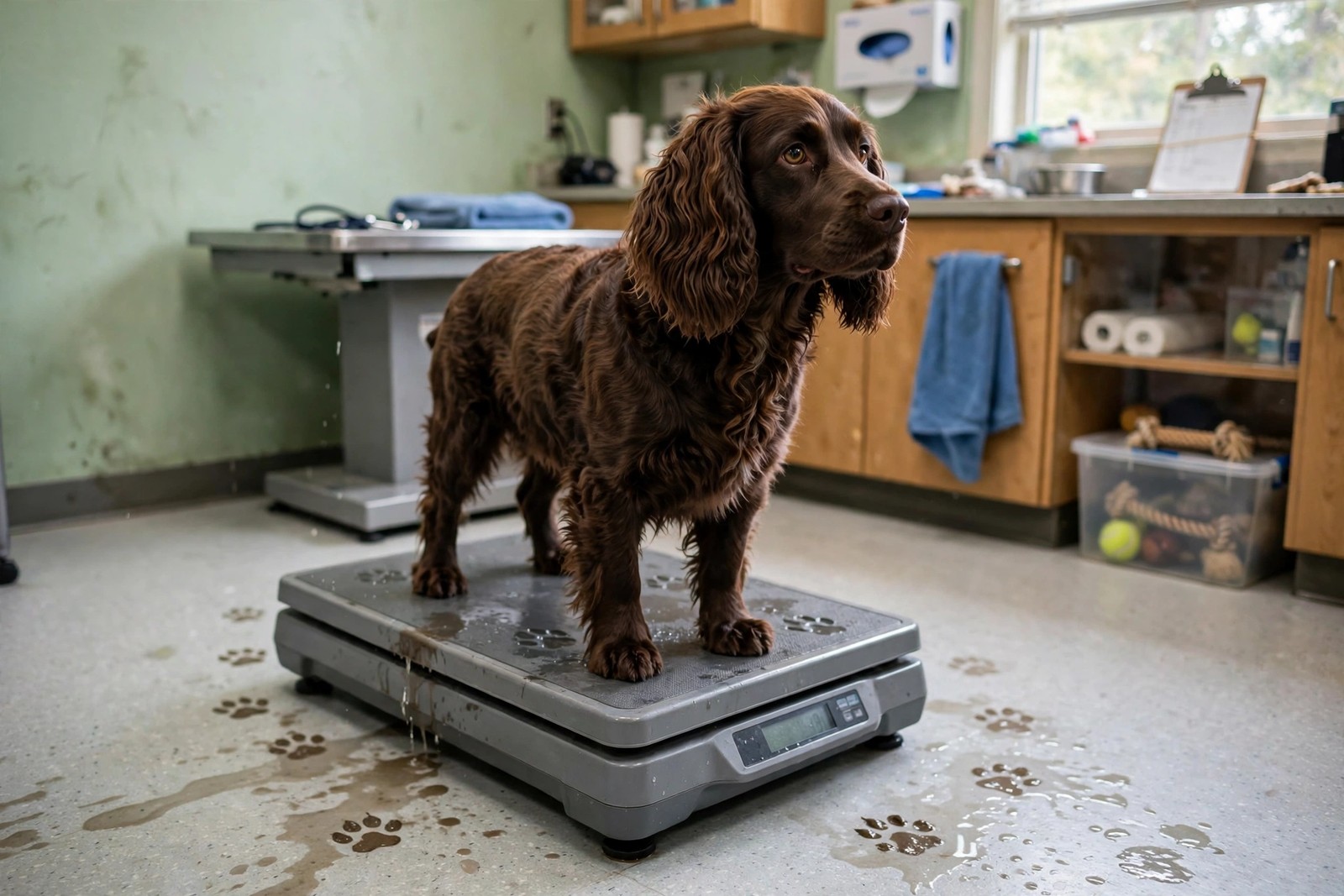
A medium dog with a big seasonal swing
Yes — a Boykin Spaniel rewards an owner who keeps records. This is South Carolina's compact water retriever: medium in size, densely muscled, famously eager, and equipped with a rich brown wavy coat that flatters a dog carrying more than it should. A Boykin in hard retrieving work is a model athlete; the same dog through a quiet, treat-rich winter at home can soften noticeably before anyone names it, because the coat, the compact frame, and the breed's cheerful roundness all conspire to hide the change.
A monthly weight tied to activity notes makes the calendar visible. You will see condition follow the season in your own numbers, and you can feed ahead of the pattern instead of correcting after it.
Logging for water work and house life
Weigh puppies every two weeks, adults monthly, and add an extra check at the start and end of any hunting or heavy training season. Use the same scale, and record the dog you actually have that month: hours of retrieving, swimming, and field training per week, the daily food amount, and whether extras increased during holidays or family visits.
Pair the number with a hands-on spaniel check. Part the wavy coat and feel the ribs — they should be found with light pressure — check the waist from above, and feel the chest and thigh muscle that does the swimming work. Note ear condition at the same handling session, since spaniel ears that spend time in water deserve regular attention, and jot down energy and recovery after a long day afield.
Steady growth for a sturdy puppy
Boykin puppies grow into a sturdy, moderate frame without the extremes of giant or toy breeds, so the curve should be smooth and unhurried. Consistent gain, a hearty appetite, and boundless interest in play and early retrieving games are the signs of a puppy on track. Because this breed loves food from the start, the bigger puppy risk is usually gain that runs ahead of growth, encouraged by training treats handed out generously during early lessons.
Count training rewards in the day's food from the beginning and let the log show you the total picture. Raise a concern with your veterinarian if a puppy's gain stalls across several weigh-ins, appetite drops, stools stay loose, or enthusiasm for activity fades. A puppy who is gaining fast while feeling soft and rib-hidden needs a portion conversation just as much.
Feeding the adult by the record
For adults, let the log drive seasonal feeding: step food up deliberately as real work increases, step it back down when the season ends, and confirm each change at the next weigh-in rather than guessing. Boykins are companionable house dogs in the off-season, and that closeness is exactly when shared snacks accumulate — your notes on extras will usually explain any winter rise before it becomes a project.
Book a veterinary visit promptly for unexplained loss, a lasting appetite or thirst change, reduced stamina in the field, persistent ear trouble, or limping that does not settle with a few days of rest. Bring the seasonal record; a clinic that can see work, food, and weight together can judge condition far better than from one number on a busy day.
In KinsLe, Pet Passport files your Boykin's weights beside its health records in one place, so season-to-season condition is documented for vets, trainers, and anyone sharing the dog's care.