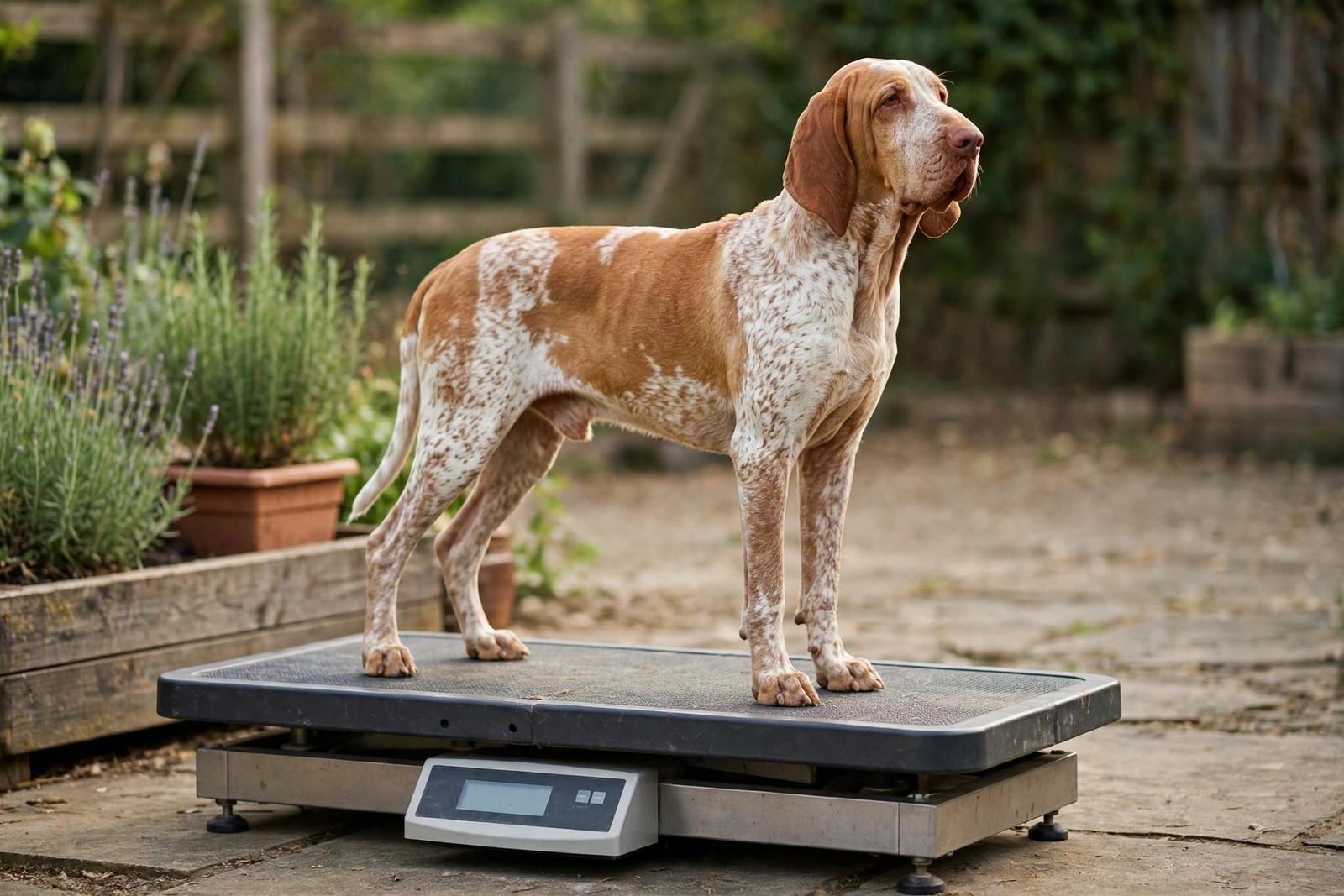
Why the Bracco defeats guesswork
Yes — a Bracco Italiano is a breed where a written log earns its keep. One of Italy's ancient pointing dogs, the Bracco grows into a large, substantial frame draped in loose skin, with a long head, drooping ears, and a somewhat sagging, noble outline even at ideal weight. That build defeats visual condition checks: the dog can look soft when perfectly fit, and the loose coat of skin can equally conceal real gain in a less active adult.
Development adds a second puzzle. Bracchi mature slowly and in stages, so a young dog may carry height without chest, or substance without coordination, for months at a time. Owners comparing that unfinished dog to a mature photograph can worry unnecessarily. A dated log replaces the comparison with evidence about your own dog.
What a useful Bracco log contains
Weigh every two weeks during the first year and monthly afterwards, on a large platform scale. Record height at the shoulder every month or two in a young dog, the daily food amount, and the week's activity — field training, long country walks, or quieter home weeks. This breed was made to work at a steady, ground-covering trot, so weight read beside workload is weight understood.
Each entry needs a hands-on condition line: ribs felt under a light covering when you run a hand along the side, waist discernible from above despite the loose skin, and muscle feel through the hindquarters. Add appetite, stool quality, and ear and skin-fold notes if you check them at the same session, since those long ears and folds benefit from routine attention in this breed.
Reading a slow growth arc correctly
A healthy Bracco puppy's curve climbs steadily with occasional spurts, while the dog's proportions keep rearranging themselves. Plateaus of a few weeks in weight while height or chest visibly changes are not automatically a problem, provided appetite, energy, and condition hold. What the log should never show is a long stall with fading appetite, or a rapid climb where rib feel disappears under fat while the frame is still developing.
Talk to your veterinarian if gain stops for an extended stretch during growth, weight falls at any age without a workload explanation, digestion stays unsettled, or a young dog shows persistent limping or reluctance on longer outings. As a deep-chested large breed, the Bracco also carries the emergency rule: a swollen abdomen with unproductive retching and restlessness means emergency care at once, not observation at home.
The adult record: work, rest, and age
Adult Bracchi divide their year between active and quiet periods in many homes, and the log lets you feed that rhythm honestly — more when the work is real, less when it is not, verified monthly. In senior years it guards against the opposite drift, where an older dog's loose-skinned outline stays the same while muscle thins; a thigh and topline note beside each weight catches what the silhouette misses.
Share the record at veterinary visits and with trainers or sitters, so feeding decisions follow the dog's documented condition rather than its deceptively relaxed appearance. Several people often share a Bracco's field and home life, and one written history keeps their judgments aligned.
Held in KinsLe inside Pet Passport, your Bracco's weights, heights, and condition notes preserve that long, slow development in a single packet any vet or caregiver can pick up and follow.