The Muscle-or-Fat Problem
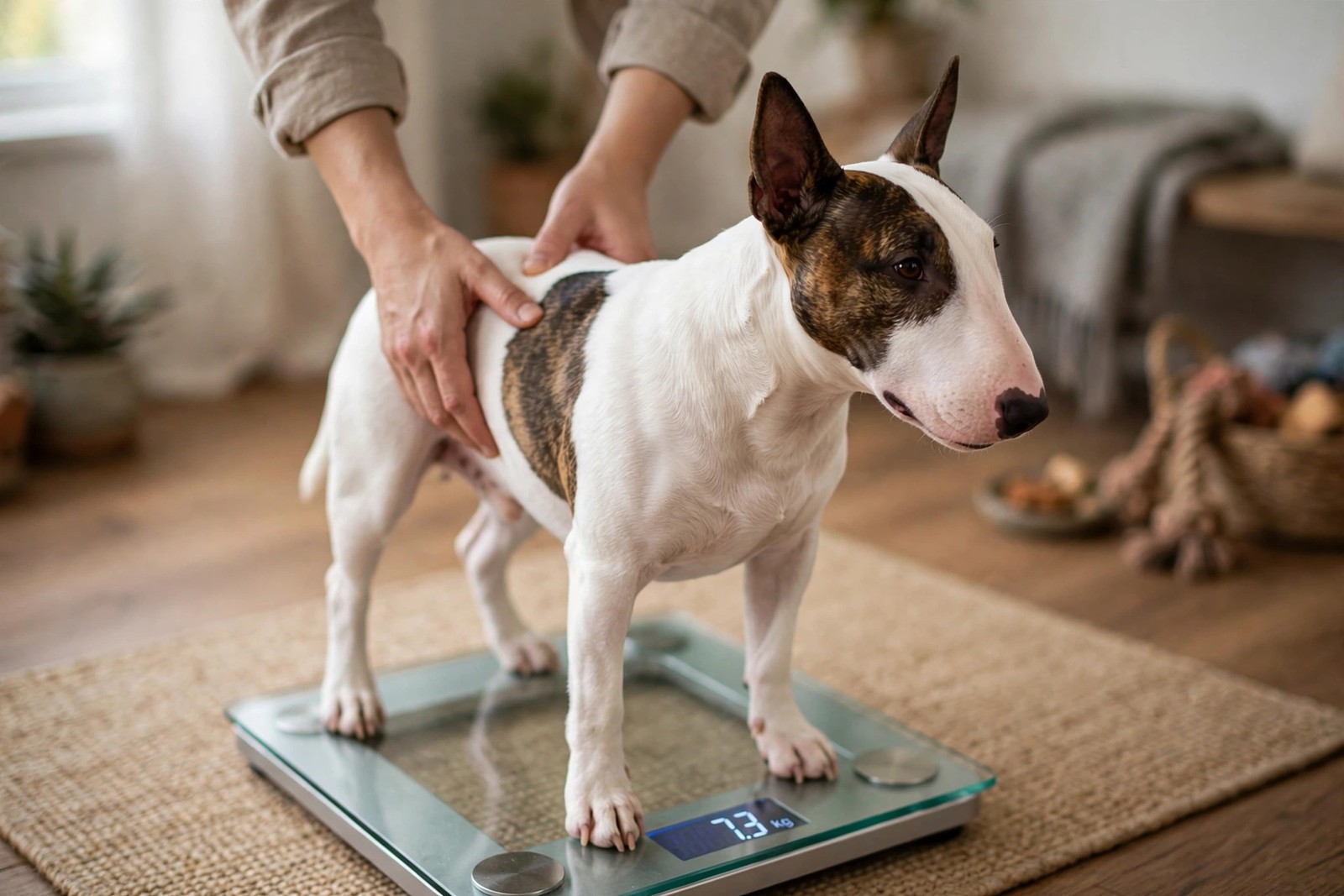
A Miniature Bull Terrier is a small dog built like a weightlifter: broad chest, powerful shoulders, and substance everywhere. That construction creates a specific logging challenge, because a Mini Bull who is gaining fat still looks strong, and owners happily read padding as power. The truth lives in two places the mirror cannot judge well: the waist, which should narrow behind the ribs even on this chunky breed, and the scale, which does not care how athletic the silhouette appears. A regular log with a hands-on condition note keeps you honest about which kind of bulk your dog is adding.
What to Capture for a Mini Bull
Weigh puppies every few weeks while the frame is being built, then monthly through adulthood, using the same scale and roughly the same time of day. Beside each weight, record a waist check: viewed from above, is there an inward curve behind the ribs, and can you feel ribs with moderate pressure through the muscle? Log food amounts and, with particular honesty, the extras. Miniature Bull Terriers are determined, comical beggars, and in many households the treat economy, not the dinner bowl, is where the surplus lives. Notes on skin and ears at weigh-in are worth adding too, since this breed's health picture often shows there first.
Feeding a Dog Who Negotiates
Let the log arbitrate the negotiations. If entries climb while your waist notes soften, reduce the informal extras first and trim portions slightly, then check the trend over the following entries rather than reacting to a single reading. Growth in puppies should look steady on the page: this is a breed that matures into compact power, and forcing rapid puppy gain with oversized meals adds fat, not the bone and muscle you are hoping for. Keep exercise notes as well; a Mini Bull whose activity drops during a spell of bad weather or a household change will show you exactly why the next weight moved.
Patterns That Belong in Front of a Vet
Book a veterinary visit if the log shows weight rising despite measured food and normal activity, weight falling without explanation, or condition changes arriving with itchiness, ear trouble, lethargy, or a dull coat. For a breed with several known health sensitivities, a dated timeline of weight alongside appetite and energy notes gives the vet a head start. The same goes for a puppy whose recorded growth falters; small, sturdy breeds should progress predictably, and the numbers will show a stall before your eye trusts it.
Exercise Notes Keep the Chart Interpretable
A Mini Bull's weight only makes sense beside his workload. This is a playful, clownish breed whose exercise can collapse during hot weather, household upheaval, or a bout of skin trouble that sidelines walks, and muscle itself changes with activity. A line in each entry noting whether he has been charging about as usual or living quietly tells you whether a heavier reading is fat arriving, muscle shifting, or simply a month out of routine, and it stops you cutting food for a dog whose real deficit is exercise.
Keeping the Bully's File in One Place
A Mini Bull's paperwork serves him best kept whole: weights, condition notes, vet findings, and skin observations in a single record that any carer can read. KinsLe provides that home through the Pet Passport, which keeps a dog's records together in one portable packet, so your Miniature Bull Terrier's weight story is always part of his complete health picture.