Built Solid, and Padded by Nature
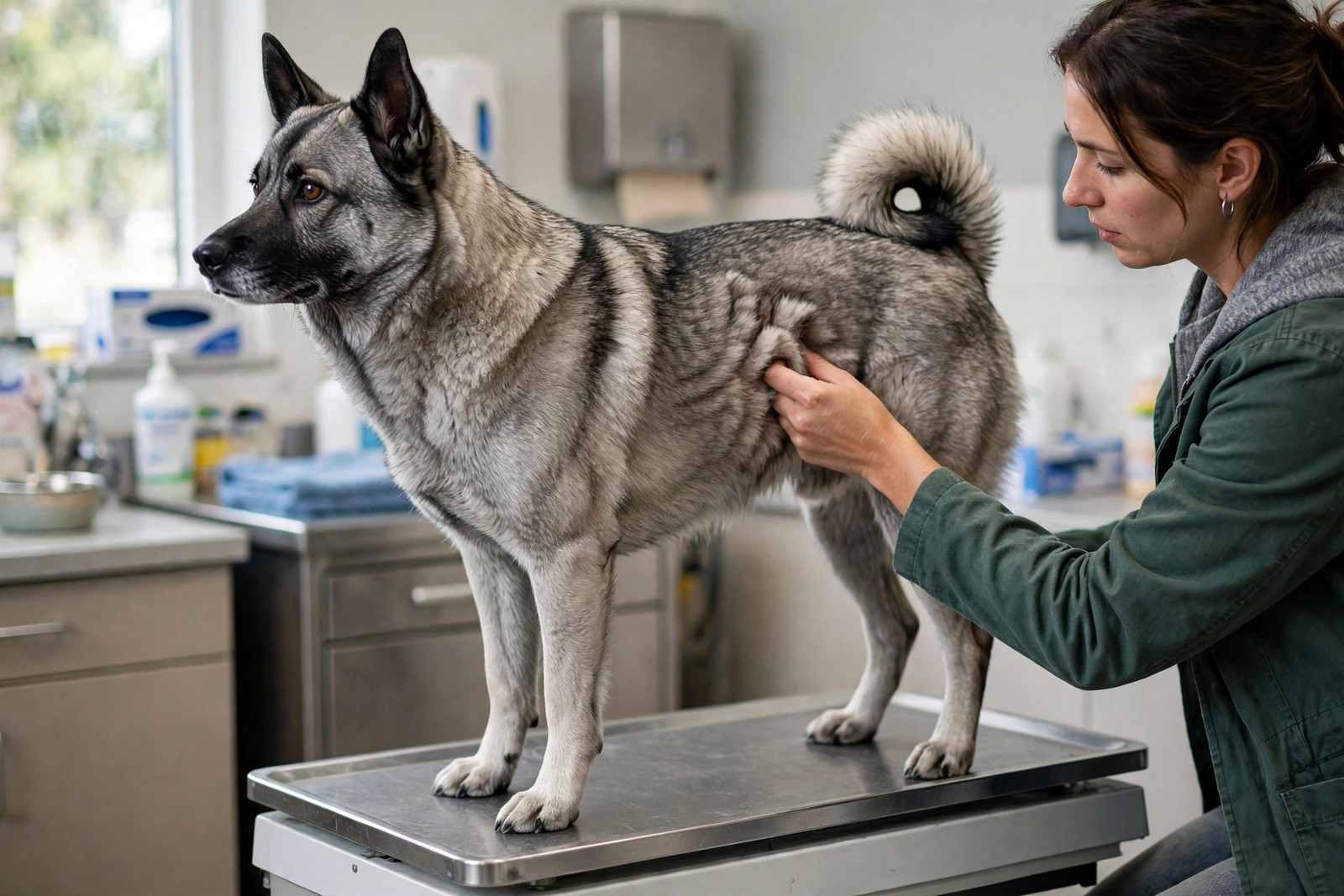
The Norwegian Elkhound is an ancient spitz hunter, compact and powerful, with a dense silver-grey double coat, tightly curled tail, and a constitution designed for Scandinavian winters. Two facts make a log valuable here. First, that weatherproof coat is deep enough to bury the early signs of weight gain completely; an Elkhound can be carrying real surplus while still looking like the same sturdy dog. Second, the breed's thrifty metabolism, an asset in a northern working dog, means mature Elkhounds gain readily when modern pet life supplies generous food and modest work. Numbers and fingertips, recorded regularly, are the countermeasure.
Entries That Tell the Truth
Weigh your Elkhound every few weeks as a puppy and monthly as an adult, on the same scale where you can, and never file a weight without its condition partner: hands pressed through the coat to find the ribs, and a check for a waist from above and a tuck from the side. Record coat stage too, because the Elkhound's seasonal shedding can change his apparent size dramatically without his body changing at all. Note food amounts and exercise honestly, especially the difference between an active autumn of long hikes and a settled winter of short outings, since that contrast is where this breed's weight stories usually begin.
Feeding a Thrifty Northern Dog
When entries edge upward, act while the correction is still small: slightly reduced portions, treats counted rather than assumed, and an extra walk where the week allows. Elkhounds are independent and food-motivated, a combination that produces skilled scavenging, so log any reliable extra food sources the dog has arranged for himself, from sympathetic neighbours to accessible bins. For puppies, aim the log at steadiness; a young Elkhound should fill into his frame gradually, and entries showing smooth, moderate gain tell you the feeding is right far better than comparisons with other puppies do.
Drifts That Deserve Professional Eyes
An Elkhound gaining despite measured food and honest exercise notes, or losing weight, shedding outside his normal pattern, or showing less enthusiasm for the vigorous activity the breed thrives on, should be examined by a veterinarian. Bring the log: dated weights tied to food, exercise, and coat stage let the vet separate a lifestyle drift from something medical, and in a dog this well insulated, your hands-on condition notes are evidence no one else can supply after the fact.
Senior Elkhounds and the Slowing Years
The log's value changes again in an Elkhound's senior years. Older dogs of this breed often stay round-cheeked and well coated while quietly losing muscle underneath, so keep the hands-on note in every entry and record what your fingers find along the spine and hindquarters, not just at the ribs. A stable scale weight paired with thinning muscle is a pattern worth raising with your vet, and it is exactly the kind of change a written record catches while general impressions of a hardy old dog still say he looks fine.
One Complete Record for a Hardy Dog
Elkhounds are long-lived companions whose care spans vets, groomers, sitters, and sometimes kennels, and every one of those people reads a better dog from a complete file. KinsLe assembles that file in the Pet Passport, keeping a dog's records together in one portable packet, so your Elkhound's weights, condition notes, and health history stay together for life.