A giant who takes his time becoming one
Yes, a growth log is genuinely valuable for a Scottish Deerhound, because this breed combines two traits that punish guesswork: enormous eventual size and a long, unhurried route to reach it. A Deerhound puppy will stand among the tallest dogs alive, yet he is not built quickly — height comes in surges, substance much later, and the whole project runs well past his first birthday. Feeding that frame on feel leads to the classic giant-breed error of pushing calories to match the silhouette you expect, loading growing joints in the process. A log with weights, heights, and condition notes keeps growth honest, steady, and documented at the pace the dog is actually setting.
Measuring a dog who outgrows the bathroom scale early
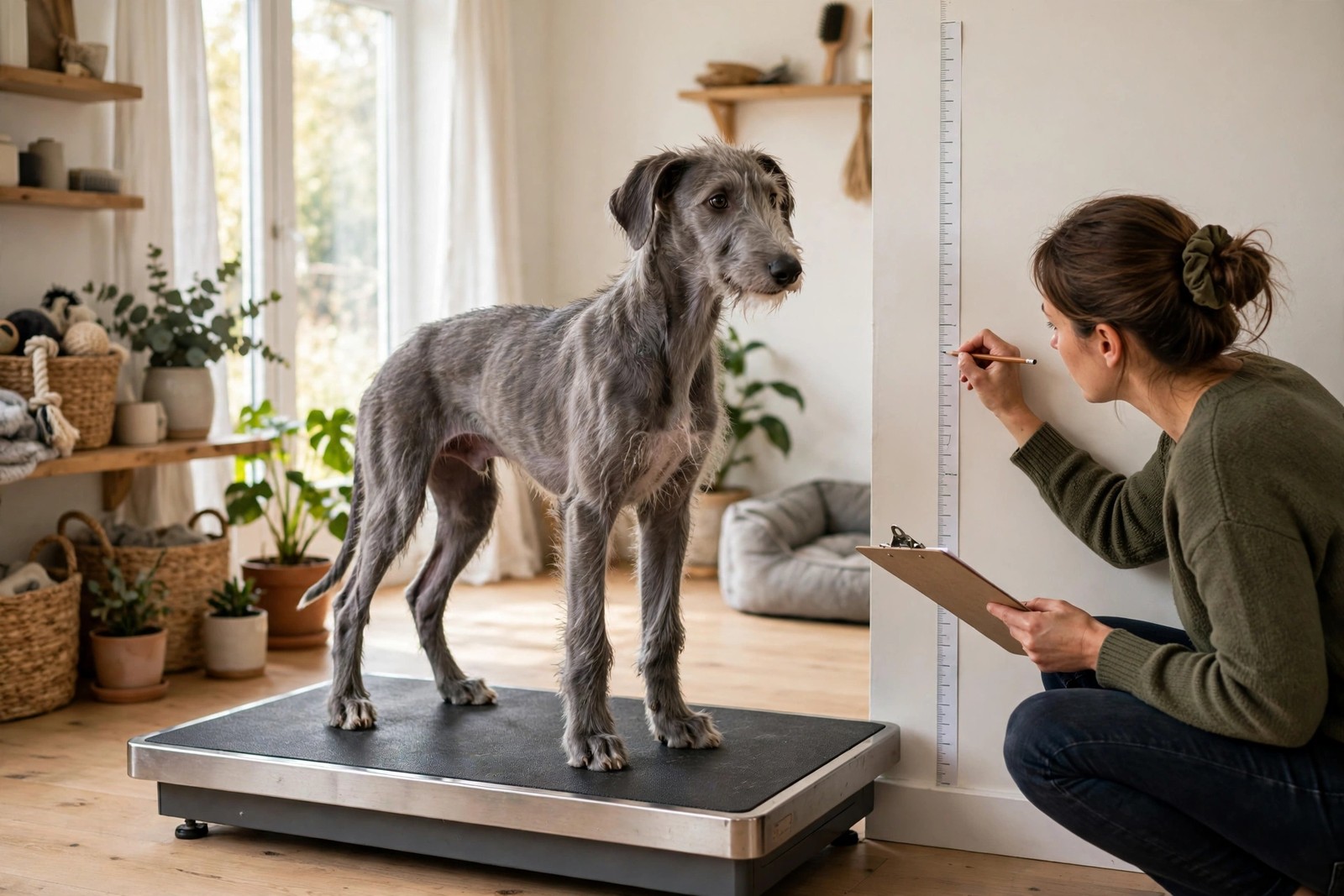
Use a clinic or large platform scale from the start — a Deerhound pup outgrows hold-and-weigh methods while still young — and settle into a fortnightly rhythm through his main growth, then monthly as an adult. Measure height at the shoulder each time, standing him square on a level floor; in this breed the height line is as informative as the weight line, and the pair shows whether he is growing up, growing out, or — the pattern to avoid — growing out faster than he grows up. Record condition by feel under the rough, wiry coat: ribs under a light cover, hip points present but padded, never a loaded, roly-poly outline on a young frame.
Food, rest, and the giant puppy's notes column
Log measured food amounts and every change, because a Deerhound's needs climb substantially through growth and guessing by appetite alone overshoots — a growing giant is essentially always willing. Note exercise and rest as faithfully as food: young Deerhounds need their activity moderated while bones mature, and quiet weeks after growth spurts are part of the pattern, not laziness. Record appetite dips too; brief fussy stretches during growth phases are common in the breed, and a log entry showing weight holding steady through a picky fortnight is the reassurance that stops an owner from frantically enriching meals a puppy did not need enriched.
Reading a two-year growth curve
Expect the steepest height gains early, long plateaus, then slow filling of chest and muscle into his second year and beyond. Judge each fortnight against the last few entries, not against the adult he will become: steady incremental progress with good condition is the goal, while sharp weight jumps following portion increases are your cue to hold steady instead. As an adult, a Deerhound settles into a lean, greyhound-like condition for his size, and the log's later job is guarding that — catching the slow heavy drift of middle age on a frame whose joints have the most to lose from carrying it.
When a giant puppy's log needs the vet
Take the record in if growth stalls or weight falls, if height and weight diverge strangely, if he develops a persistent limp or reluctance to rise during a growth phase, if appetite loss lasts beyond a brief fussy patch, or if an adult's number moves without explanation. In a breed built at this scale, early conversations prevent large problems, and a dated curve gives the vet the timeline that memory cannot. Storing the curve in his KinsLe Pet Passport keeps his entire growth history attached to his health records for every clinic and caretaker who follows his progress.