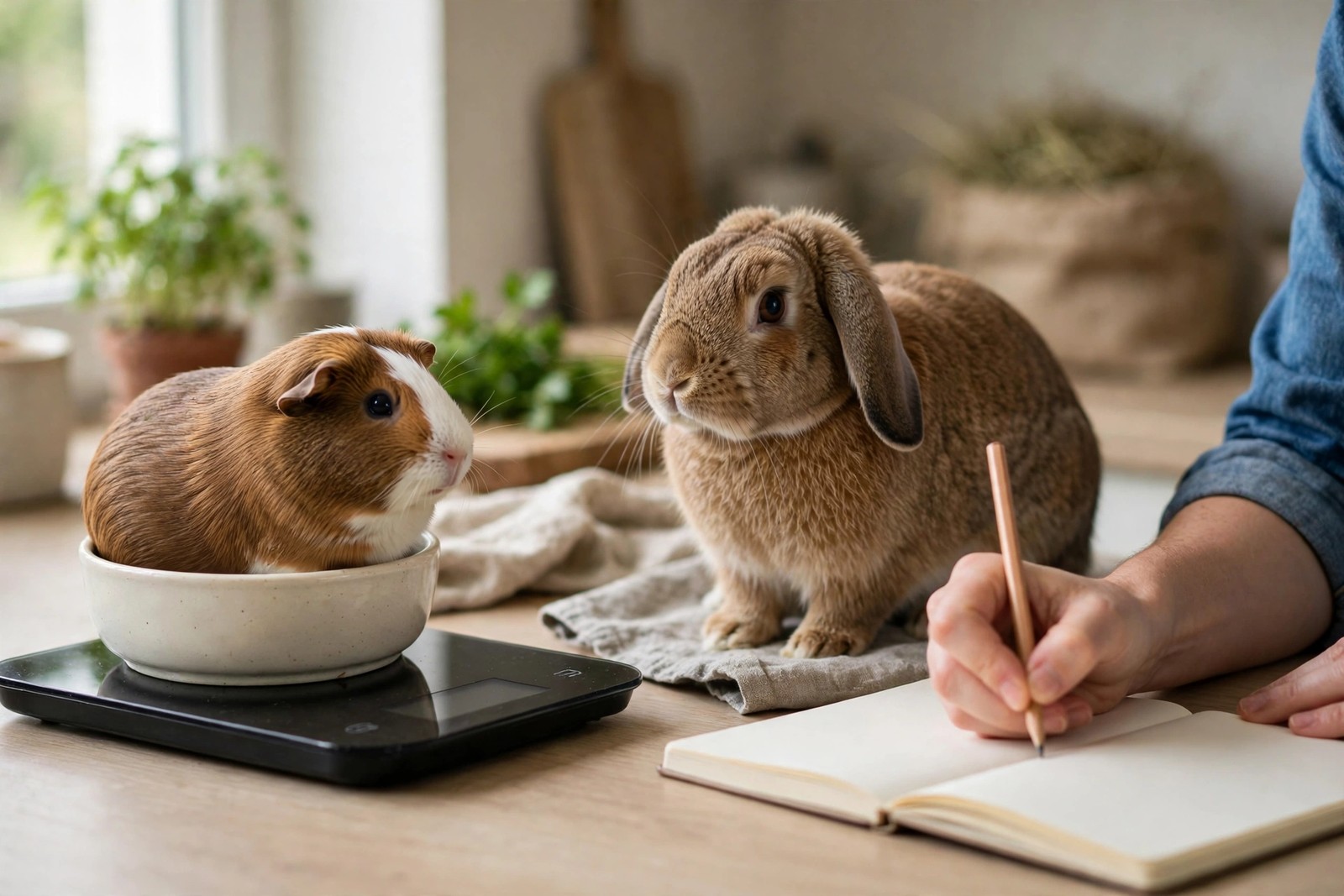
Yes — for prey animals that hide illness as a survival strategy, the scales often speak first. A guinea pig or rabbit can be quietly losing condition behind a full hay rack and a bright expression, because in the wild the animal who looks unwell gets targeted. Weight is one of the few measures that does not depend on your pet choosing to show you anything, and a written log of it is a genuinely useful record for a small-mammal owner to keep.
How to Weigh, and How Often
Weigh a guinea pig weekly and a rabbit monthly, using the same scales, at the same time of day, ideally before the morning feed so a full stomach does not muddy the comparison. Kitchen scales that read in grams suit both species: place a guinea pig in a high-sided bowl or small box on the scales, and weigh a rabbit in a carrier, then weigh the empty carrier and subtract it. Record the actual grams every time rather than rounding to a general impression, because the value of the log is in small changes.
Youngsters who are still growing should be weighed at every session without fail, since their line should climb steadily and a stall in growth is information. Any animal recovering from illness, surgery, or a dental procedure should be weighed as often as your vet directs, and daily weighing for a short stretch is common then. Otherwise, weekly for the guinea pig and monthly for the rabbit is a rhythm many households can hold for years, and a held rhythm is what makes the numbers comparable.
What the Numbers Are Telling You
A stable adult weight that wanders a little with season and appetite is normal. What matters is direction over time. A gradual slide across several readings, a sudden drop between two, or a guinea pig whose weekly figure falls three sessions in a row deserves a vet conversation even if the animal is still eating, because dental pain, gut slowdown, kidney trouble, and other problems in these species often reduce intake quietly before behaviour changes at all. Weight gain matters too: a steadily climbing rabbit is heading toward sore hocks, difficulty grooming, and flystrike risk in warm weather, and the log gives you the evidence early enough to adjust feeding gently.
Read the log alongside behaviour rather than instead of it. Weight stable, droppings normal, animal bright: reassuring on all three counts. Weight falling plus smaller droppings is an urgent picture in a rabbit or guinea pig, and that combination should not wait for next week's weigh-in.
Making the Log Part of the Routine
Tie weighing to something that already happens: the guinea pigs get weighed while their enclosure is cleaned, the rabbit on the first weekend morning of the month. Keep the scales where the animals live, note the figure the moment you read it, and jot one line about appetite and droppings beside it. Keep the readings honest by zeroing the scales with the empty bowl or carrier already in place before the animal goes in, at every single session. When you visit the vet, bring the whole run of figures, not just the latest; vets can do far more with twelve weeks of weekly guinea pig weights than with an owner's honest guess that he seems thinner.
KinsLe Pet Passport holds that weight history where it belongs, in one portable records packet with vet visits, dental notes, and feeding details, so the trend behind today's number is in front of the vet at every appointment.