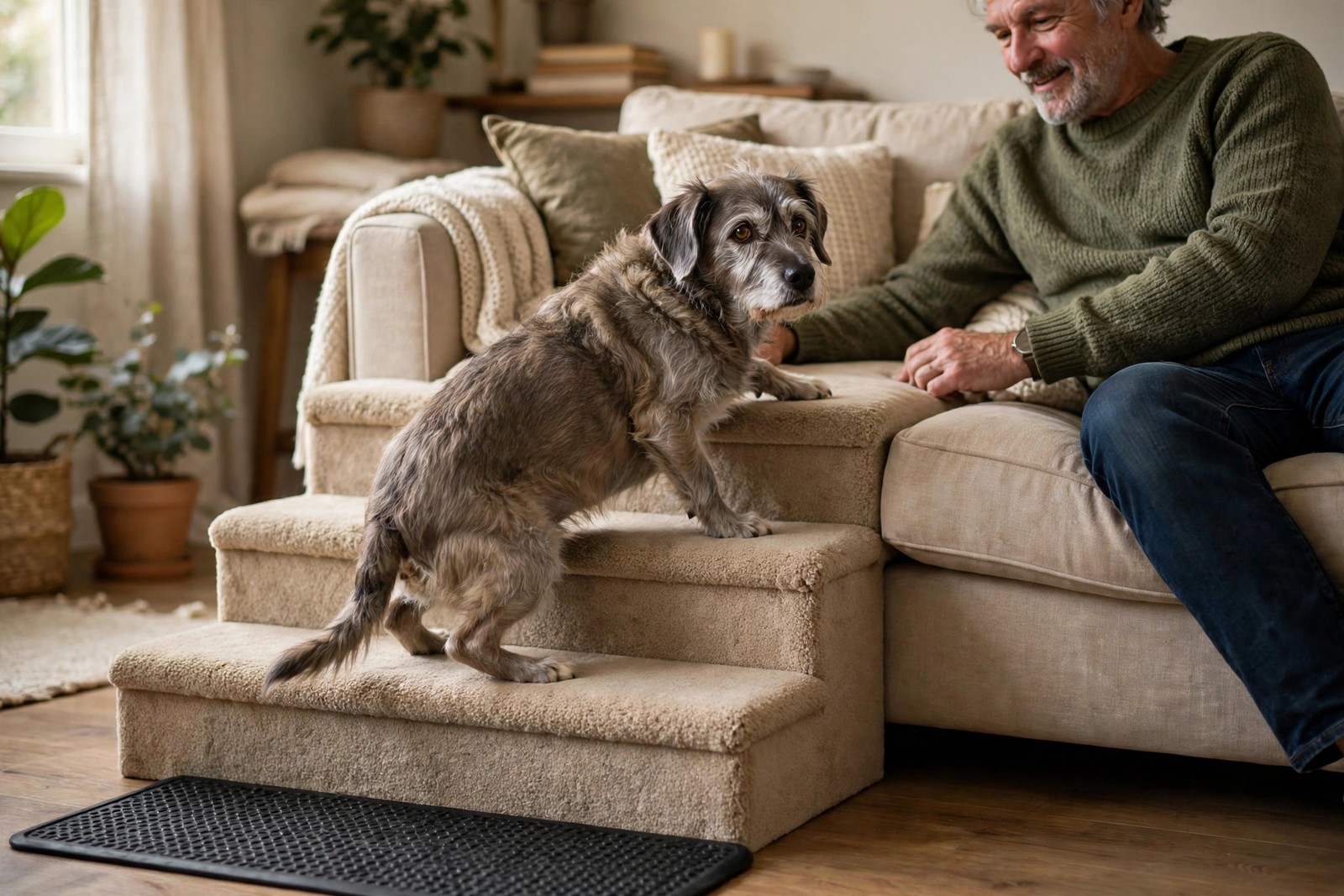
An arthritic dog does not need to lose its favourite spot on the sofa — it needs to lose the jump that gets it there. For a dog who has spent years curled beside you, being suddenly banished to the floor is a real loss of comfort and companionship at exactly the age when both matter most. The impact of leaping up and, worse, thudding down onto hard flooring is what damages sore joints and risks a bad landing. Solve the access, and most arthritic dogs can keep their place safely for years.
Why the Jump Down Is the Real Problem
Jumping up loads the shoulders and elbows; jumping down is harder still, because the front legs absorb the whole landing force through joints that arthritis has already made fragile. A slip on the way down — polished floor, a rug that slides — can turn a routine hop into a sprain or a frightened dog who will not try again. Watch for the quieter warnings that the current arrangement is failing: hesitating at the sofa edge, crying out occasionally on landing, scrambling rather than stepping up, or avoiding a once-loved spot altogether. Those signs mean change the access now, not that the dog no longer wants to be up.
Steps, Ramps, and the Right Furniture
Give your dog a route it will actually use every time. Wide, deep steps with a non-slip surface suit most dogs who are still confident climbers; a gentle ramp with good grip suits dogs whose shoulders or elbows are the sore ones, since ramps avoid stepped lifting of the front legs. Train the route with treats for the first week and block the direct jump meanwhile — a cushion barrier works — because an untrained dog defaults to the leap it knows. Whichever you choose, fix the landing zone: a non-slip mat where paws touch the floor, and steps that do not wobble.
Furniture choice helps too. The lowest sofa or an armchair with a low seat reduces the climb, and a firm cushion supports arthritic joints better than a deep, sagging one the dog has to haul itself out of. A washable throw protects the fabric and gives some grip. If your dog sleeps on your bed, the same rules apply with more height at stake: a ramp is usually the right answer there, and some seniors are genuinely better on a supportive floor bed beside yours.
When Floor Level Is the Kinder Answer
Some dogs should come off the furniture altogether: a dog who still launches itself down past the steps, a dog with severe spinal or elbow disease whose vet advises against climbing, or a dog who has fallen. Make the floor option excellent rather than exiled — a thick, supportive bed placed right against the sofa where the family sits, in a warm spot out of draughts, so the dog keeps the company without the height. Sit down at floor level with your dog sometimes; for many seniors, your presence is the point of the furniture anyway.
Combine access changes with the wider arthritis picture — weight control, pain relief as prescribed, and steady gentle exercise — and review the setup at each vet visit as mobility changes.
Sitters and family members need to enforce the same no-jumping rule or the training unravels in a weekend, and KinsLe's Pet Passport records your dog's steps routine and vet mobility advice alongside its health history, so everyone caring for your dog protects those joints the same way.