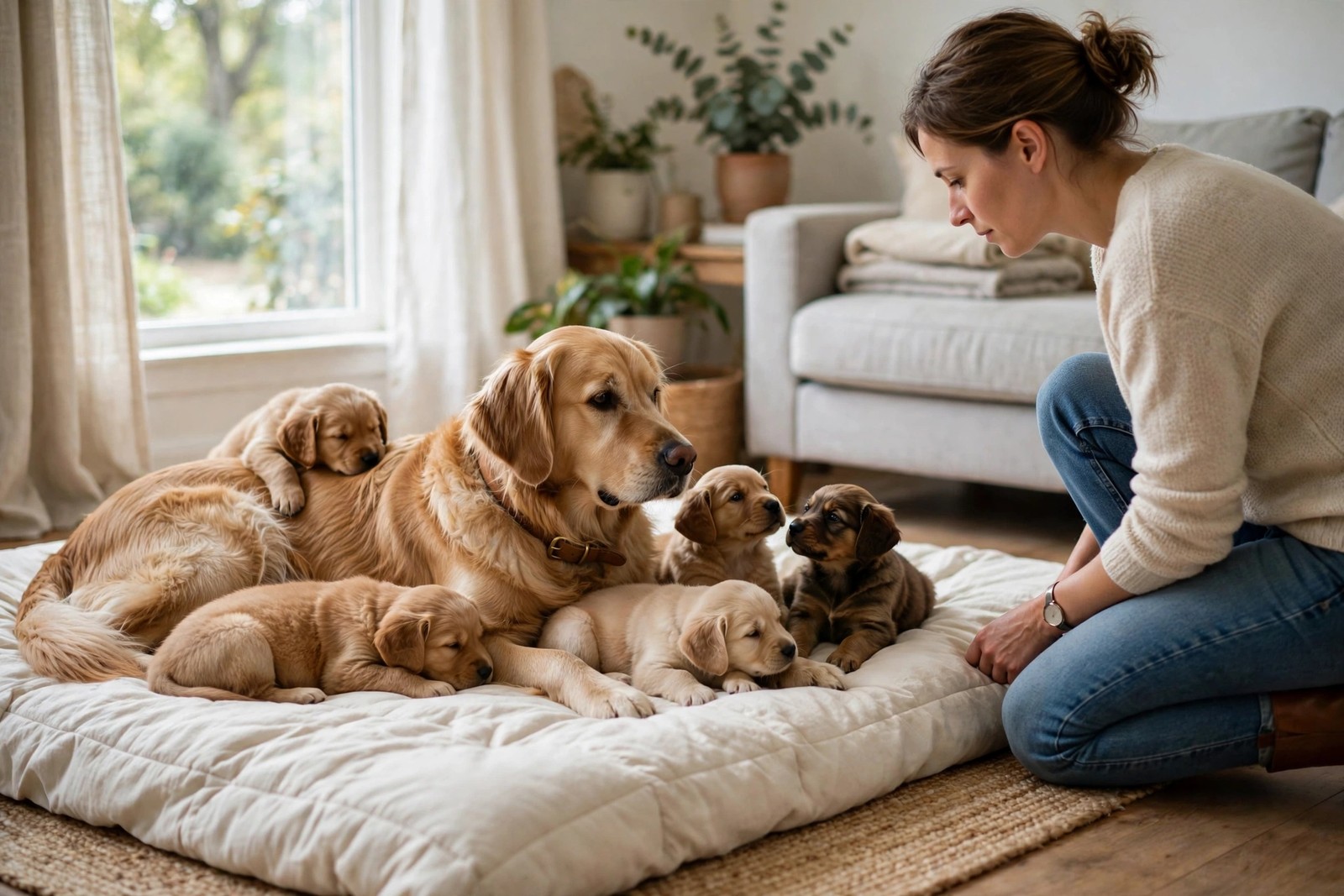
Yes. Meeting a puppy's parents, above all the mother, is the single most informative step you can take before committing, because puppies are not blank slates. Temperament is partly inherited and partly learned from the dam in the first weeks, and the adults in front of you are the clearest forecast of the dog you will actually live with for the next decade or more.
What the dam shows you
Watch the mother before you focus on the puppies. Is she relaxed with visitors, curious rather than shrinking or lunging, and in good visible condition, with a clean coat, clear eyes, and a healthy weight rather than looking worn down by back-to-back litters? A nervous, fearful mother raises puppies who start life learning that strangers and new sounds are alarming, and a mother who is aggressive toward ordinary visitors is a serious consideration, not a detail to excuse. Note her size and build too: puppies usually grow into something close to their parents, so the dam's adult size, coat type, and energy in the room tell you more about your future dog than the tiny puppy does.
Ask how old she is, how many litters she has had, and whether she lives in the home as a pet. A dam who is part of the household, knows her name, and settles on a mat between interactions is being bred from a very different life than one brought in only for viewing.
The father, and what to accept if he is absent
Fathers often live elsewhere, so not meeting the sire is not automatically a problem. What matters is that the breeder can tell you exactly who he is, show photographs or video, describe his temperament and health testing, and explain why he was chosen for this dam. Vague answers about the father, or a different story each time you ask, matter. If the sire is on site, meet him with the same eyes: friendly, sound, and typical of the breed in size and character.
The home is part of the evidence
Meeting the parents means seeing where the litter is raised. Puppies growing up in a lived-in room, used to household sounds, visitors, children where appropriate, and handled daily, have a head start that puppies raised in an isolated outbuilding do not. Look for clean bedding, fresh water, toys and varied surfaces underfoot, and puppies who come forward to investigate you. Ask to see health records for the parents, any screening results relevant to the breed, and the puppies' worming and first vet-check notes, and expect straight answers.
When a breeder says no
A breeder who will not let you meet the mother, insists on delivering the puppy to you, or pressures you to decide on the spot is asking you to buy blind, and reputable breeders simply do not work that way. Walk away, however appealing the puppy in the photograph looks. The one fair exception is rescue: a rescued litter's parents may genuinely be unknown, and a good rescue will say so plainly and share everything they do know about the puppies' start.
When the puppy does come home, KinsLe Transferrable Profiles lets the breeder or rescue transfer the puppy's profile to you with its early records, feeding routine, and vet history included, so that carefully checked start is never lost.