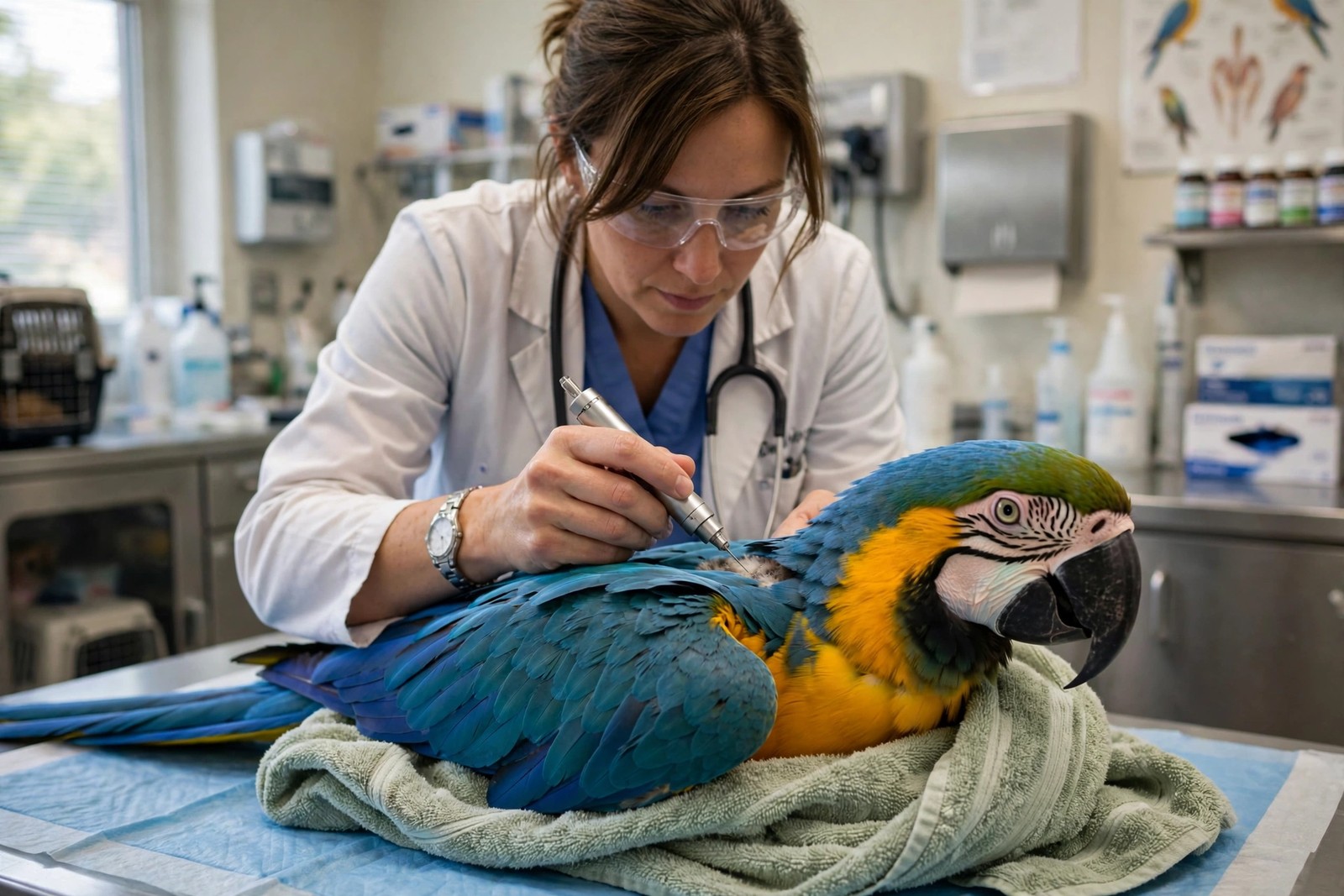
Yes — for a large parrot, a microchip is one of the most reliable forms of identification you can provide. Macaws, African greys, Amazons, and cockatoos are long-lived, valuable, and strong fliers: exactly the birds most at risk of being lost after an escape and most targeted by theft. A closed leg band can be removed or can injure a leg, and an open band can slip off, but a chip stays with the bird for life and gives a vet, rescue, or police officer a permanent identity number to trace back to you.
How Implantation Works in a Parrot
Birds are not chipped between the shoulders like dogs. An avian vet implants the chip into the pectoral muscle — the large breast muscle — because a parrot has little loose skin and the muscle holds the chip securely where a scanner reads it reliably. The procedure is quick but is usually done under a brief general anaesthetic or heavy sedation, both for the bird's comfort and so the vet can place the chip precisely and check the bird over at the same visit; some vets combine it with a health check, blood work, or a beak and nail trim so one anaesthetic covers everything.
Size is the suitability line. Standard chips are designed for larger parrots, and your avian vet will advise honestly if a smaller species — a budgie or a small conure — is below the sensible size for implantation, in which case a correctly fitted closed band and good records matter more. Always use a vet experienced with birds for this: placement depth and site choice are avian skills, not generic ones. Ask for the chip number in writing before you leave, and have the vet scan the chip at future visits to confirm it still reads and has not migrated.
Registration: The Part That Decides Whether It Works
A chip is only a number until it is registered to you. Register it with the database your vet uses as soon as it is implanted, in your name, with your current mobile number, home address, email, and an emergency contact who could act if you were unreachable — then confirm the entry actually shows when the database is searched, because unregistered chips are a common discovery when lost birds are scanned. Keep the chip number with your parrot's hatch papers and vet records, and tell any buyer or new keeper the number if the bird is ever rehomed, so registration transfers properly instead of lapsing.
Keeping details current is a habit, not a task: update the registration the same week you move house, change phone number, or change email, and if ownership changes — including in your will arrangements for a bird who may outlive you — update the registered keeper and emergency contact too. Once a year, look the record up and check every field, the way you would test a smoke alarm. A parrot stolen or found twenty years from now is traced through whatever the database holds on that day, not through what it held at implantation.
Layer the Identification
Treat the chip as the permanent layer, not the only one. Keep a clear set of photographs showing your parrot's face, both sides, and any distinguishing marks, note its band number if it wears one, and keep vet records that tie the chip number to the bird. If your parrot ever escapes, those details plus an immediate local alert give finders several ways to confirm identity and reach you fast.
A scannable profile makes that backup layer easy to keep current alongside the registry entry, and KinsLe's Verified QR ID Pet Profiles lets your parrot carry a QR identity holding its chip number, description, and your contact details, so a finder can reach you even before a vet scans for the chip.