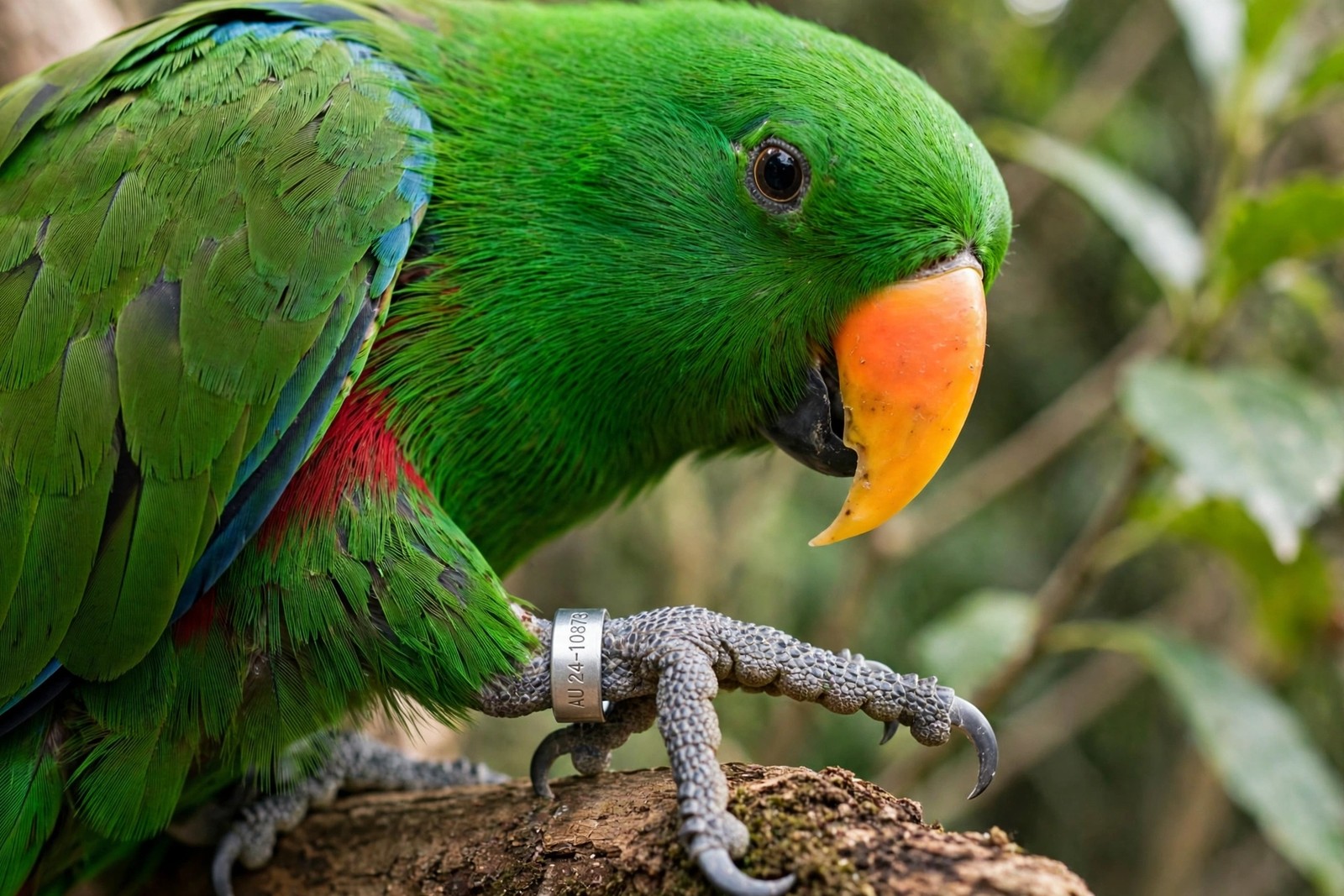
Yes — for a banded eclectus, a legible band photograph plus the number written out in full is one of the strongest pieces of identification you own. Unlike a dog, an eclectus carries no collar, and two green males or two red-and-purple females can look strikingly alike in a found-bird listing. The band is the individual marker, but only if you have recorded it accurately before you ever need it.
What is actually stamped on the band
A closed band is slipped over the foot while a chick is still in the nest, so its presence itself tells a story about the bird's origin. Around its narrow surface you will typically find a breeder or society code in letters, a two-digit hatch year, and the bird's individual number, sometimes with a state or country mark. Each character matters: change one digit and you are describing a different bird. That is why a single hurried note scribbled during a vet visit is not enough on its own.
Photographing a band on a living bird
Never force an eclectus through a stressful restraint session just for paperwork. Work during a calm moment, ideally with a second person your bird already trusts, and photograph the band while the bird is perched and settled. Rotate your view — or gently encourage the bird onto a hand or a different perch — so you capture the band in sections all the way around, because no single frame shows the whole circumference. Use a bright light without flash glare off the metal, get close, and zoom in on each shot before you stop: every letter and digit should be readable, not guessed. If a character could be a 6 or an 8, keep shooting until the shape settles it. Alongside the band shots, take clear whole-bird photos showing the beak colour, feather condition, and any distinguishing marks.
Write it out, then back it up twice
Transcribe the full number exactly as stamped, keeping the letters and digits in their stamped order, and keep that written version with the photographs rather than trusting the images alone. File one copy with your emergency pet documents at home — the folder a neighbour or family member would grab if the house had to be left quickly — and keep a second copy off-site, in a backed-up phone album or cloud folder, so a house fire or a lost phone cannot erase your only record. Add your avian vet's details and the date you recorded the band, and check the transcription against the bird once a year, since bands can wear and characters can grow harder to read with age.
Why this belongs with the emergency set
If an eclectus escapes through a torn screen or startles out of an open door, the first hours go to searching and posting descriptions. A finder, a rescue, or a vet who scans a found bird for a band needs your exact number to confirm a match, and a dated photograph of that band on your bird is persuasive proof of ownership if a bird is ever disputed. Do not publish the full band number in a public lost-bird post — share a partial description openly and give the complete number privately to anyone claiming a match, so the number stays a proof rather than a script for a false claim. Stored together in KinsLe's Pet Passport, the band photo, the written number, and your eclectus's health and diet records form a single packet you can send to a vet, a rescue, or an emergency contact without hunting through your camera roll.