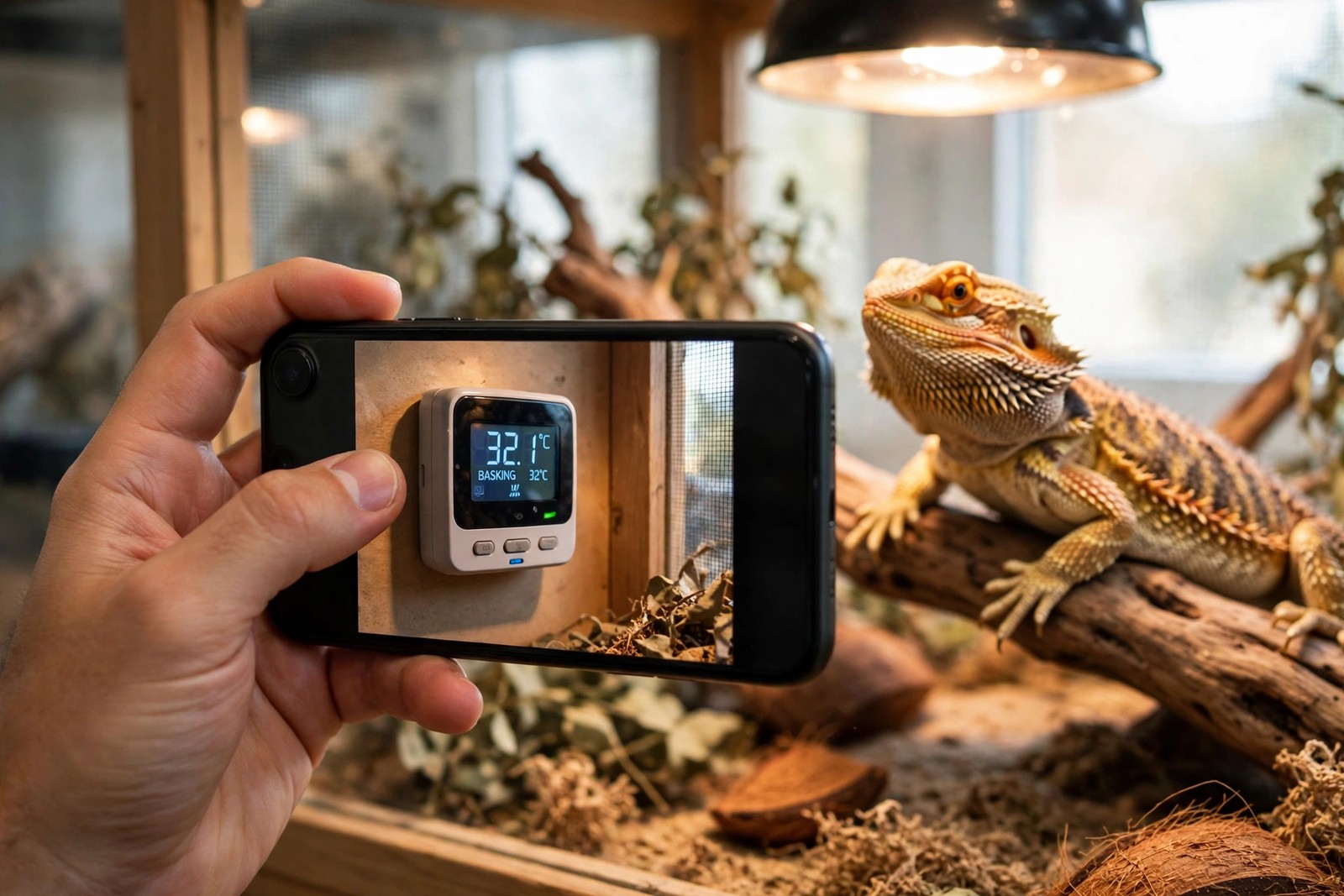
Yes, and for a reptile this matters more than for almost any other pet. Your sitter is not just feeding an animal; they are running a small climate system — a basking temperature, a cool end, a humidity level, and lights on a timer — and a photograph lets them copy that system exactly instead of interpreting your handwriting under pressure.
The Photographs Worth Taking
Take a clear, close shot of the thermostat display or dial showing the set temperature, and a second shot showing where its probe sits, because moving a probe even a few centimetres changes what the thermostat controls. Photograph each thermometer and hygrometer at a normal midday moment so the sitter knows the readings to expect, not just the target range. Capture the timer plugs or smart-plug schedule for heat and UV lights, the misting or fogger settings if you use them, and the full enclosure from the front so hide positions, water bowl placement, and substrate depth are all visible. Finish with the plug strip as it should look, labelled, so a knocked switch is obvious.
Make Each Photo Self-Explaining
A picture without a caption still leaves questions, so add one line to each: “Thermostat reads 32°C (90°F) at the basking spot — probe clipped under the slate,” or “Lights on 7 a.m. to 7 p.m. — do not switch the timer to manual.” Shoot in good light, tap to focus on the numbers, and retake anything blurry; a sitter zooming in on a smudged dial at 9 p.m. cannot guess safely. Photograph your hand pointing at anything that must never be moved, and add a separate note listing what not to touch: the probe, the timer, and the thermostat itself unless a reading moves outside the range you have written down.
Pair the Photos With Three Short Lists
Photos show settings; lists cover actions. Leave the feeding days and prey or portion sizes, the misting and water-change routine, and the “call me or the vet if” triggers — for example, temperatures well outside range for more than a few hours, a heat lamp dead with no spare, or the animal injured or limp. Walk the sitter through the album once in person if you can, let them scroll it on their own phone, and send the set before the trip so questions surface while you can still answer easily.
Reptiles are not routinely vaccinated or microchipped, so a handover built on setup photos, feeding records, and shed or behaviour notes is the right record for this species. KinsLe's Pet Passport gathers those labelled setup photographs with your reptile's care notes and emergency contacts in one portable packet, so whoever steps in can reproduce the enclosure exactly rather than reconstructing it from memory.