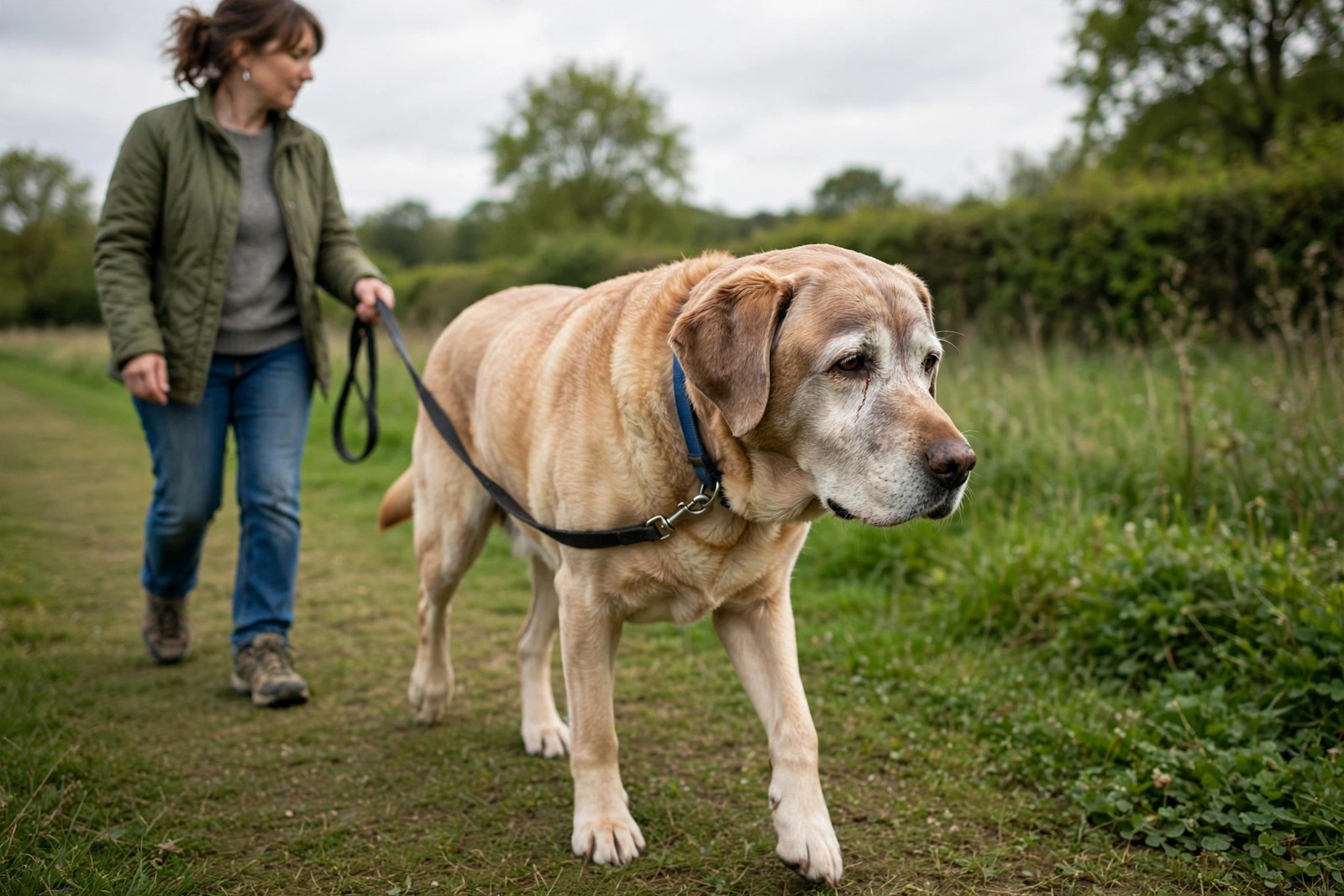
No — retiring an arthritic dog from walks usually makes her worse. The muscles around an arthritic hip, elbow, or knee act as living supports for that joint, and they waste surprisingly fast without use. A dog who stops walking also gains weight, stiffens through the whole body, and loses the sniffing, social contact, and routine that keep an older dog engaged with life. The answer is to reshape the walk, not remove it.
What the new walk looks like
Swap one long outing for two or three short ones spread through the day, so no single effort overloads her joints and she never stiffens up for hours between outings. Let her set the pace, and build in pauses: standing and sniffing works her mind and her muscles gently without adding distance. Choose grass, earth paths, and flat routes over concrete, steep slopes, and slippery surfaces, and turn for home while she is still moving comfortably — the goal is a dog who arrives back keen for the next outing, not one who pays for this one. Many owners find a repeatable sweet spot, such as fifteen relaxed minutes at a time, and treat that as her current prescription for movement.
Reading the next-morning test
The honest measure of a walk is not how she looked during it, when excitement masks discomfort, but how she rises the next morning. Extra stiffness getting up, reluctance on stairs she managed yesterday, lagging sooner than usual, or licking at a joint all say yesterday's total was slightly too much — trim a few minutes rather than cancelling walks. The opposite pattern matters too: a dog who is brighter, looser, and keener after a week of short outings is telling you the new level suits her. Cold and damp weather commonly makes stiffness worse, so expect to shorten outings in winter and lengthen them a little on warm, dry days.
Weight, footing, and help at home
Every extra pound is load carried on painful joints with every step, so keeping an arthritic dog lean is one of the most powerful things you control — ask your vet to judge her condition honestly and feed to that target. At home, put rugs or runners over slick floors on her main routes, use a ramp or a supported lift for the car and any steps she cannot avoid, and give her a thick, supportive bed away from draughts. A harness that spreads support can be kinder than a collar for a dog who is unsteady, and a rear-support sling helps some larger dogs on stairs during bad spells.
Flare days and the vet conversation
During a genuine flare — marked limping, holding a leg up, crying out, or refusing to bear weight — cut back to short toilet trips on the lead for a day or two and contact your vet for advice rather than pushing through or stopping exercise indefinitely on your own. Likewise, if her pain seems poorly controlled on her current plan, if she stops wanting to go out at all, or if weakness appears suddenly in the back legs, that needs a vet visit, not just a shorter route: pain relief, joint support, and options such as physiotherapy or hydrotherapy are decisions to make with the clinic that knows her. Keeping a dated log of walk lengths, flare days, and medication changes in KinsLe's Pet Passport turns those vet conversations from guesswork into a clear record of what she can do and how it is changing.