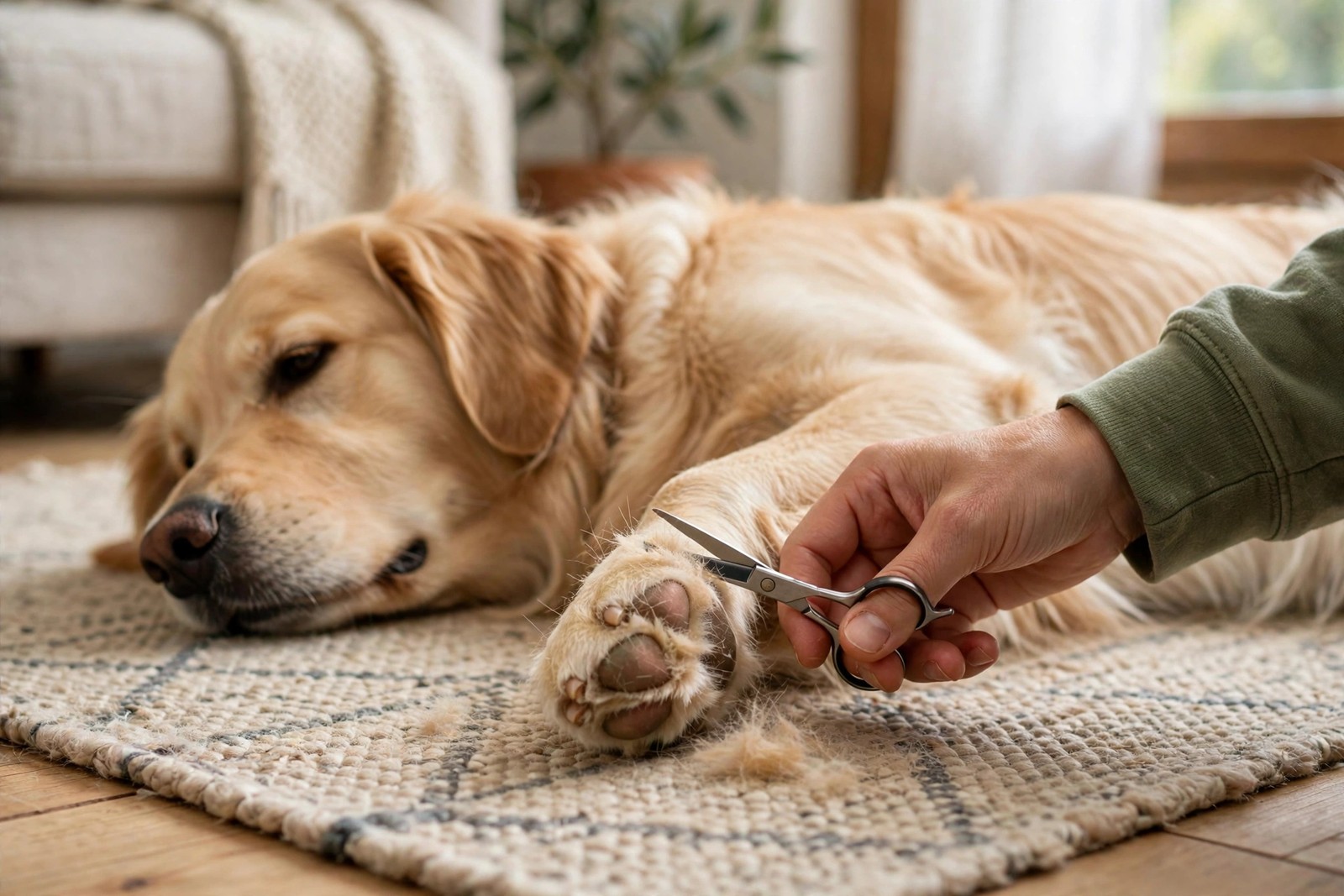
For many pet dogs, yes: the hair between the paw pads should sit level with the pads themselves. This is one of those small grooming jobs with an outsized effect, because feet are where grip, comfort and a surprising amount of lameness all begin. Hair that grows long past the pads changes how the foot meets the ground, and in wet or cold weather it actively collects trouble.
Why Level With the Pads Works
Pads grip because their rough surface contacts the floor directly. When long hair grows past them, the dog is effectively walking on hair instead, which skids on wooden, tiled and laminate floors, a real fall risk for puppies learning stairs and for older dogs whose back ends are already less steady. Outdoors, the same long hair traps what the dog walks through: mud dries into hard clumps between the toes, grit works against the skin, and in snow, ice balls pack into the tufts and pull with every step until the dog starts chewing at its feet or limping. Keeping the hair level removes the shelf that all of that collects on. Dogs living mostly indoors on smooth floors gain the clearest benefit, while a dog working rough ground daily may keep a little more protective hair; if your dog runs that kind of terrain, ask your groomer what length suits it rather than copying the house-dog trim.
How to Trim Without Nicking Skin
Work on a calm dog, in good light, with the paw held gently but securely. Choose small blunt-ended scissors for control, or clippers if your dog accepts them, and remove only hair protruding past the pads, skimming level rather than scooping down between them. The pads themselves must never be cut, and the skin between the toes is thin, so slow, small cuts beat ambitious ones. If your dog fidgets, do one foot and stop; four calm single feet across two days is a better outcome than a struggle that ends with a nick and a dog that hides at the sight of scissors. Many owners find clippers easier to control for this job once the dog accepts the sound, and a helper feeding treats buys you the stillness you need. If you are not confident, leave the trim to the groomer and do the checks below yourself.
What to Check While the Feet Are Up
A pad trim puts the feet in your hands, so use the moment. Look between the toes and along the pads for redness, cracks, small cuts, thorns or anything lodged. In summer, feel carefully for grass seeds between the toes; a seed working into the skin can cause real trouble, and a dog suddenly licking or chewing one foot deserves a close look the same day, with a vet visit if you find swelling, a sore spot or a seed you cannot see to remove. Check the nails while you are there, including any dewclaw, which curls into the pad if it is missed for long stretches. Note which foot you found something on, because a pattern of soreness on one foot tells your vet far more than a general report of limping.
How Often, and When to Ask
Pad hair grows at coat speed, so for many dogs a tidy every few weeks alongside ordinary grooming keeps it level; fast-growing coats and dogs walked in mud daily may need it more often. Redness that does not settle, cracks that deepen, limping, or a dog that resists having one foot handled should go to the vet rather than be trimmed around, since feet hide splinters, seeds and infections well. Puppies benefit from gentle foot handling long before they need a real trim, so build paw touching into ordinary cuddles. Through Care Teams in KinsLe, the pad check can ride along with the coat groom as one shared task, and the person who did it can note anything found, foot by foot.