
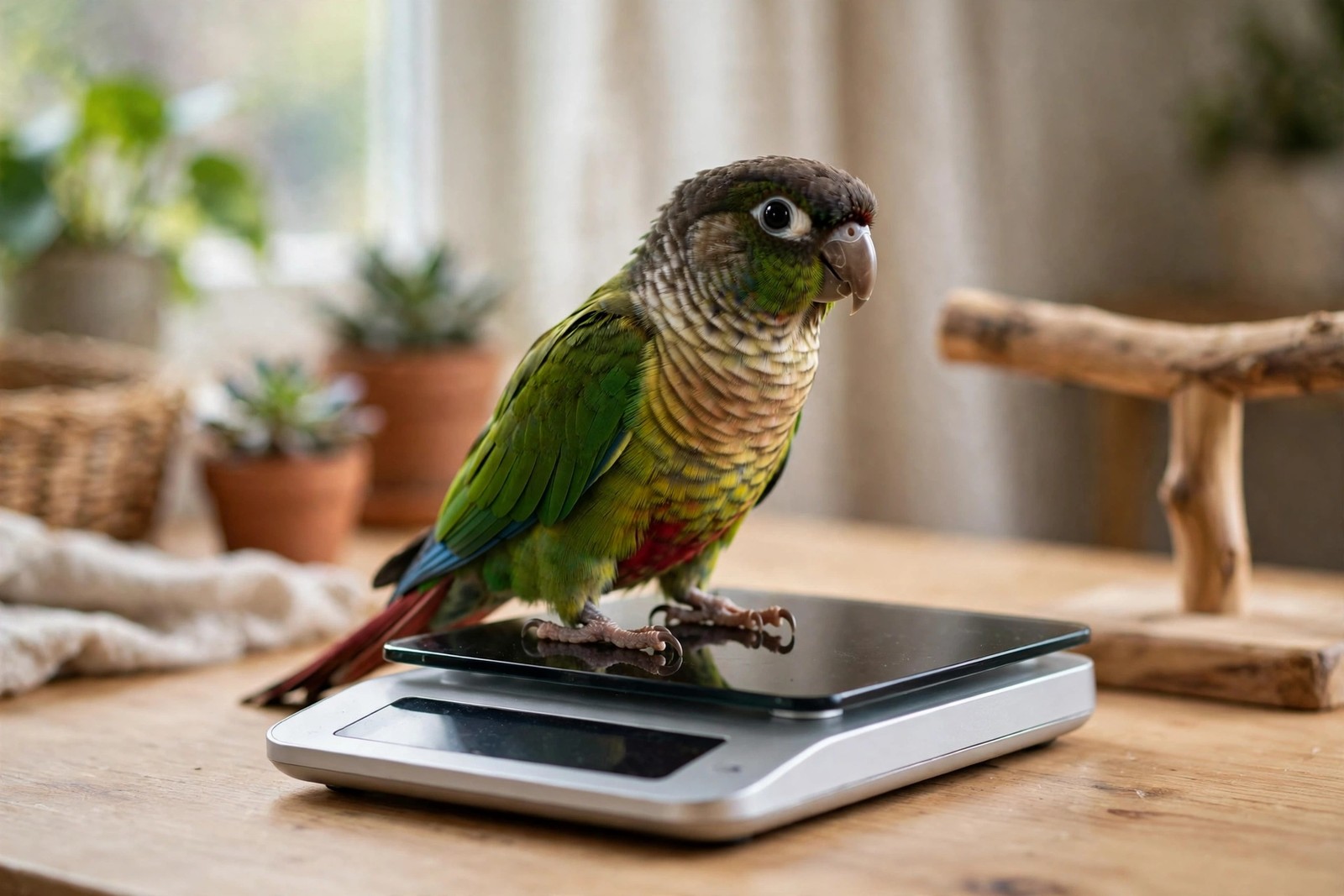
Yes, you should weigh your bird regularly. A weekly weigh-in on a gram scale, at the same time of day and under the same conditions, is one of the most useful early-warning habits a bird owner can build, because a steady weight shift can appear before you notice other changes. Log every result, watch for trends, and share any ongoing change with your avian vet rather than trying to interpret it alone.
Why Weight Tells You So Much
Birds are masters at looking fine. In the wild, showing weakness attracts attention, and pet birds keep that instinct. Weight is harder to disguise. A bird who is eating less, absorbing nutrients poorly, or fighting something off may start to drift down before droppings, energy, or appetite change in an obvious way. A young bird who should be gaining steadily but stalls also gives you information worth passing along.
That does not mean a single number should panic you. A gram or two can shift with a big drink, a recent meal, or a molt. What matters is the pattern over several weeks, recorded honestly.
How to Weigh Your Bird Step by Step
You do not need specialist equipment. A small kitchen scale that measures in grams, with a perch or stand your bird will step onto calmly, works for most pet birds.
- Weigh at the same time, ideally in the morning before the first big meal.
- Use the same scale, perch, and routine every time.
- Let your bird step up willingly — reward calm behavior with a favorite treat after.
- Wait for a steady reading, record the date, time, and weight immediately.
- Note context: molting, egg-laying, diet change, travel, or a new medication.
Train the routine gradually if your bird is wary. Let them explore the scale area without being weighed, reward short sessions, and keep the whole thing brief and positive. A stressed scramble for a number defeats the purpose.
Reading the Log Without Overreading It
Keep the log where you will actually use it — a notebook near the cage or a note on your phone — and review it monthly. Look for a consistent climb, a consistent slide, or a sudden jump that does not match what you noted about food and activity. Compare young birds against the growth expectations your vet or breeder discussed, and adults against their own usual range, not against a generic chart for the species.
Bring the log to every vet visit. A page of dated weights is far more helpful than saying your bird seems a little lighter lately, because the vet can see when a change started and how fast it moved.
When to Call Your Vet
Contact your avian vet promptly if you see a steady trend in either direction over a couple of weeks, a sudden change you cannot explain, or any weight change paired with quieter behavior, fluffing up, reduced appetite, or altered droppings. Do not start a new diet, supplement, or feeding plan on your own to chase a number — your vet should guide that decision with an exam and your full log in hand.
Bringing Your Weighing Questions to Kimmy
A steady log still leaves questions between weigh-ins, and those are worth bringing to Kimmy in KinsLe as they arise. Ask how much week-to-week wobble is ordinary, what context notes make a reading easier to interpret, or how a molt or diet change can muddy a single number. Working through them keeps you engaged with the record, so the dated log you hand your avian vet stays whole and continuous. Kimmy answers owners who ask more in KinsLe about reading a weekly weight trend, with replies taken from KinsLe Answers entries.