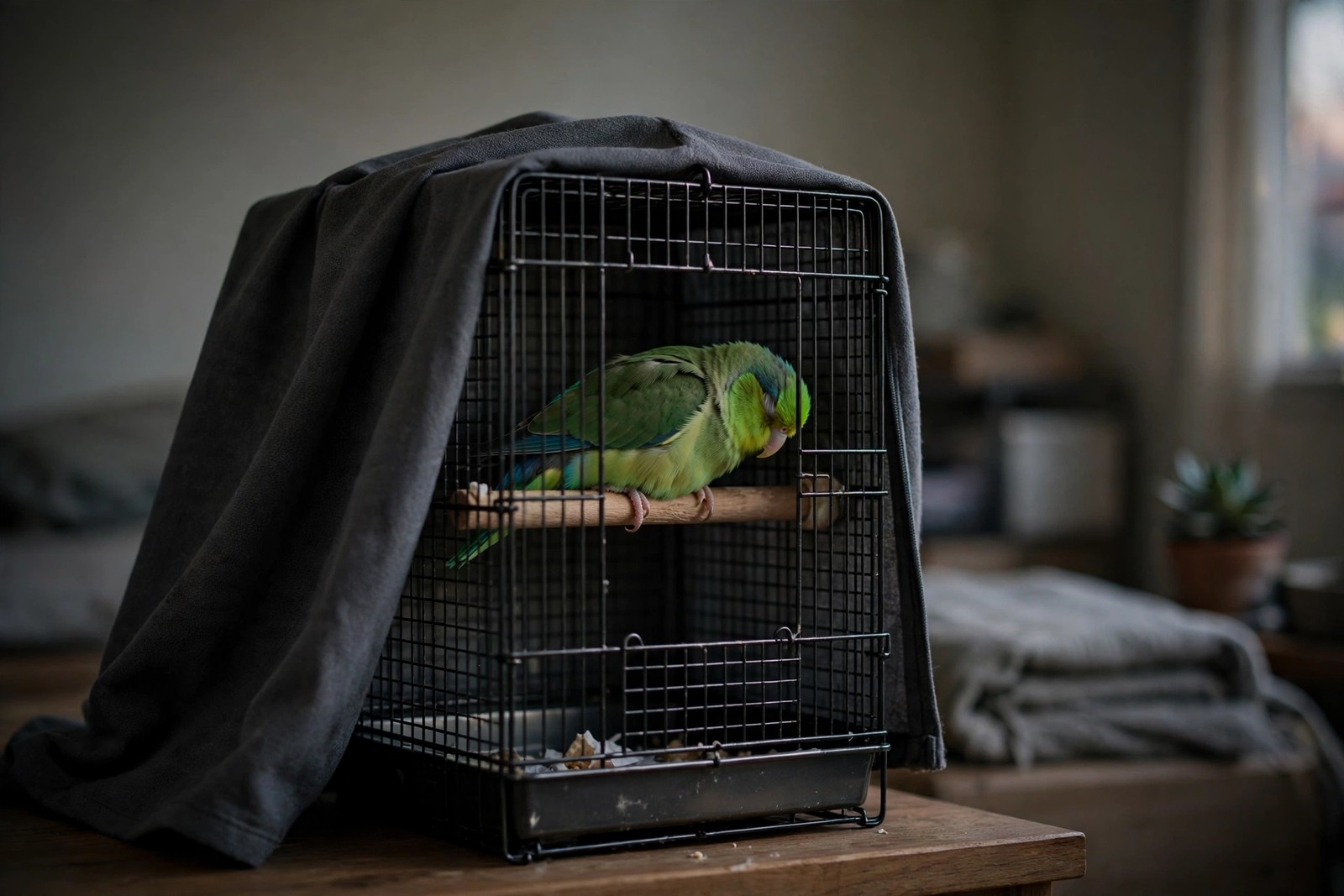
For many birds, yes, but the real question is about sleep, not furniture. Parrots, budgies, cockatiels, and other common pet birds need roughly ten to twelve hours of sleep in darkness and quiet each night to stay healthy and even-tempered. Whether a separate sleep cage is the right answer depends entirely on whether your bird's main cage can deliver those hours where it already stands.
What poor sleep does to a bird
A bird kept up by television light, conversation, and household movement until late shows it in behaviour before anything else: more screaming, more biting, feather-damaging habits, jumpiness at small sounds, and in some species increased hormonal behaviour such as territoriality and egg laying outside the breeding season. Owners often treat these as training problems when the bird is simply chronically tired. Birds also sleep lightly by design, waking at disturbances a person would sleep through, so a room that feels quiet to you may still fragment your bird's night repeatedly.
When a sleep cage earns its place
A separate sleep cage makes sense when the main cage lives in the family room, when household members keep very different hours, or when the bird is a light sleeper who reacts to every footstep. The sleep cage can be smaller than the day cage because the bird is in it to rest, not to exercise, but it still needs a comfortable sleeping perch positioned high, fresh water, room to stretch both wings fully, and safe, plain construction with nothing to snag toes or wings in the dark. Place it in a room that can be darkened fully, kept at a steady comfortable temperature, and left undisturbed until morning.
Build the move into a calm nightly ritual: a consistent bedtime, a few quiet minutes together, then into the sleep cage with lights out. Birds who learn the routine usually step up willingly and settle fast, and many clearly prefer their sleeping quarters once the habit forms.
When a cover is enough
If the main cage stands in a room that genuinely goes dark and quiet at a reasonable hour, a breathable, well-fitted cover that blocks light without restricting airflow can provide the darkness, and no second cage is needed. The test is honesty: a cover over a cage in a room with the television on until midnight blocks light but not sound or vibration, and the bird is still awake behind it. Covers also need checking for loose threads a bird could catch or chew during the night.
Making the change without stress
Introduce a sleep cage gradually. Let the bird explore it during the day with a favourite food inside, practise the bedtime move for short periods before the first full night, and keep the morning wake-up time as consistent as the bedtime. A night light is unnecessary for most birds and can keep some awake; total darkness with a settled routine suits the majority, though a bird prone to night frights, as some cockatiels are, may settle better with very dim light and a clear space around the cage.
The arrangement fails if one person puts the bird to bed and another wakes her for evening company. Her profile, meanwhile, can be shared with relatives you select through KinsLe Family Sharing.