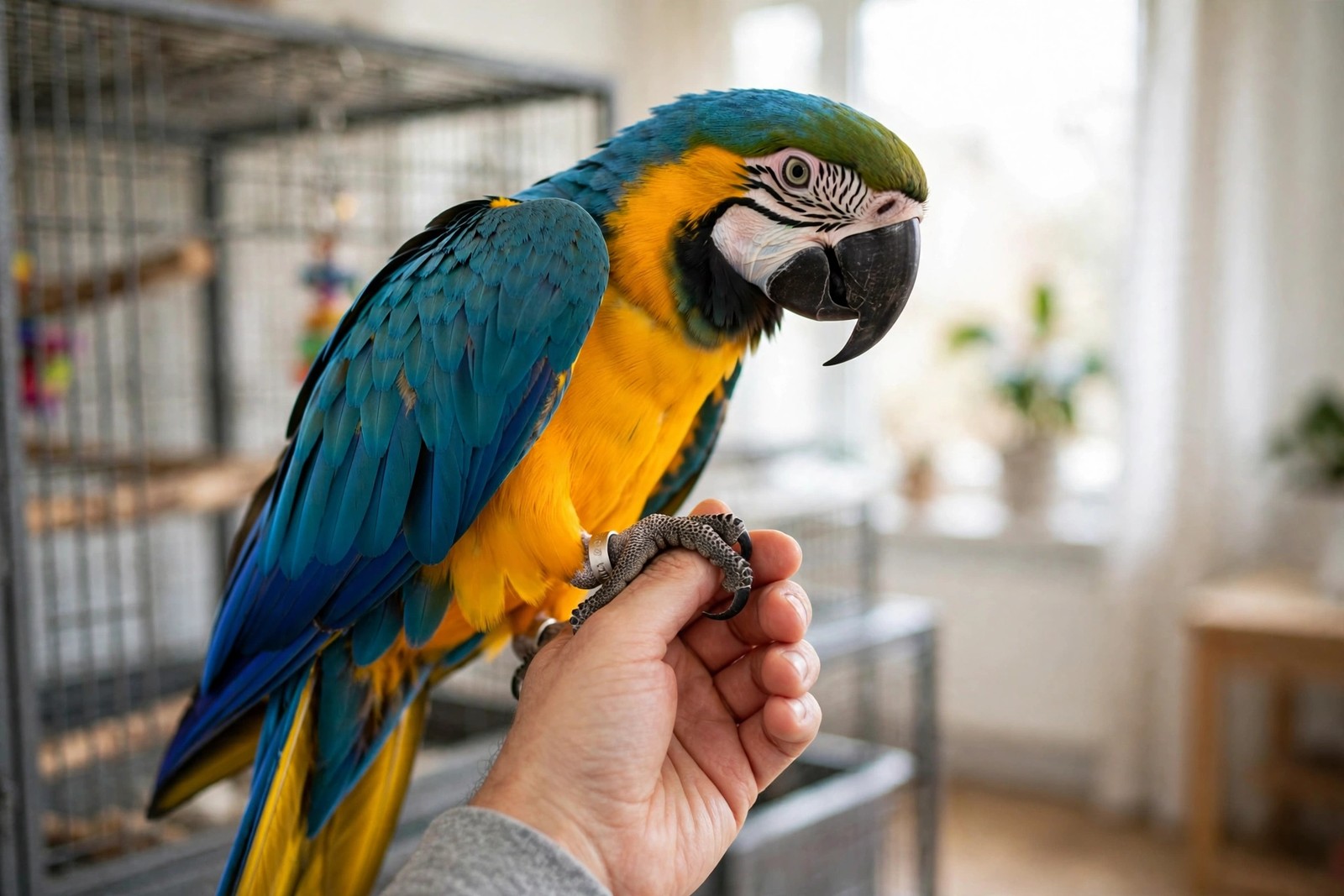
Yes, your bird should have some form of identification, but birds cannot wear ID the way dogs and cats do. There is no collar option, and anything attached carelessly to a bird's leg can injure her. The realistic choices are a closed leg band, a microchip for suitable larger birds, and a thorough paper and photo record that backs both up.
Closed leg bands: the standard for many birds
A closed band is a seamless ring slipped over a chick's foot in the nest during the brief window when the toes can pass through it; once the foot grows, the band cannot come off without being cut. Breeders use these bands widely, and the stamped code typically ties the bird to the breeder and hatch details. That only helps you if you record the exact band number, keep it somewhere safe outside the cage paperwork you might lose, and can produce it to prove a found bird is yours. Check a band regularly as part of routine care: it should sit freely, the leg should look normal above and below it, and any swelling, tightness, or the bird worrying at the band needs an avian vet promptly, because a constricting band is an emergency for the foot.
Never try to fit a closed band to an older bird; it cannot be done safely. Split or open rings, which are pinched onto adult legs, exist, but they carry more risk of catching on cage bars and toys or closing too tightly, so discuss them with an avian vet before considering one rather than fitting one yourself.
Microchips for larger parrots
Larger parrots, such as African greys, Amazons, and macaws, can often be microchipped by an avian vet, giving them permanent ID that cannot be lost, chewed, or removed. The chip only works if it is registered to your current contact details and if whoever finds or receives the bird thinks to have her scanned, which vets and rescues routinely do. For most budgies, finches, and other very small birds, chipping is generally not suitable because of their size, which makes the band and your records their main protection. Ask your avian vet honestly which category your bird falls into rather than assuming.
The record that makes ID work
Photograph your bird clearly from several angles, noting distinctive markings, feather colours, beak or eye features, and anything unusual, and update the photos after a moult changes her appearance. Keep the band number or chip number, purchase or adoption details, and vet details together. If two birds of the same species live with you, record which band belongs to which bird; similar-looking flock mates are easy to confuse under stress. ID also matters for proof of ownership disputes and for vet care, not only escapes.
If your bird escapes
Act immediately: search the immediate area calling and listening, tell neighbours the same day, contact local vets and rescues with the band details and photos, and share a clear description widely while the bird is likely still nearby and tired birds are easier to recover. A tame bird found by a stranger can only be matched to you if the finder can check a band or chip against details you have published or provided.
Fast, local alerting is what reunites escaped birds, and KinsLe Lost Pet Alert System lets you send an alert to nearby members the moment your bird gets out, so a finder who spots her can message you directly.