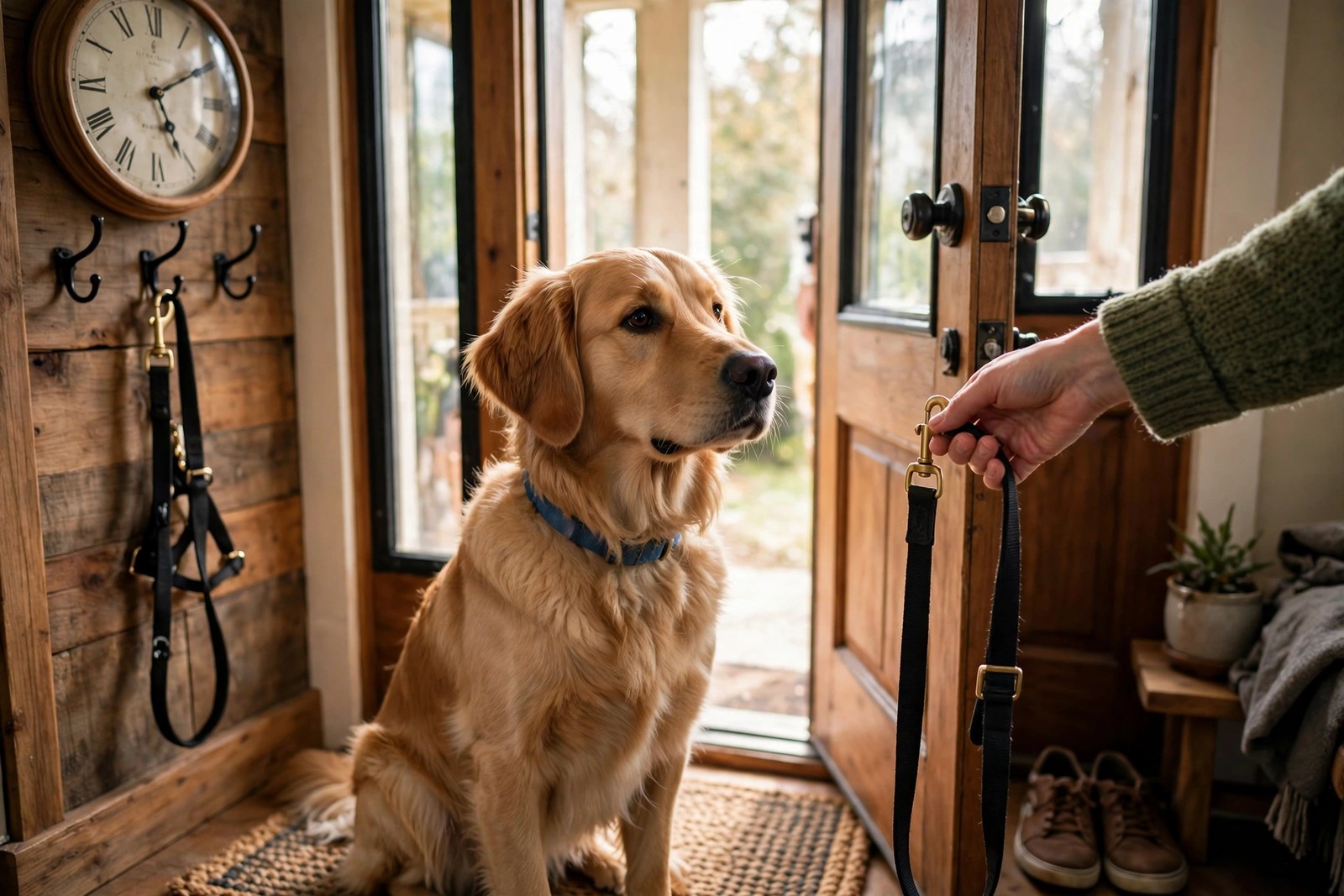
Your dog needs a routine, but not a timetable. The healthiest pattern is a predictable core, the same events in the same order within generous time windows, wrapped in deliberate flexibility. Dogs who know what happens next relax; dogs whose lives are run to the exact minute often unravel the first time a train is late or a visitor stays over.
What belongs in the predictable core
Anchor the day with feeding at roughly consistent times, because a dog's digestion, toilet needs, and expectations all organise themselves around meals. Provide toilet opportunities at dependable points: first thing in the morning, after meals, after play, and last thing at night, which is also the backbone of housetraining for puppies and newly adopted dogs. Walks and exercise should total a similar amount each day and fall in broadly predictable slots, and sleep should be protected, especially for puppies, who need far more rest than their energy suggests, and seniors, who need regular chances to toilet and move stiff joints gently.
Predictability is also about people behaving consistently. The same cue words, the same rule about the sofa, the same reward for coming when called, from every member of the household, teach a dog faster than any schedule does. A routine written down and shared stops the mixed messages that stall training.
Where flexibility actively helps
Vary the details on purpose. Walk a different route, play a different game, feed thirty minutes early or late within the window, and occasionally change the order of non-essential events. Dogs exposed to gentle variation learn that change is normal, which pays off during holidays, house moves, schedule changes at work, and the arrival of guests. A dog who can only cope with one exact sequence, one route, and one person performing it is fragile, and that fragility is usually created by owners trying to be perfect.
Flexibility also means responding to the dog in front of you. A young dog bursting with energy on a wet day needs indoor play and training substituted for the usual walk; a senior dog having a stiff morning needs a shorter, slower outing. The core promise is that needs get met, not that the clock is obeyed.
Puppies, anxious dogs, and loosening up
Start tighter, then loosen. Puppies benefit from the most structured version, with frequent, predictable toilet trips, meals, and naps, because their bodies and learning both run on short cycles. Anxious and newly rehomed dogs also settle faster with a clear pattern they can learn to trust. As confidence grows over weeks, widen the windows gradually: shift a walk by a little, swap in a new route, let a different family member handle a feed. If loosening up produces clinginess, accidents, or restlessness, you moved too fast; narrow the routine again for a while and widen it more slowly.
A shared, visible pattern is easier for a whole household to keep than one person's memory, and KinsLe Family Sharing puts your dog's core routine, time windows, and cue words on one shared profile that everyone caring for them can follow.