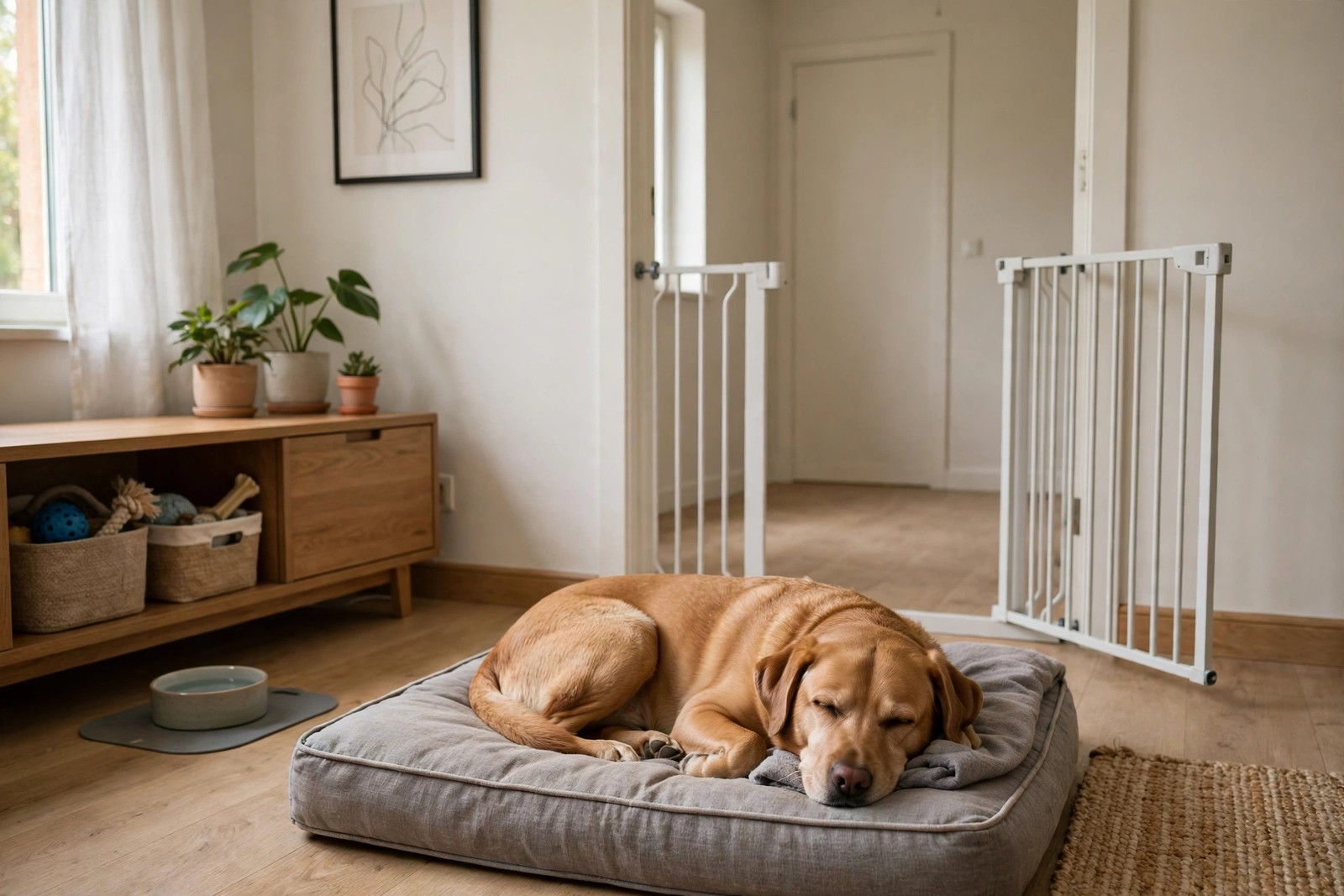
Whole-house access is a graduation, not a starting point. Some adult dogs can be trusted with the run of a well-proofed home for hours; many cannot, and the difference is rarely obedience. It is age, housetraining reliability, chewing history, anxiety when left, and how many hazards your particular house puts within reach of a bored, unsupervised dog.
The criteria worth insisting on
Consider full access only when your dog has been reliably housetrained for an extended stretch, with no indoor toileting even when the routine is disrupted. They should be past the adolescent chewing phase and have shown, while you are home but not watching, that they leave shoes, furniture, remote controls, and bins alone. They should settle when left, resting rather than pacing, barking at windows, or scratching at doors, because a dog who is anxious with more space often does worse, not better, with rooms to patrol. Finally, they should have no history of raiding food, bins, or laundry, since socks, cooked bones, medication, and cleaning products turn freedom into a vet visit faster than any other factor.
Puppies fail almost every criterion by definition, and newly adopted dogs need time to learn both the house rules and that you come back. Both start confined, and that is care, not punishment.
Proofing room by room, honestly
Walk each room at dog height and remove what an unsupervised dog could reach: medicines and cleaning chemicals behind closed, latched doors, food off counters or in cupboards, bins with locking lids or bins removed, cables tidied, small swallowable items lifted, and doors to rooms you cannot proof kept shut. Kitchens and bathrooms are usually the last rooms a dog earns, because they concentrate food, chemicals, and bins. Check what your dog can open; many dogs learn lever handles, cupboard doors, and pedal bins, and proofing that worked last month may not work now.
Trial stages that tell you the truth
Extend freedom in steps you can verify. Start with the dog's one proofed room while you are out briefly, then add a hallway or second room, lengthening absences gradually only after several clean, calm returns in a row. A camera, even a simple one, transforms guesswork into evidence: a dog asleep on their bed for three hours is ready for more space, while a dog who seemed fine but is filmed pacing and whining needs a step back and help with being left, not more rooms. If you return to damage or toileting, return calmly to the previous stage without scolding; the dog was given more than they could handle, and that is information, not defiance.
The dogs who do better with less space
Many dogs genuinely prefer a smaller, den-like area with their bed, water, and safe chew items to an empty house they feel they must monitor. Senior dogs may need confinement near a door for toilet ease, dogs in multi-pet homes may need separation while unsupervised, and a dog recovering from injury may need restriction on vet advice. The goal was never maximum space; it is a dog who is safe and relaxed until you return.
Staged freedom only works if everyone respects the stages, and KinsLe Family Sharing shares your dog's cleared rooms, proofing notes, and current stage on one profile, so nobody accidentally gives them the whole house too soon.