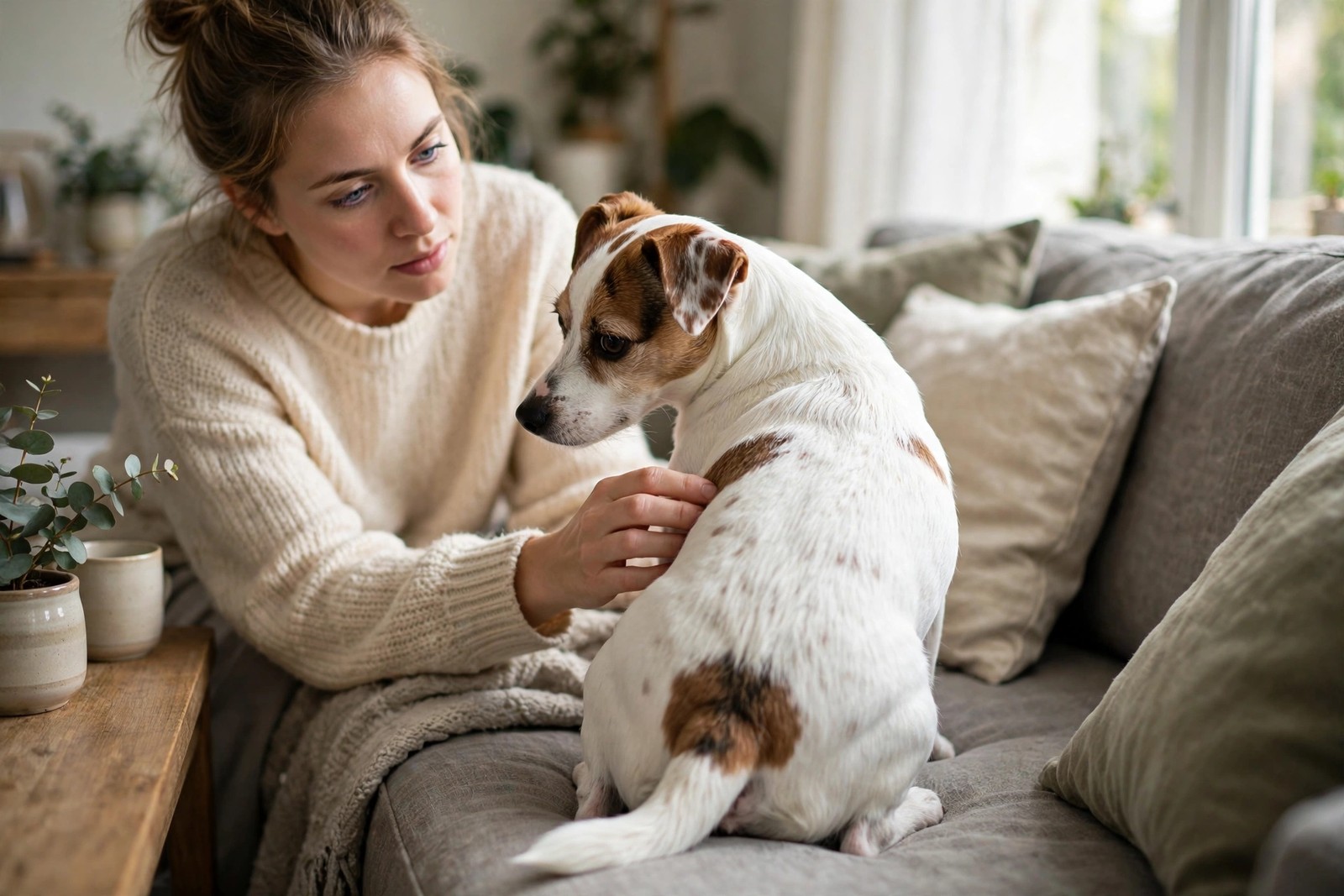
Anal glands, often called anal sacs, are two small pouches sitting just inside your dog's anus at roughly the four and eight o'clock positions, each one lined with glands that produce a thick, intensely strong-smelling fluid. They are scent organs, close cousins of the glands a skunk uses, scaled down for communication rather than defence. Every dog carries them, male and female, large and small, and in a dog whose system works as designed, you will never need to think about them at all.
How Healthy Glands Empty Themselves
Each time a dog passes a firm stool, pressure from the stool and the muscles around the anus squeezes the sacs, and a few drops of fluid coat the stool as it leaves. That coating is thought to be part of how dogs leave individual scent information for one another, which is why dogs investigate each other's droppings and rear ends with such dedication. Firm stools do the squeezing properly; a dog passing consistently soft stools may not generate enough pressure, which is one reason glands and digestion are linked.
Most dogs empty their glands this way, unaided, for their whole lives. Emptying by hand is not a routine every dog needs, and glands that are working normally are best left alone.
Why Some Glands Fill Instead of Emptying
Problems start when fluid is produced but not expressed. The sacs gradually fill, and the fluid inside thickens the longer it sits, making natural emptying harder still. Smaller breeds are affected more often, as are overweight dogs, dogs with persistently soft stools, and dogs with allergies or skin irritation around the rear, where swelling of the surrounding tissue narrows the tiny ducts the fluid escapes through. Conformation plays a part too: some individual dogs simply have glands positioned so they empty poorly, and those dogs tend to need help repeatedly through life.
A full gland is uncomfortable in a way a dog cannot explain: a feeling of pressure and fullness at the rear that drives the licking, chewing and bottom-dragging owners notice. Left fuller for longer, a gland can become impacted, with the contents hardening, and bacteria multiplying in a warm, sealed, nutrient-rich sac can turn impaction into infection.
From Discomfort to Abscess
An infected gland is a genuinely painful problem. The area beside the anus swells, reddens and becomes sore to sit on, and if the infection is not treated it can form an abscess, a pocket of pus under pressure that may eventually burst through the skin beside the anus, leaving a draining wound. That sequence, from a quietly filling gland to a burst abscess, is the real reason glands that cannot empty themselves need attention at the clinic rather than patience at home.
Because emptying a sore, infected or impacted gland is a clinical task, this belongs with your vet, not with a home technique learned from a video. What the clinic does is assess whether the gland is simply full, impacted or infected, empty it appropriately, and judge whether anything further is needed.
Knowing Your Own Dog's Pattern
Once a dog has needed help once, note the interval, the signs that showed first, and what the clinic found, since that dog will likely need checking on a similar rhythm in future. Scooting, licking at the rear, a fishy smell that lingers after bathing, reluctance to sit, or swelling beside the anus all belong on the call-the-clinic list rather than the wait-and-see list. Repeated episodes deserve a wider vet conversation about weight, stool quality and allergies, since treating the reason glands fill beats emptying them forever.
KinsLe records each gland visit in the Pet Passport, holding the dates, findings and interval notes alongside the rest of your dog's veterinary history.