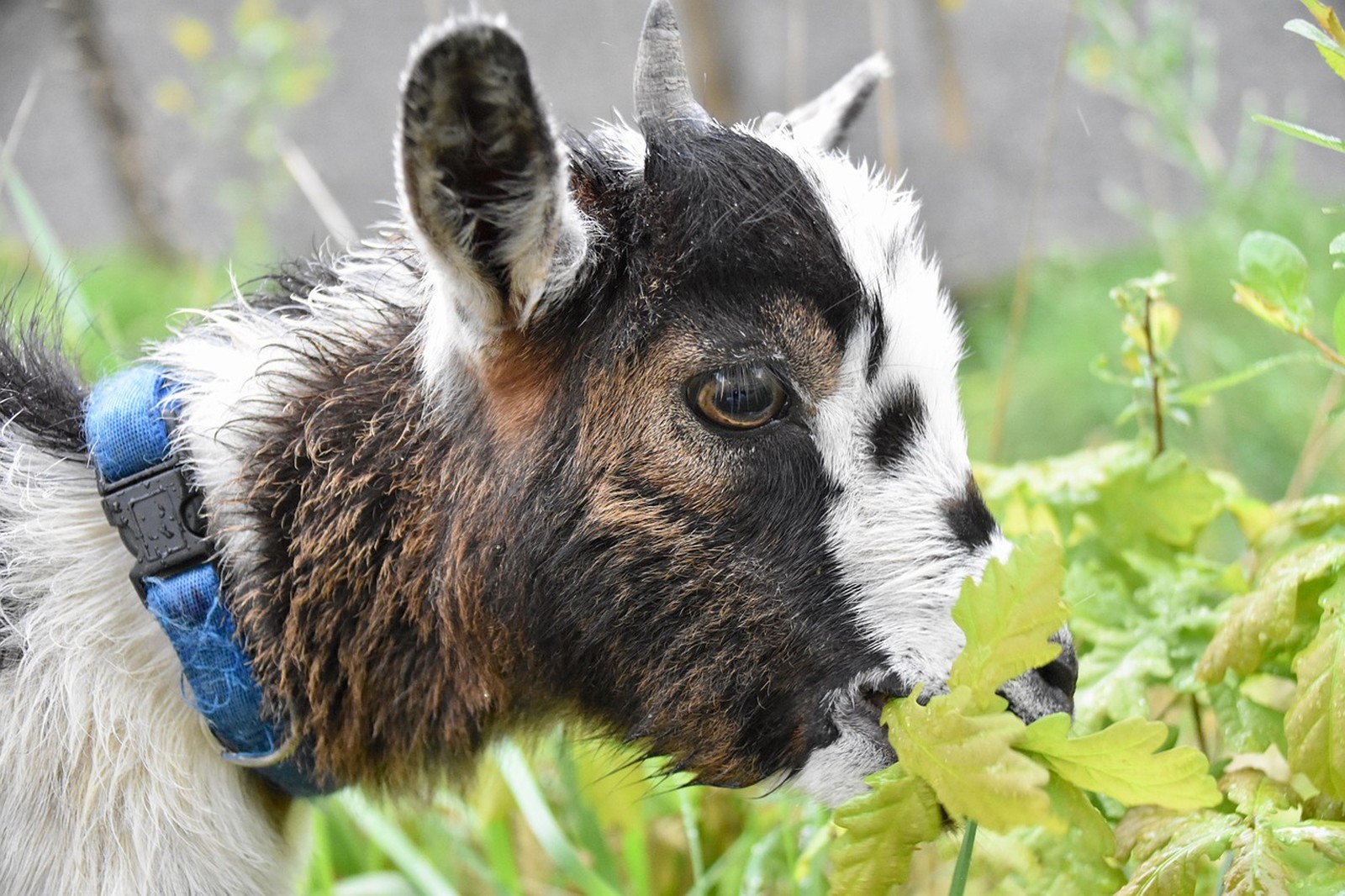
Daily goat health is mostly pattern recognition. Goats are creatures of rhythm, and a herd in good health looks remarkably consistent from one morning to the next: the same eagerness at the fence, the same cud chewing during the quiet hours, the same droppings in the same places. You are not looking for perfection in any single goat; you are learning each animal's normal so well that a deviation catches your eye before it becomes a crisis.
Bright, Social, and Interested
Begin with demeanor. A healthy goat is alert, with ears up and eyes following what moves, and stays woven into the herd's social fabric — jostling at the hay rack, resting near companions, answering your arrival with interest. Goats are deeply social animals, so a goat standing alone in a corner, facing a wall, or lagging behind the group is telling you something before any physical sign appears.
Eating, Cud Chewing, and What Comes Out
Digestion is the goat's engine, and it announces itself clearly. During rest periods, a healthy goat chews cud — bringing up a bolus, chewing it thoroughly with that sideways grinding motion, swallowing, and repeating. A ruminating goat is a goat whose whole system is ticking over, and a goat who has stopped chewing cud deserves close attention the same day. At the other end, look for the usual firm, individual pellets in normal quantity; watery droppings, straining, or a soiled rear are changes worth noting and watching closely. Drinking matters too: the herd should visit water steadily across the day, and clean water should always be there to be visited.
Eyes, Breathing, Coat, and Movement
Eyes should be bright and clear, without thick discharge or cloudiness, and check the color of the inner eyelid and gums the way your veterinarian has shown you — a healthy pink, not pale. Breathing at rest should be quiet and unhurried, with no persistent cough, no raspy noise, and nostrils free of heavy discharge. The coat in a healthy goat lies smooth and carries some shine, with skin underneath free of scabs, raw patches, or relentless scratching against fences. Movement should be even and willing: the goat rises without struggle, walks out soundly, and bears weight on all four feet, with hooves that are not overgrown or foul-smelling. Run a hand along the ribs and spine as you pass; condition should feel steady week to week, because slow loss hides easily under a winter coat.
Changes That Earn a Vet Call
Certain deviations skip the watching stage entirely. Call your veterinarian promptly for a goat who stops eating or cudding, isolates from the herd, shows labored or noisy breathing, bloats, develops watery diarrhea, cannot rise, or seems suddenly dull and unresponsive. Many goat illnesses — parasite burdens, infections, digestive upsets, and more — are possibilities a veterinarian investigates from exactly these early signs, and goats tend to decline faster than their stoic behavior suggests.
Keeping a Baseline for Every Goat
Individual goats differ: one is always first to the feeder, another always hangs back politely, and normal for one would be alarming in another. Written baselines turn that knowledge into something the whole household, and your veterinarian, can use. This is the quiet strength of the Pet Passport on KinsLe for a herd: each goat's packet holds the individual record — usual condition, appetite character, kidding and health history, past treatments as labeled by your veterinarian — so the animal who seems slightly off this morning can be compared against a personal history instead of a guess. Logging the daily signs — appetite, cud chewing, droppings, demeanor — as a dated note when something looks different takes seconds and builds, over a season, into the clearest health picture your herd has ever had. Baselines only stay useful while they stay current, and KinsLe's Pet Passport gives every goat in the herd an individual home for exactly those everyday observations.