
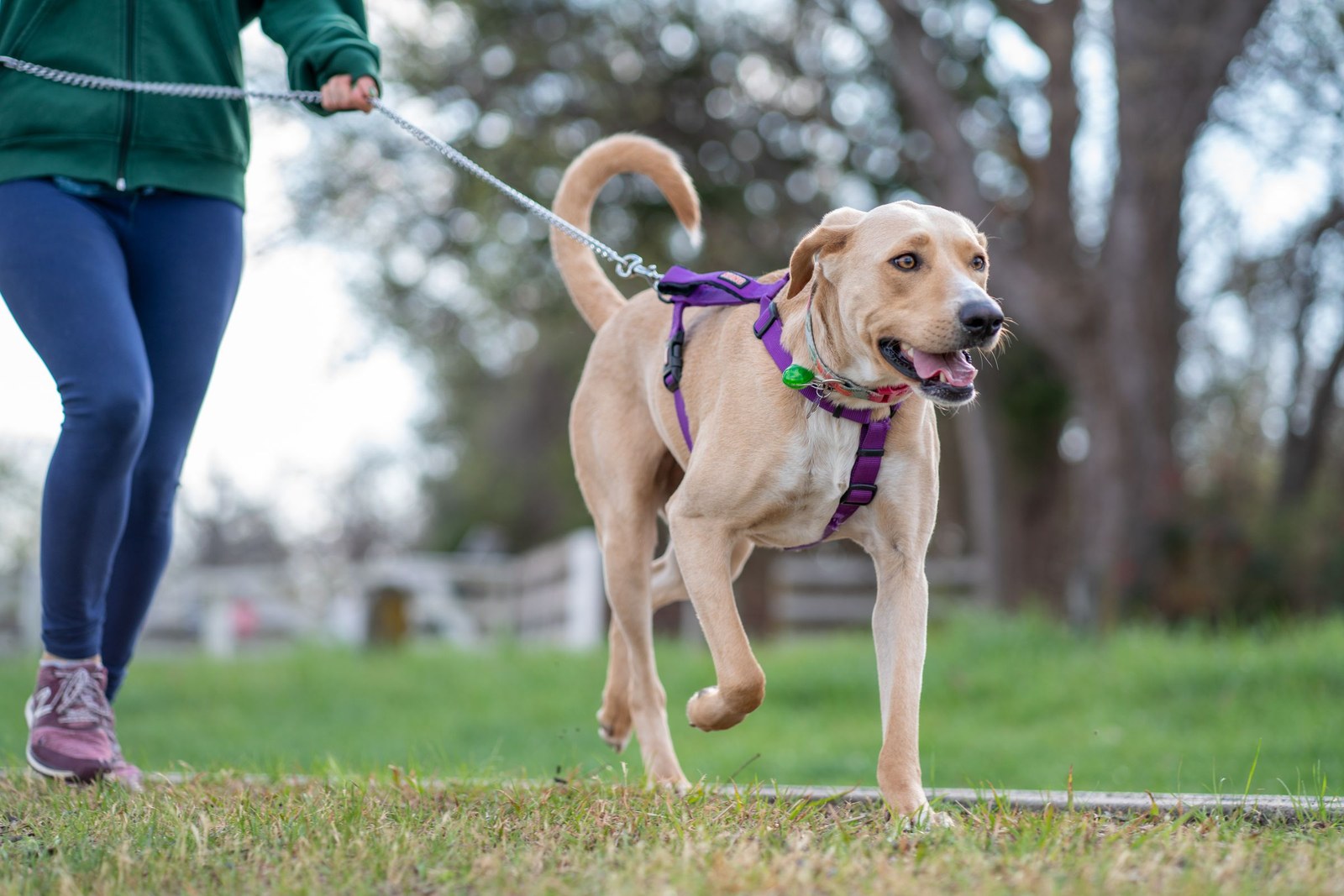
Gentle, low-impact activities for an older dog include sniff-led walks at your dog's pace, easy food puzzles, low-pressure trick training, and — with your veterinarian's approval — swimming or hydrotherapy, all stopped while your dog is still enjoying them.
The Sniff Walk: Exercise That Respects Old Joints
For most seniors, the classic brisk neighborhood loop should become a sniff walk. The distance shrinks; the sniffing expands. Nose work is genuine mental exercise, and a dog who spends twenty unhurried minutes investigating a park edge often comes home more satisfied than one marched a mile on pavement.
Let your dog choose the pace and, within reason, the direction. Build in standing rest stops. Keep the leash loose so your dog is not pulling sore shoulders forward, and choose soft surfaces — grass and dirt trails are kinder than concrete. On hot or icy days, shorten further: temperature extremes hit older dogs harder.
Watch the recovery, not just the walk. Heavy stiffness or reluctance to rise hours later usually means the outing was a little too long, even if your dog seemed keen at the time.
Brain Games That Don't Punish the Body
Food puzzles, snuffle mats, and scatter feeding in short grass turn part of the daily ration into an activity without a single jump or sprint. Start easy — a muffin tin with kibble under tennis balls, or treats rolled in a towel — so your senior succeeds quickly. Frustration is not enrichment.
Gentle trick training works the same way. Teach a chin rest, a slow spin if balance allows, nose touches to your hand, or "find it" with a hidden treat. Keep sessions to a few minutes, reward generously, and skip anything that asks for repeated sitting if hips are sore — repeated sit-to-stand can be the canine equivalent of squats.
Water, With a Vet Check First
Swimming and underwater treadmill hydrotherapy support the body while muscles work, which is why they are often suggested for arthritic or post-recovery seniors. They are not right for every dog — heart conditions, ear issues, open skin problems, and fear of water all change the picture — so ask your veterinarian before starting, and use a supervised facility with a canine life vest and a proper entry ramp rather than a slippery pool edge or a lake bank.
Never throw a senior dog into water to "see if they swim," and always dry them thoroughly afterwards, since older dogs chill quickly.
Know When to Stop and When to Ask
End every activity while your dog is still bright. Panting that does not settle, lagging behind, sitting down mid-walk, or unusual quietness that evening are signs to scale back. A sudden refusal to do a beloved activity, yelping, or a limp that persists deserves a veterinary visit rather than a new activity plan.
Finding Senior-Friendly Help With the Pet Services Directory
You do not have to invent all of this alone. KinsLe's Pet Services Directory helps you find local groomers, veterinarians, sitters, and trainers, and it is the place to look for gentle, senior-aware groomers who will work at your dog's pace, as well as rehab and swim providers in your area. A groomer who offers shorter, split appointments, for example, can be the difference between a stressful ordeal and a comfortable tidy-up for an old dog who cannot stand for long. On KinsLe, the Pet Services Directory listings point owners toward a veterinarian who can judge whether swimming suits a senior dog, plus rehab support built around slow, joint-kind sessions.