Hardy means a fish tolerates the small mistakes every beginner makes — a slightly late water change, a degree or two of temperature drift — without becoming ill. It does not mean any fish can survive an uncycled tank. Cycle the aquarium first, stock slowly, and then choose from species with a long record of thriving in ordinary home conditions.
Reliable First Choices for a Heated Community Tank
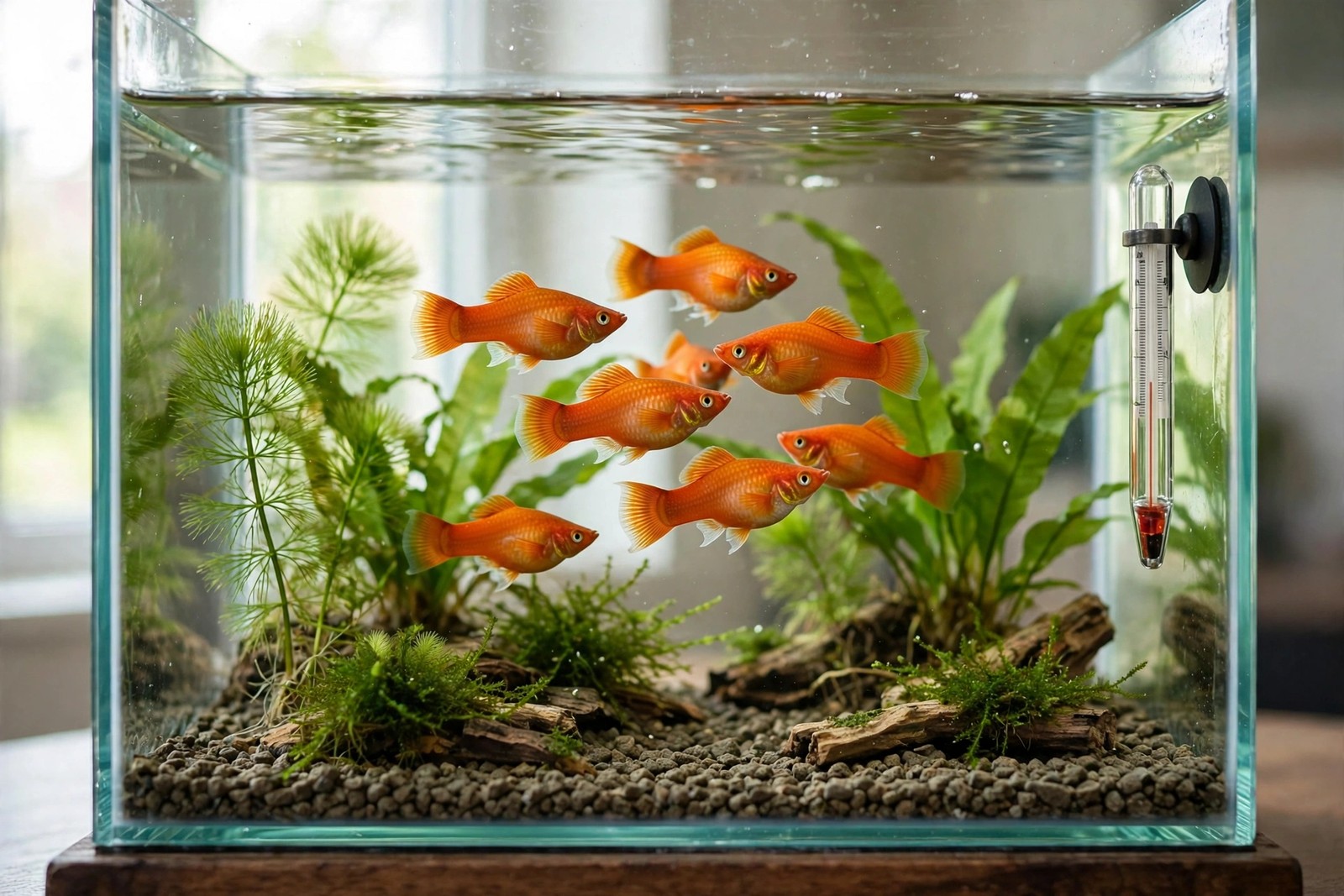
Platies are near the top of most experienced keepers' lists: peaceful, colourful, active in the middle of the tank, and tolerant of a wide range of ordinary tap-water conditions. They are livebearers, so buy only males, only females, or accept fry and a plan for them. Guppies share those strengths and the same breeding warning, though heavily bred fancy strains can be less robust than plainer fish — buy from healthy-looking, active stock.
Zebra danios are exceptionally tough, fast, and entertaining, best kept in a group of six or more with swimming length to use. They suit slightly cooler water than many tropical fish and can be a little boisterous for slow, long-finned tankmates, so pair them with similarly brisk species.
Cooler and Unheated Options
White cloud mountain minnows are small, peaceful, and genuinely happy without a heater in most homes, which makes them one of the easiest first fish of all — provided the room does not swing wildly in temperature. A group in a modest planted tank is a beautiful, low-demand start. Check local rules and never release aquarium fish outdoors; hardy is precisely why they must stay in the tank.
Bottom Dwellers, With One Timing Warning
Corydoras catfish are hardy, social, and endlessly busy over sand or smooth gravel, and they belong in groups of their own kind. Their one condition is timing: add them after the tank has been running stably for some weeks, because brand-new tanks offer them little of the settled biofilm and stable chemistry they do best in. Bronze and peppered corydoras are among the most forgiving species for a beginner.
What to Avoid Despite the Sales Pitch
Skip goldfish for a small starter tank — they grow large, produce heavy waste, and need far more space and filtration than beginners expect. Avoid fish sold as hardy that are really just cheap, such as common plecos that outgrow almost any home aquarium. Be cautious with bettas as community fish, not because they are delicate but because their compatibility depends heavily on the individual and the tankmates. And avoid adding many species at once: one group, settled for a few weeks, teaches you more than a crowded instant community.
Habits That Make Any Fish Hardier
Test the water during the first months, change part of it regularly, feed lightly once or twice a day with nothing left uneaten after a couple of minutes, and quarantine or at least closely observe new arrivals. Most early losses trace back to overfeeding and overstocking, not to the species chosen. Sharing those early tests, feeds, and water changes through KinsLe's Care Teams, each one marked done with a timestamp, keeps a new aquarium's routine steady even when the person who set it up is away.