
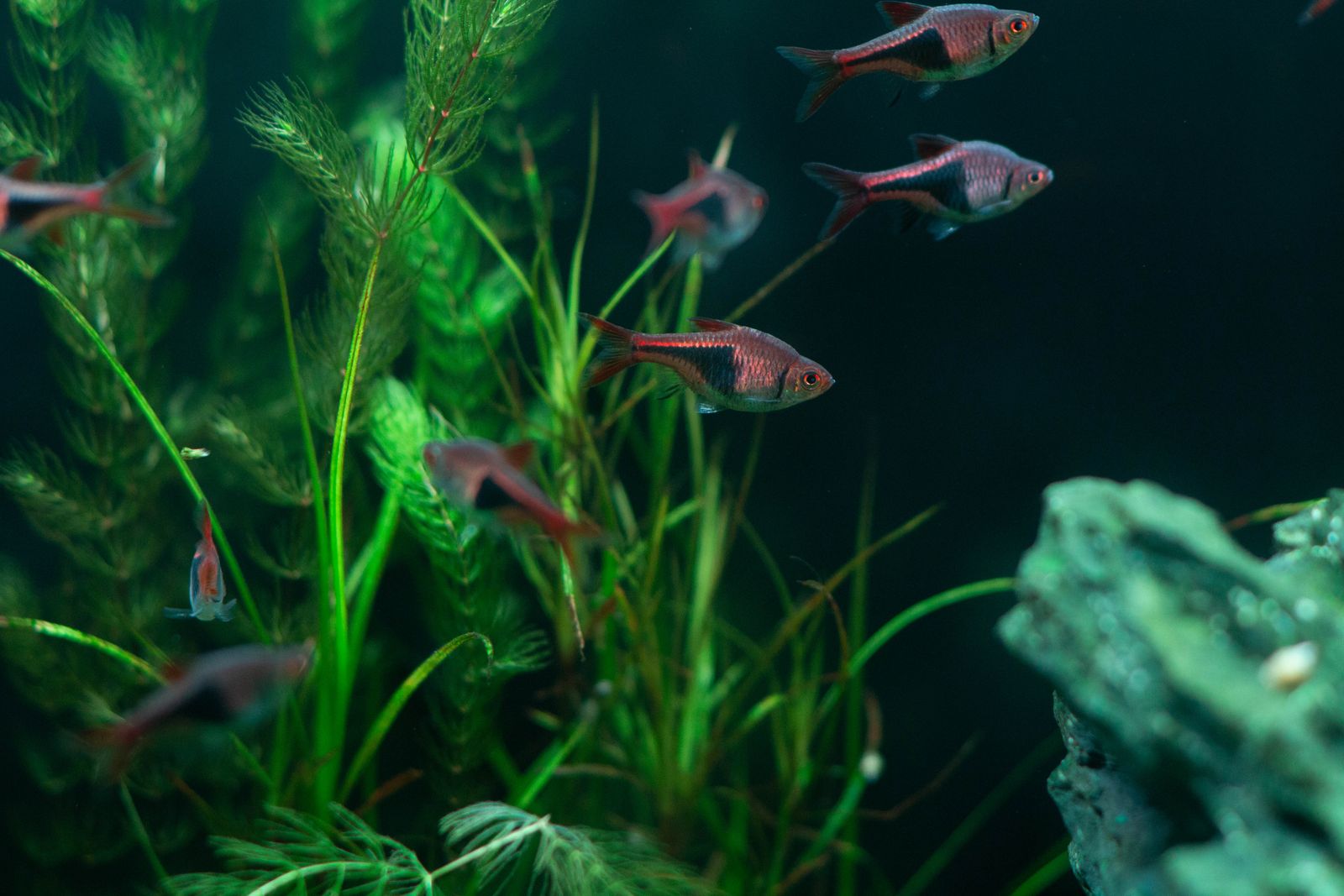
The best beginner freshwater fish are hardy, peaceful species that forgive the small mistakes every new keeper makes: guppies and platies, corydoras catfish, harlequin rasboras, cherry barbs, and hardy tetras like neons or black skirts. These fish adapt well to a range of water conditions, eat readily available foods, and get along in community tanks. Start with one or two species, learn their rhythms, and add slowly — the beginner's biggest mistake isn't the wrong fish, it's too many fish too fast. A calm, lightly stocked tank teaches you the hobby; an overstuffed one teaches you water chemistry the hard way.
Why these species work for newcomers
Guppies and platies are colorful, active, and breed readily — watching fry appear is pure delight for a first tank. Corydoras catfish are gentle bottom-dwellers that shoal together and sift the substrate, adding life to the tank's lower levels. Harlequin rasboras and tetras school beautifully, which means you get that mesmerizing synchronized swimming with a single group of six or more. All of them stay small, eat standard flake or micro-pellet foods, and tolerate the minor parameter wobbles of a new tank far better than sensitive species.
Fish to save for later
Skip the delicate or demanding at first: discus need pristine, warm, soft water and expert feeding; many dwarf cichlids are territorial; common plecos sold as tiny algae-eaters grow into foot-long tank-wreckers; and "sharks" like red-tailed sharks get aggressive in small tanks. Fancy goldfish need big tanks and heavy filtration despite their beginner reputation. There's no shame in a simple tank — the prettiest aquariums are often the most understated.
Setting up for success
Cycle the tank before any fish arrive — an uncycled tank is the number one beginner killer. Choose a tank of at least 20 gallons if you can; larger water volumes dilute mistakes. Add a proper heater, a reliable filter, and a thermometer you actually look at. Plant a few easy live plants like java fern or anubias — they improve water quality and give shy fish cover. Stock in stages: one small school, wait two weeks, check your readings, then consider the next addition.
Learning each species' needs
Even "easy" fish have preferences. Corydoras want smooth substrate and groups of six plus. Tetras and rasboras need schools to feel safe — three lonely neons are stressed neons. Livebearers like guppies produce constant fry, so have a plan. Read up on adult size, temperament, and water preferences before you buy, and buy from a store whose tanks look clean and whose staff can tell you what the fish have been eating.
How KinsLe helps
Every fish in your growing community can have its own KinsLe profile, each with a unique QR ID — so your guppy school, your corydoras crew, and that centerpiece honey gourami each get their own identity, photos, and notes from day one. It's a lovely way to track who arrived when and how each group is doing. Through KinsLe, Verified QR ID Pet Profiles give every new fish a page a finder reaches by scanning its code, with the keeper's details waiting on arrival.