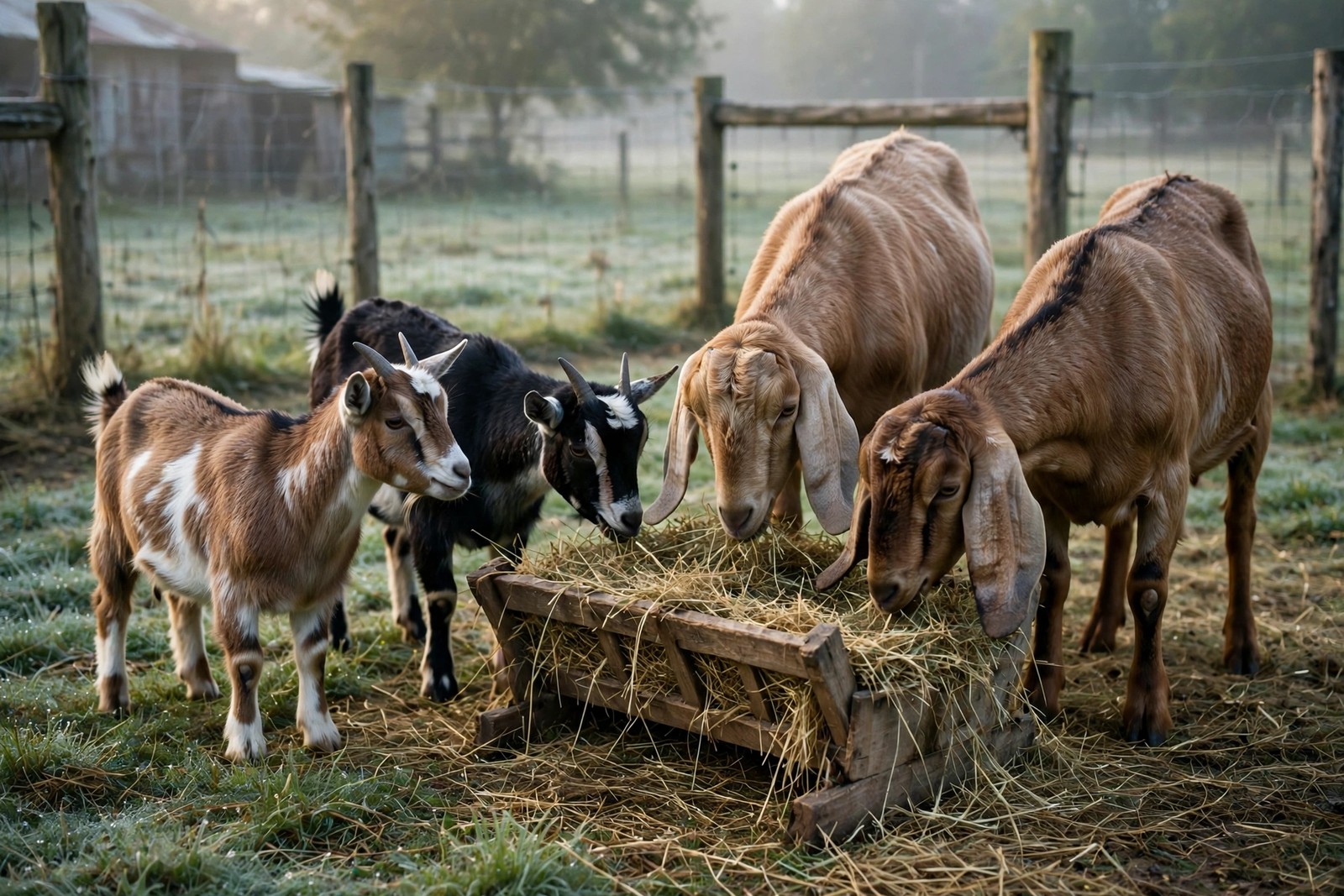
Goat breed choice starts with one honest question: what is this herd for? Milk, meat, brush clearing, showing, or companionship each point to different animals, and the breeds that dominate small farms have earned their place by doing one of those jobs reliably on modest acreage with manageable feed bills. All goats need secure fencing, dry shelter, a herd companion, and routine hoof and parasite care, but within that shared baseline the common breeds differ a lot.
The Dairy Breeds Most Small Farms Keep
Nigerian Dwarf goats are the small-space dairy favourite: fully grown does stand under two feet at the shoulder, eat far less than a standard dairy goat, and produce milk with notably high butterfat that suits cheese and soap making. Their small size makes handling, hoof trimming, and transport easier, though the milk volume per milking is modest. Nubians are the opposite shape of dairy goat — large, long-eared, and vocal — giving good volumes of rich milk and thriving in warm climates, though they are famously loud for a smallholding near neighbours. Alpines are athletic, upright-eared, and hardy, bred in mountain country; they produce generous milk over a long lactation and handle cold well, but they are energetic climbers who test fencing. LaManchas, recognisable by their tiny ear flaps, have a calm, people-friendly reputation that makes them a good first full-size dairy breed. Any dairy choice means milking once or twice daily through the lactation, plus breeding decisions each year, so the commitment is closer to keeping a cow than keeping a pet.
Meat and Dual-Purpose Breeds
Boers are the standard meat breed on small farms: broad, fast-growing, and heavily muscled, with kids that reach a useful weight efficiently on forage and modest feed. A Boer herd still needs the same fencing and shelter as any goat, but there is no daily milking, which changes the workload completely. Spanish and Kiko goats, kept more for hardiness and low-input meat production, browse rough ground well and are often chosen where pasture is scrubby. Pygmy goats sit at the smaller end: stocky, friendly, and commonly kept as pets, for showing, or for small-scale meat and brush work, and their size suits a genuinely small plot — though even a Pygmy can wreck weak fencing and needs a goat companion, never a solitary life.
Choosing Between Them in Practice
Work backwards from your land and your day. A homestead wanting household milk on half an acre often lands on two or three Nigerian Dwarf does. A farm wanting milk to sell or for cheese at any scale usually chooses Alpines or Nubians and accepts the feed and space bill that comes with full-size animals. Meat production points to Boers or hardy crosses, and a family wanting characterful grazers points to Pygmies. Ask any breeder about disbudding, parasite management in your climate, and the health testing they do on their herd, and see the dam and the fencing the herd actually lives behind before paying a deposit. However you buy, get the animal's history in writing on the day, because KinsLe's Transferrable Profiles are built for exactly that handover, letting a goat's health records, breeding details, and routines transfer to you with the animal instead of being lost at the farm gate.