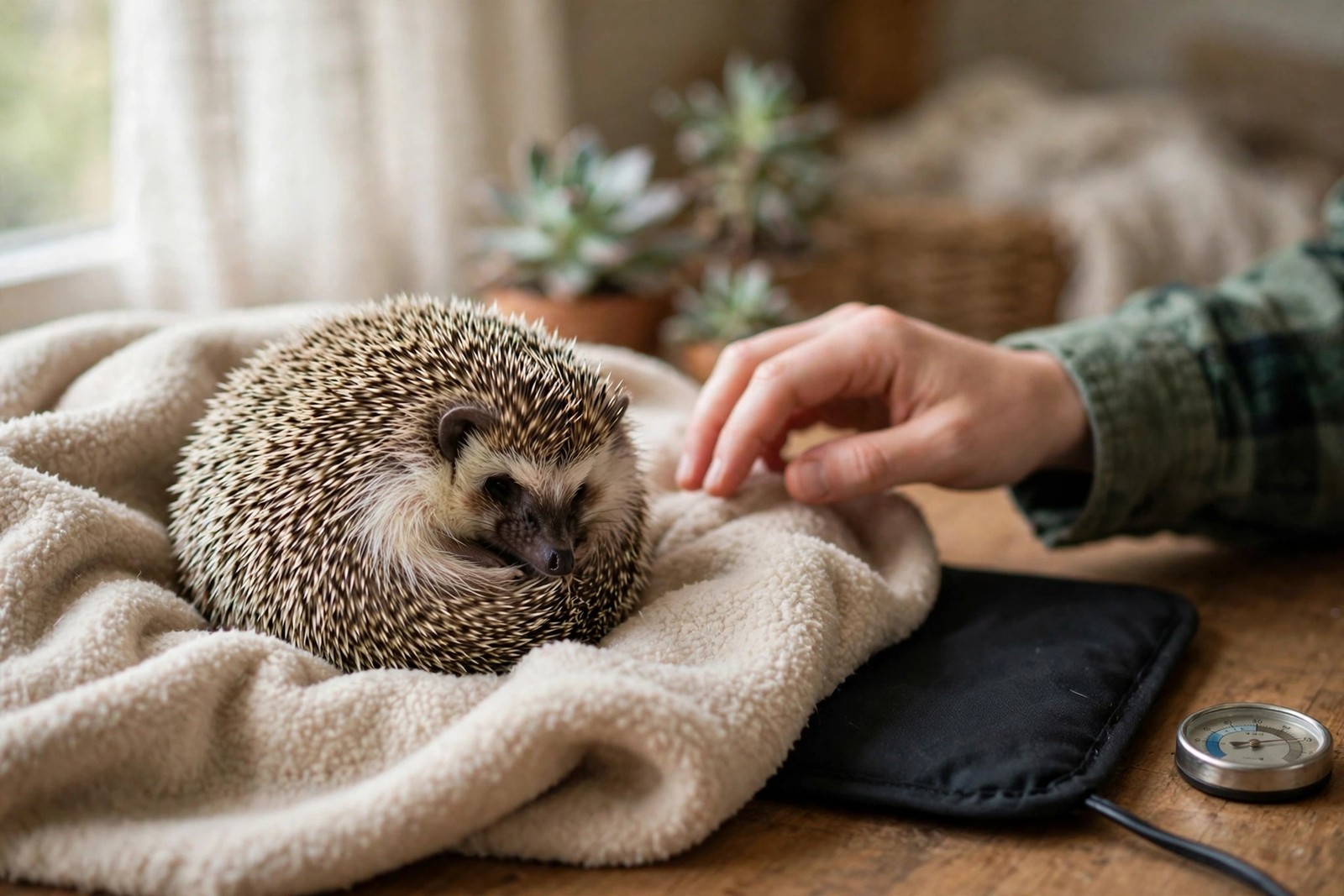
Cold changes a hedgehog's movement before it changes anything else. A hog who is normally quick to unroll and sniff around may instead stay balled, wobble on unsteady legs, or fail to respond when handled, and the belly that should feel warm against your palm feels distinctly cool. In pet African pygmy hedgehogs the serious version of this picture is an attempted hibernation: unlike their wild relatives, pet hedgehogs are not built to hibernate safely, and a hedgehog found curled, cold, and unresponsive — or wobbling and falling over when it does move — is in danger, because hibernation attempts suppress the immune system and are a common prelude to illness and death in pet hedgehogs. Pet hedgehogs need their environment held roughly in the low-to-mid 20s °C (about 73–78 °F) around the clock.
Warming a Cold Hedgehog — Slowly and Safely
Warm a cold hedgehog gradually with body heat or a warm (not hot) water bottle wrapped in cloth beside — not under — them in a small enclosure; never use direct high heat, hot water, or a hairdryer, and never offer food or water until the hedgehog is fully warm, active, and moving normally, because a cold gut cannot cope with a meal. A hedgehog who warms up, unrolls, and behaves normally within an hour or so should still be watched closely for the next few days — cold episodes are often followed by respiratory infections and appetite loss, and the cage heating needs fixing the same day (a ceramic heat emitter on a thermostat, plus a cage thermometer, is the standard reliable setup). A hedgehog who does not warm and perk up promptly, or who repeatedly attempts hibernation despite a warm cage, needs an exotics vet: repeated attempts signal something else is wrong.
What to Tell the Vet After a Cold Episode
For this species, the details surrounding the episode matter as much as the episode itself. Write down the cage temperature when you found your hedgehog, how long warming took before unrolling and walking returned, and whether eating resumed that night or stayed poor. Note any sneezing, clicking breaths, or runny nose over the following days, since breathing trouble often follows a chill in hedgehogs. An exotics veterinarian, not general information, decides whether an examination or further investigation is needed, and a hog who stays cold, limp, or unresponsive after gentle warming needs that appointment the same day rather than another night of watching.
Keeping those readings together turns a frightening night into a usable record: the temperature dip, the warming time, and the next few days of appetite and droppings show a pattern that memory alone blurs. A second episode, a slower recovery, or a cage that keeps slipping below range each point to a different fix, and dated entries make the change visible at a glance. For the next appointment, gather cage-temperature readings, warming times and appetite notes inside the Pet Passport on KinsLe, so your hedgehog's vet sees the whole cold episode at once.