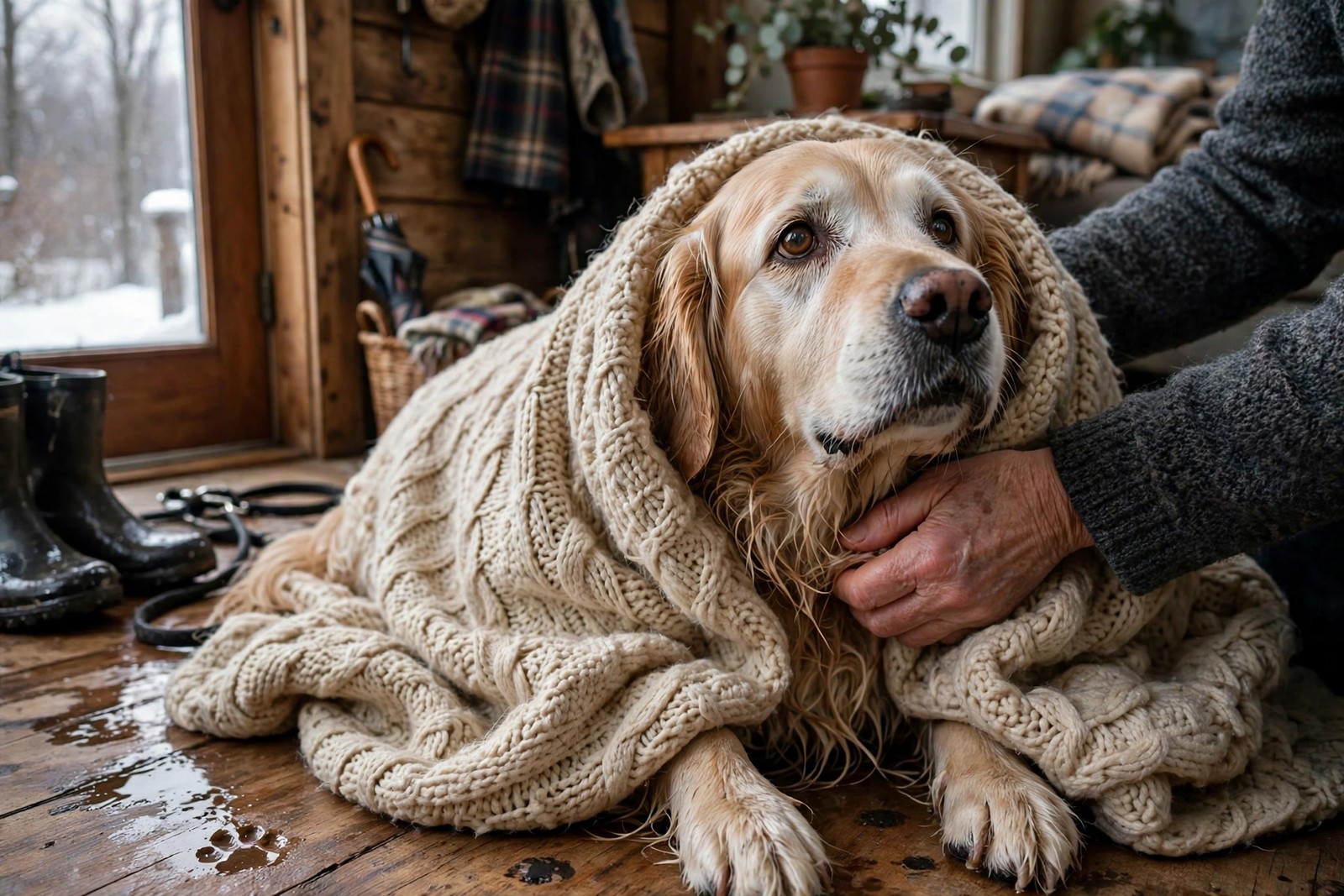
The earliest picture is a dog who shivers, grows anxious, slows down, lifts their paws one after another, and starts hunting for shelter or the way home. Those are your cue to end the outing. More serious warnings — weakness, lethargy, stumbling, or a dog who stops shivering despite still being cold — mean your dog needs to get inside and warm up right away, and a veterinarian should be contacted urgently if they seem disoriented or do not perk up as they warm.
Early signs: end the walk here
Shivering is the body's attempt to generate heat, and in a dog who is out in winter weather it should be read as a message, not a personality quirk. Anxious behavior in a normally confident dog — whining, clinging, tucked tail, ears back — often arrives with it. So does the paw dance: lifting one foot, then another, because the ground itself is painfully cold. Behavior changes are just as telling. A dog who slows, lags behind, sits down, seeks doorways or parked cars for shelter, or pulls toward home has decided, correctly, that this is enough. Believe them. Small, short-coated, lean, young, old, and unwell dogs reach this point far sooner than big double-coated breeds, who may show almost none of these signs in the same weather — which is why the threshold belongs to the individual dog, not the breed chart alone.
Serious signs: act immediately
Weakness, wobbliness, unusual sleepiness, or a slow, dull response as a dog warms up are not normal tiredness after a walk. A dog who was shivering hard and then stops while still exposed is a particular worry, because it can mean the body is struggling to keep generating heat. Pale, cold-feeling ears and body, confusion, or collapse all mean urgent veterinary contact. Do not rely on how a hardy dog looks, either. Even cold-loving breeds can be overwhelmed by wind, wet fur, exhaustion, or a long time standing still in deep cold. Duration matters: a dog playing vigorously stays warmer than a dog waiting tied outside a store in the same temperature.
Warm your dog up the right way
Bring your dog inside, dry them thoroughly with towels, and warm them gradually with blankets in a comfortably warm room. A wrapped warm — not hot — water bottle against the body can help. Offer room-temperature water once they are alert and interested. Avoid intense direct heat. Do not use very hot water, heating pads on high, or a hair dryer held close, because cold skin can be damaged easily and warming too fast is hard on the body. Gradual is the goal. Keep watching for the next half hour: a mildly chilled dog should return to normal energy, appetite, and interest. If yours does not — or if at any point they seem disoriented, limp, or unresponsive — contact a veterinarian urgently rather than continuing to watch at home.
Build cold days into the routine
On forecast-bitter days, shift the plan before the walk: shorter outings at midday, a coat for vulnerable dogs, indoor games and training for exercise, and no dog left waiting in a cold car or outside a shop. Check paws on return, since cold damage and packed ice often announce themselves after the walk ends.
Follow-up questions about cold days
Cold weather raises practical questions of its own: whether wind and wet fur make today a coat-and-short-walk day for your dog, what to look for when you check paws after a walk over frozen ground, and how to warm a chilled dog gradually. The signs themselves — shivering that will not settle, paws lifted off cold ground, a dog who seems dull or slow to perk up — call for action first: end the outing, get your dog inside, and warm them gradually, contacting a veterinarian urgently if they seem disoriented or do not perk up. For questions that remain once your dog is warm and settled, put a follow-up question to KinsLe's Kimmy; she answers using the KinsLe Answers library.