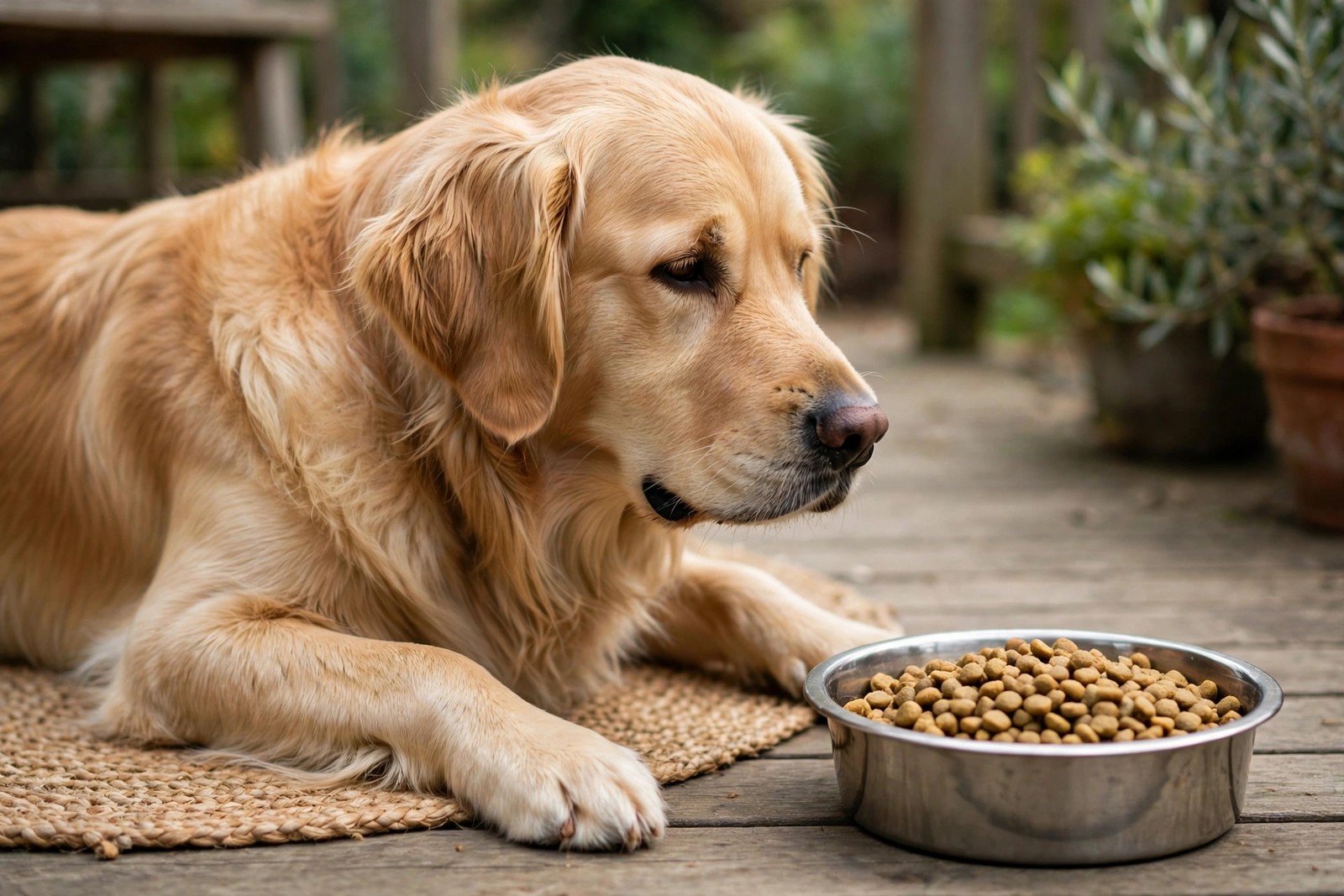
A food that does not agree with a dog rarely announces itself in a single dramatic day. The picture builds across digestion, skin, energy, and weight, and each strand on its own can look too minor to mention. Loose stools morning after morning for three weeks, alongside new itching and a coat losing its shine, form a pattern worth taking seriously. Your task as an owner is observation rather than diagnosis.
Digestive signs to notice first
Start with the stool, because it reports on the meal directly. Note consistency, frequency, mucus, urgency, and whether night-time trips outdoors have become regular. Extra wind, audible gurgling, grass eating, lip licking after meals, and occasional vomiting belong in the same record, with the hour they happened relative to feeding. Appetite patterns matter too. A dog who rushes the first mouthfuls then leaves the rest, eats eagerly on some days and picks on others, or has started refusing a food eaten happily for months may be linking the bowl with feeling unwell afterwards. Record treats, chews, table scraps, and anything scavenged on walks beside the main meals, since a diary that covers only the bag of food misses half the day's intake.
Skin, coat, ears, and energy over weeks
Slower signs arrive on a different clock. A coat that turns dull or flaky, skin that grows itchier, paws licked raw in the evening, head shaking, or ears that grumble repeatedly can accompany a food problem in some dogs, and each can also arise from entirely separate causes. Weight drifting while portions, treats, and activity stay steady is a concrete fact to bring to an appointment, unlike a general feeling that the food seems wrong somehow.
Building a two-week diary that a vet can use
Keep the diary plain and complete for a fortnight before you change anything. For each day, list the food and amount served, every treat and chew, the stool quality at each outing, any vomiting or gurgling with its timing, itching or ear signs scored simply as mild or strong, and appetite at each meal. Bring the diary to your appointment instead of summarising it from memory in the car park, because the details you forget are often the ones that reorder the clinician's thinking.
Changes to avoid while you gather evidence
Resist the rapid swap. Changing foods every few days resets digestion repeatedly, blurs every pattern, and can leave you with a dog who has eaten six recipes in a month and improved on none of them for long enough to judge. When you and your veterinarian agree a change is worth trying, move gradually across several days, mixing rising amounts of the new food with falling amounts of the old, and change one variable at a time. A food trial, where a restricted diet is used to test whether food plays a role, is a veterinary-guided project with a defined length and a strict treat rule, not a home experiment built from online ingredient lists. Do not label your dog allergic or intolerant from signs alone, and do not cut whole food groups without advice, because an unbalanced restriction creates a new problem while the original one stays unexplained.
Signs that should move the appointment forward
Some findings should not wait for a fortnight of notes. Book promptly for blood in stool or vomit, repeated vomiting, refusal of food lasting beyond a day in an adult or far sooner in a puppy, visible weight loss, marked lethargy, signs of dehydration such as dry gums and reduced urination, or a swollen abdomen. Otherwise, let the diary run, keep portions and treats steady, and take the record to a routine appointment where the conversation can cover diet history, body condition, and whether further checks or a guided trial make sense for your dog. That record stays complete inside KinsLe, where Care Teams gathers each feeder's entries, treat notes, and stool scores into one dated history you can hand over in full.