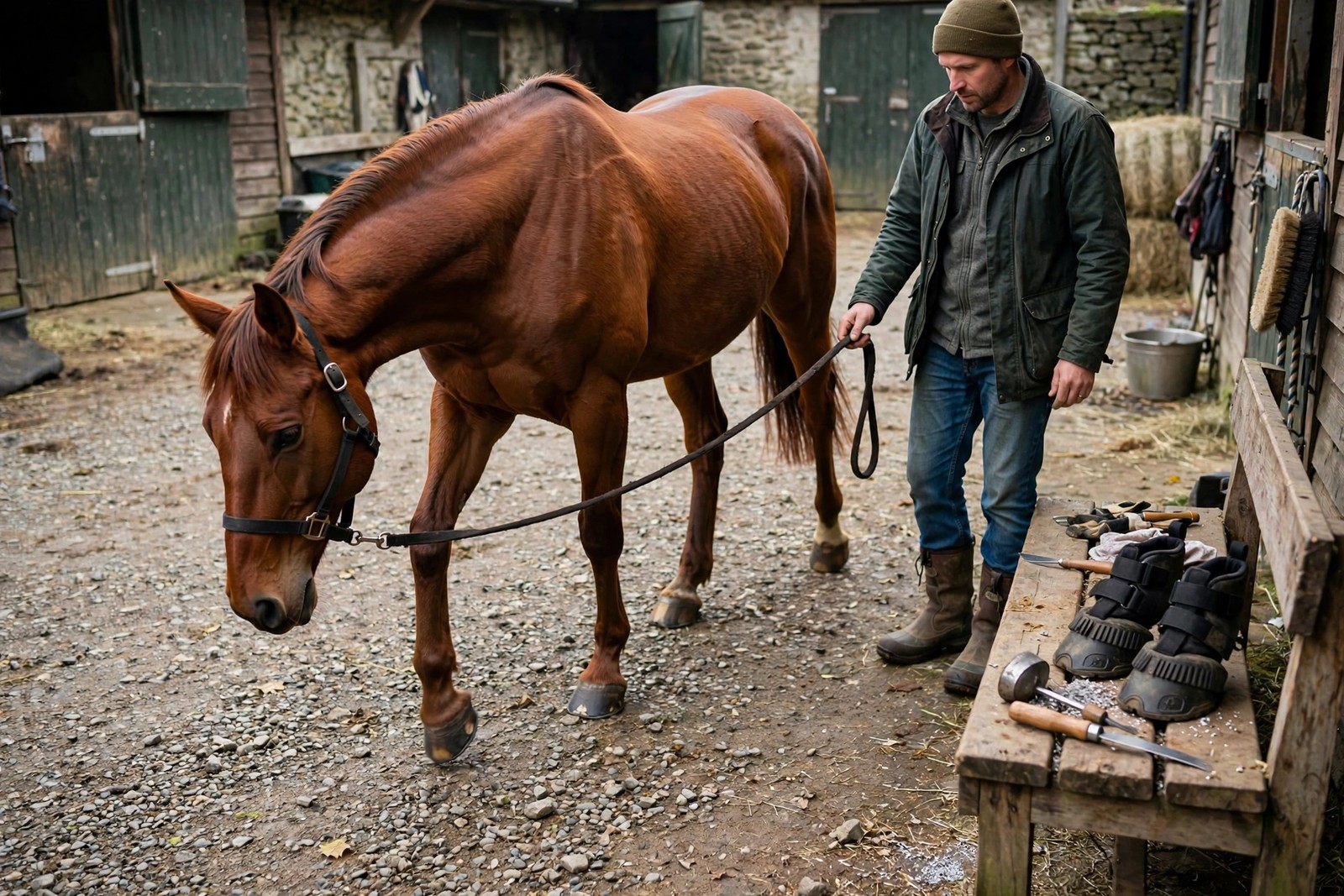
Going barefoot works well for many horses, but readiness is decided by the hoof and the ground, not by the calendar. A horse that is not ready tells you through its feet and its movement, usually within the first trim cycle, and the signs below are the ones farriers watch for before recommending more time, a slower transition, or shoes again.
Soreness That Follows Every Trim
Some mild sensitivity for a day or two after a first trim can settle as the hoof adapts, but repeated footiness after every trim — a horse that is reluctant to walk out of the stable, picks its way across the yard, or is still visibly sore three days after trim day — is a strong sign the feet are being asked for more than they can currently give. Note how long each episode lasts: shortening recovery is progress, while the same four sore days every cycle is a stalled transition.
Tenderness on Hard or Stony Ground
Watch the horse where the surface changes. A barefoot-ready horse walks across gravel and tarmac in the same rhythm it keeps on grass or arena surface. A horse that is not ready shortens its stride, lands toe first to unload the heel, veers toward any soft verge, or stumbles on stones it would normally step over. Test honestly on the surfaces the horse must actually cross daily — drive, gateway, and track to the field — not only on the softest route.
What the Hoof Itself Shows
Thin soles are a central warning: a sole that flexes under firm thumb pressure, a horse that flinches when the sole is pressed, or a flat foot with little depth between ground and bone leaves too little protection for hard work unshod. Add heat in the hoof wall, a digital pulse that feels stronger than usual at the fetlock, persistent chipping and cracking that outruns growth, and soles that bruise visibly after work, and the picture is consistent — the hoof capsule needs more time, different trimming intervals, or protection. Only a farrier or vet can judge sole depth properly, including with imaging where needed, so treat your observations as the reason to ask, not as the verdict itself.
What to Do With These Signs
Slow the transition rather than abandoning the idea on one bad week: reduce work on hard ground, keep turnout consistent, use hoof boots for hacking if your farrier agrees, and reassess after a full trim cycle with notes rather than memory. Sudden severe lameness, a hot foot with a strong pulse, or a horse unwilling to bear weight needs a vet promptly, not a wait-and-see note. KinsLe's Care Teams helps you run that observation period properly — daily soundness checks, surface notes, and trim dates can be assigned to whoever is at the yard, each marked complete with a timestamp, so your farrier sees a clear record instead of a summary from memory.