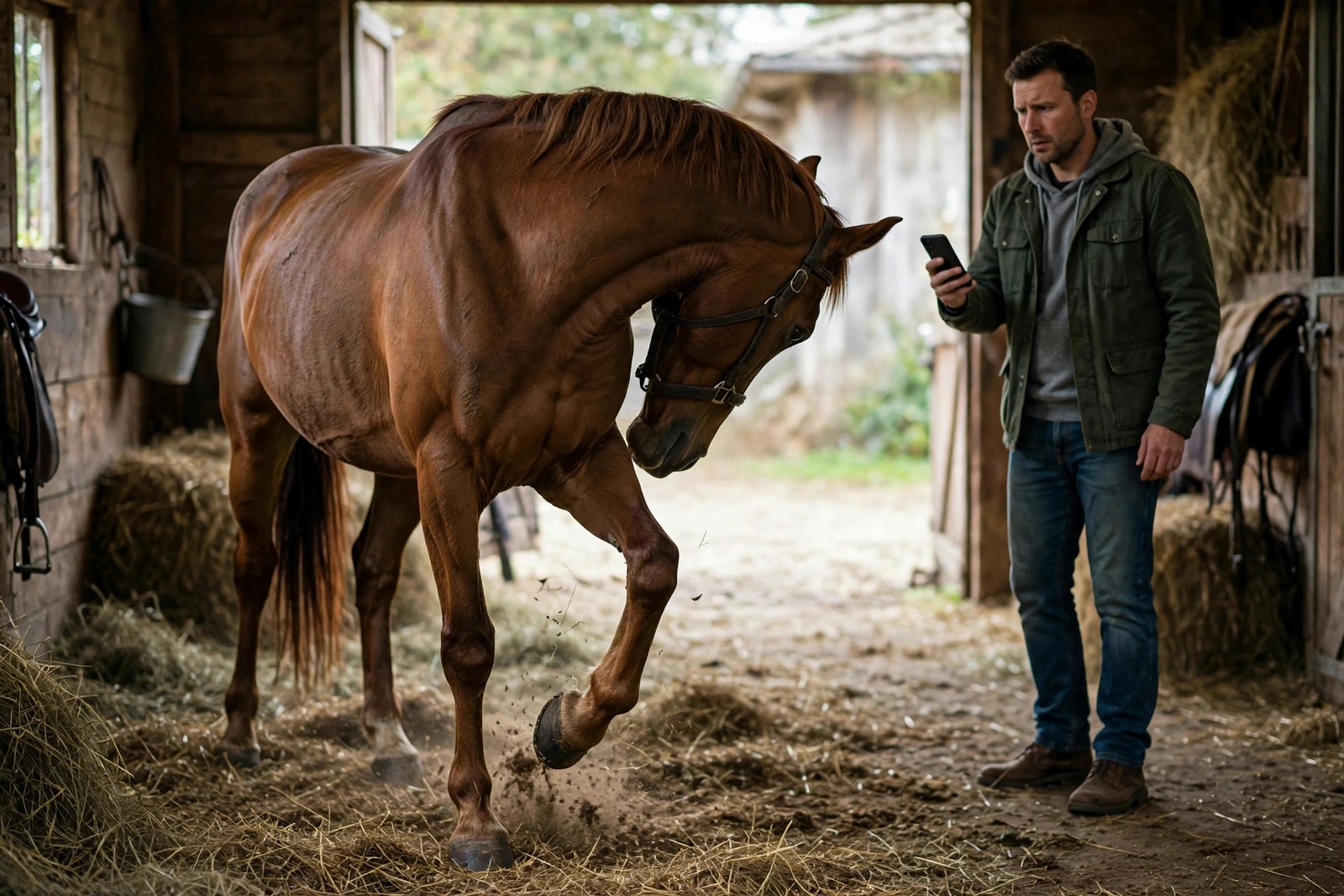
Colic means abdominal pain, and in a horse it is the emergency that outranks every other job in the yard. Some colics settle with medical treatment; others are surgical, and hours can decide survival, which is why the vet is phoned the moment colic is suspected, before anything else is done. The signs, roughly in escalating order: off food and quieter than usual, reduced or absent droppings, pawing the ground, repeatedly looking or biting at the flanks, getting up and down, rolling (especially violently or repeatedly), sweating without work, a stretched-out stance as if to urinate, rapid breathing, and gut sounds that are absent or abnormally loud and tinkling when you listen at the flank. A normal horse produces droppings regularly — a stable with none since morning is a finding in itself.
What To Do While the Vet Comes
Once the vet is called and is directing you: remove all hay and feed, and water as your vet advises. Walk the horse gently in hand if it is trying to roll violently or is distressed — walking can help comfort and gut movement, but do not march an exhausted horse for hours; quiet standing in a safe, deeply bedded area is fine for a calm horse, and never put yourself at risk from a thrashing animal. Do not give any medication — including leftover pain relief — unless your vet specifically instructs it, because painkillers can mask the signs the vet needs to assess and change the treatment decision. Never attempt home remedies, drenches, or oiling. Note and report the timeline: last normal droppings, last feed, water drunk, worming history, any recent change of feed, grazing, or routine, and whether the horse has colicked before. Keep the horse where a vet can examine and, if needed, load it — a yard with light and access, not a distant field.
What your vet needs to hear
A vet deciding whether a colic is medical or surgical works from the pattern you report, so arrive at the phone call with the sequence straight. Say when the horse was last normal, when droppings last appeared and how many, whether the pain comes in waves or stays constant, and what changed in the last two days — new hay, new grazing, a wormer, a hard workout. Mention any previous colic, any surgery, and the horse's age and usual routine. Written down as it happens, that account shortens the examination and sharpens the decision; remembered under stress an hour later, half of it blurs.
Colic is always a vet call the moment you suspect it — rolling, flank-watching, pawing, no droppings, or a horse who is simply 'not right' with gut silence. Never wait overnight on colic.
Keeping a colic record that travels
Colic tends to recur in the same horses, and a horse who has colicked once gives you information worth preserving properly: the date, the signs in their order, what the vet found, what was done and how recovery went. Kept together, those episodes let the next vet — who may be a locum meeting your horse for the first time at midnight — see at once whether this presentation matches the last one. That record of dates, findings and veterinary history is exactly what KinsLe's Pet Passport holds for a horse, so its records move with it between yard, home and clinic.