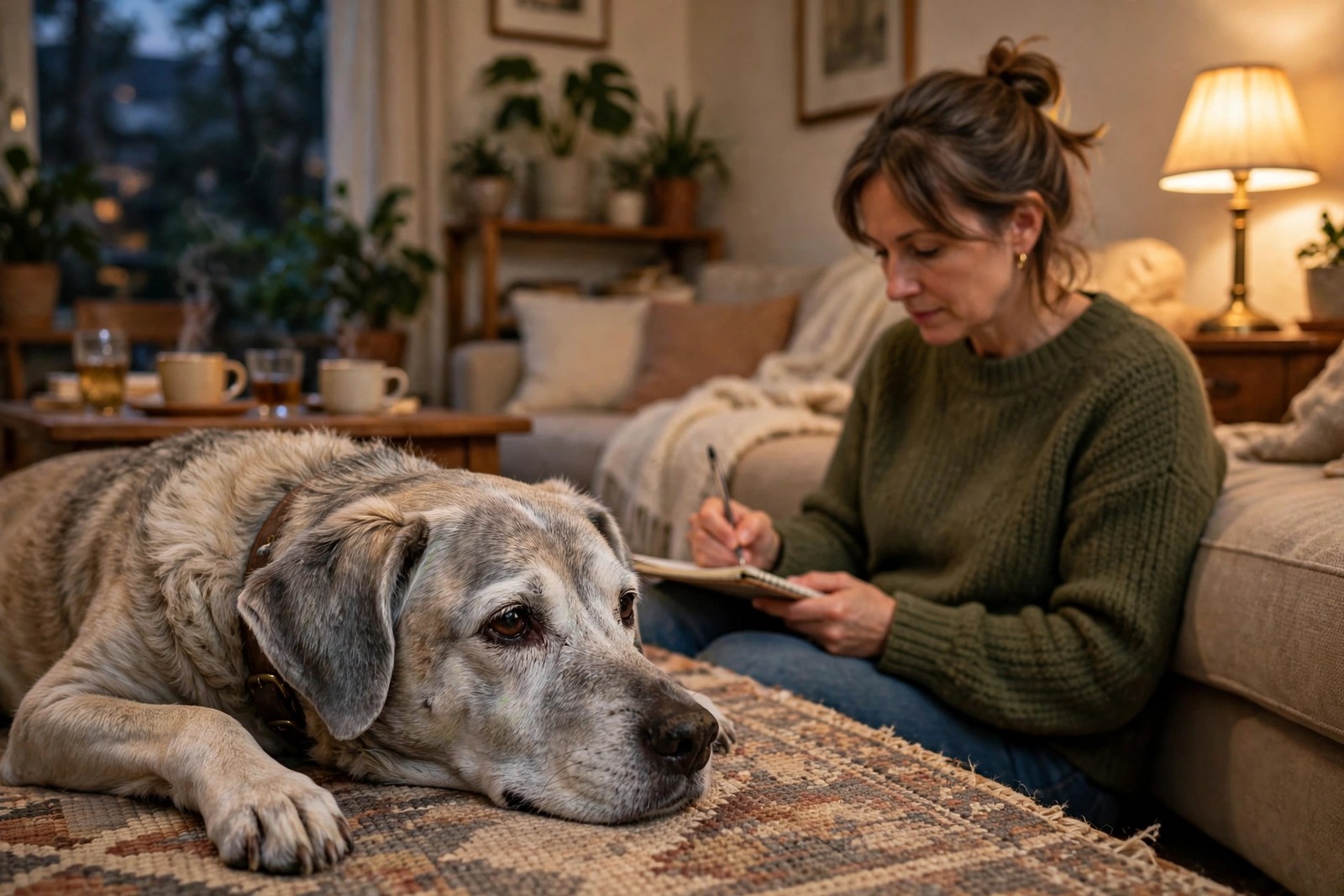
Canine dementia — cognitive dysfunction — creeps in through changes so gradual that owners often blame ordinary ageing until several appear together. Vets commonly organise the signs into a pattern covering disorientation, interactions, sleep, house-soiling, and activity, with anxiety often added, because looking for the whole pattern is far more reliable than fixating on one odd afternoon.
Disorientation in familiar places
This is usually the sign that unsettles owners most. A dog with cognitive change may stand staring at a wall or into a corner, get stuck behind a partly open door or under a table and seem unable to back out, go to the wrong side of a familiar door, or appear lost in a garden she has crossed for years. She may fail to recognise a usual walking route or wander into a room and stand as if she forgot why she went there. Brief confusion after a deep sleep can be normal; repeated episodes in broad daylight, in places she knows well, are the pattern to record.
Changed interaction and new anxiety
Social behaviour shifts in both directions. Some dogs become clingy, following their owner from room to room, seeking contact at night, and showing distress when left even briefly. Others withdraw: greeting you less warmly, losing interest in visitors or in a housemate dog, and no longer asking for games they once started. New anxiety is common alongside this — restlessness at dusk, panting or whining without an obvious trigger, and startling at familiar sounds. Note which direction your dog is moving, because a written record of she no longer greets us at the door is more useful to a vet than a general feeling that she seems different.
Sleep and wake turned upside down
A flipped cycle is a hallmark sign. The dog sleeps deeply through much of the day, then wakes in the small hours to pace, wander, vocalise, or ask to go out and stand in the garden without toileting. Owners lose sleep too, which is often what finally prompts the vet visit. Keep a simple note of when she settles and when she wakes for a week or two; the pattern, and whether it is worsening, helps your vet judge severity and discuss ways to support better nights.
House-soiling and changed activity
A dog who was reliably clean for years may begin toileting indoors, sometimes shortly after being outside, as if the learned sequence of ask, go out, and toilet has come apart. She may also seem to forget cues and routines she knew well. Activity changes complete the picture: aimless pacing or repetitive behaviour such as circling or licking, alongside less interest in toys, walks, and exploring — or, in some dogs, restless activity that never quite settles into rest.
Why a vet visit comes before a conclusion
None of these signs, alone or together, proves dementia, and this article cannot diagnose your dog. Pain from arthritis, loss of sight or hearing, thyroid and other illnesses, and some medications can mimic or worsen the same picture, and several of those causes can be treated. Book a vet appointment, describe the specific episodes with dates and times, and mention sleep, toileting, and interaction changes even if they seem minor. Arrive with that timeline stored in KinsLe's Pet Passport, alongside her medication list and health history, and your vet can judge how fast things are changing instead of relying on a single snapshot in the consulting room.