
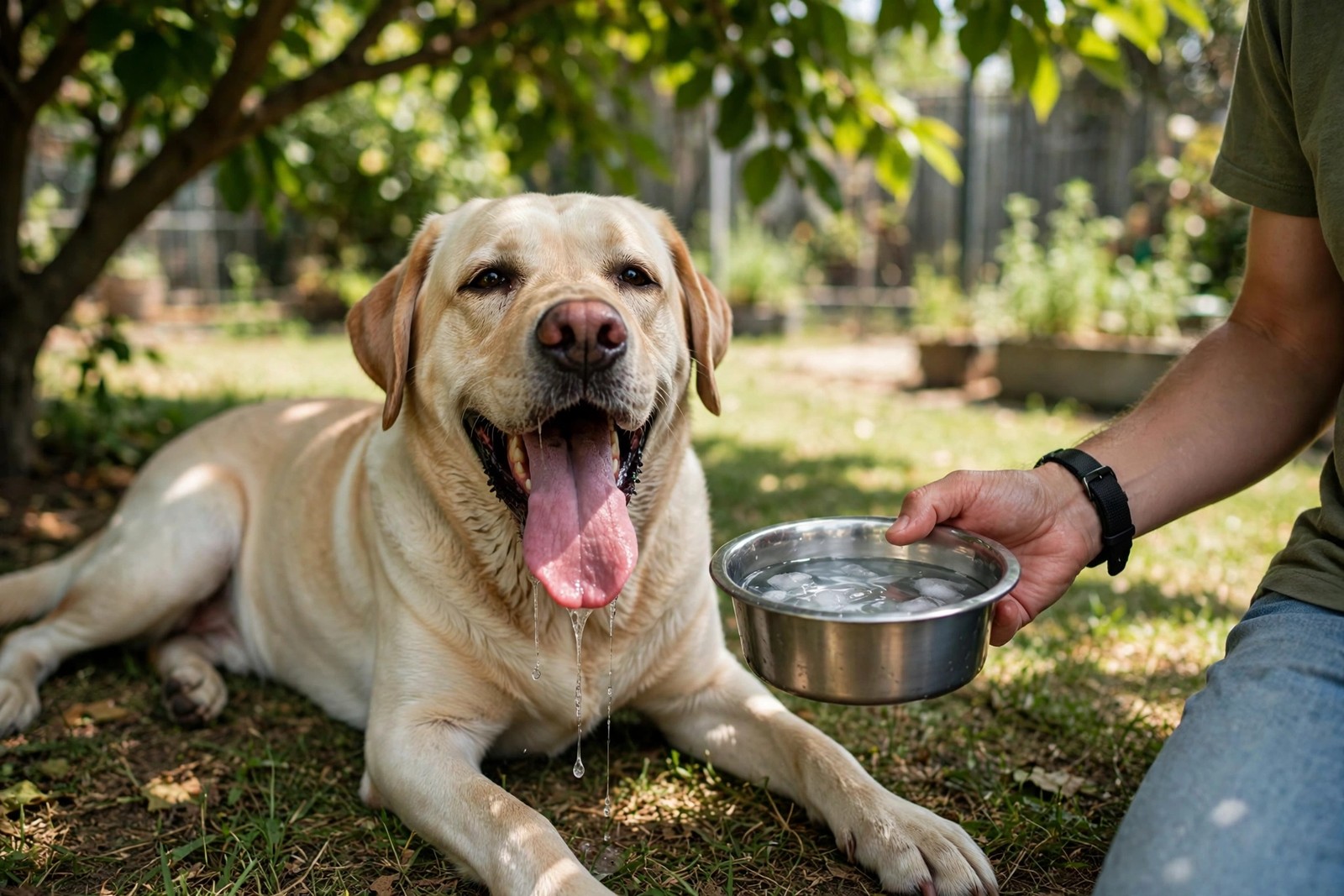
Heatstroke in dogs shows up as heavy, relentless panting, thick ropey drooling, bright red gums, and a dog who looks drunk — wobbly, disoriented, or unable to stand — sometimes followed by vomiting, diarrhea, or collapse. Those signs are an emergency. If you see them, stop, move your dog to shade or air conditioning, and start toward a veterinarian immediately rather than watching and hoping it passes.
Why Heatstroke Escalates So Quickly
A dog's normal cooling system — panting — can be overwhelmed when temperature and humidity climb, when exercise continues too long, or when a dog is left in a hot, still space like a parked car. Once body temperature rises too high, it begins to affect the brain, gut, kidneys, and blood itself. That is why a dog can seem “just very hot” and then deteriorate in minutes.
Risk is not evenly shared. Flat-faced breeds like English Bulldogs and Boston Terriers, overweight dogs, seniors, puppies, and dogs with heart or airway problems get into trouble faster. So do enthusiastic working and sporting dogs — the Border Collie or Labrador who will not quit a game on his own. Dark coats, thick coats, and a previous episode of heat illness also raise the stakes.
The Signs, From Early to Severe
Early warnings deserve action, not a wait-and-see:
- Panting that is heavier or louder than normal and does not settle with rest in shade
- Excessive drooling, or saliva that becomes thick and sticky
- Gums that look bright red, dry, or tacky instead of moist and pink
- Restlessness, seeking shade obsessively, or suddenly lagging behind
Severe signs mean call the emergency clinic and go:
- Stumbling, weakness, confusion, glazed eyes, or collapse
- Vomiting or diarrhea, sometimes with blood
- Gums turning brick red, purple, or muddy
- Seizures, tremors, or unresponsiveness
Do not rely on feeling the ears or nose, and do not delay care to find a thermometer. Your eyes and your dog's behavior are enough reason to act.
What to Do in the First Minutes
Move your dog out of the heat at once. Offer small sips of cool water if he is alert and able to drink, but never force water into the mouth of a wobbly or collapsed dog. Wet him with cool — not ice-cold — water, especially around the neck, armpits, and belly, and get air moving with a fan or car air conditioning. Ice and ice baths can constrict blood vessels and complicate care, so avoid them.
Call ahead while someone drives if you can, so the clinic is ready. Keep cooling gently on the way, and even if your dog seems to perk up, still go in. Heatstroke can cause delayed complications that are not visible from the outside, and only a veterinary exam can judge how serious the episode was. This article cannot diagnose your dog — when in doubt, treat the signs above as urgent and let the vet decide.
Know Your Emergency Route Before You Need It
The worst time to search “emergency vet near me” is with a collapsing dog in your arms. On a calm day, save your regular vet's number, identify the nearest after-hours emergency clinic, and drive the route once so it is familiar.
KinsLe's Pet Services Directory helps you find local veterinarians and other pet services ahead of time, so your nearest options are already known before a crisis. Pull up the Pet Services Directory on KinsLe at once and head to the nearest emergency veterinarian while someone keeps cooling him gently, because a dog with heatstroke cannot wait and must never be left in a parked car in warm weather.