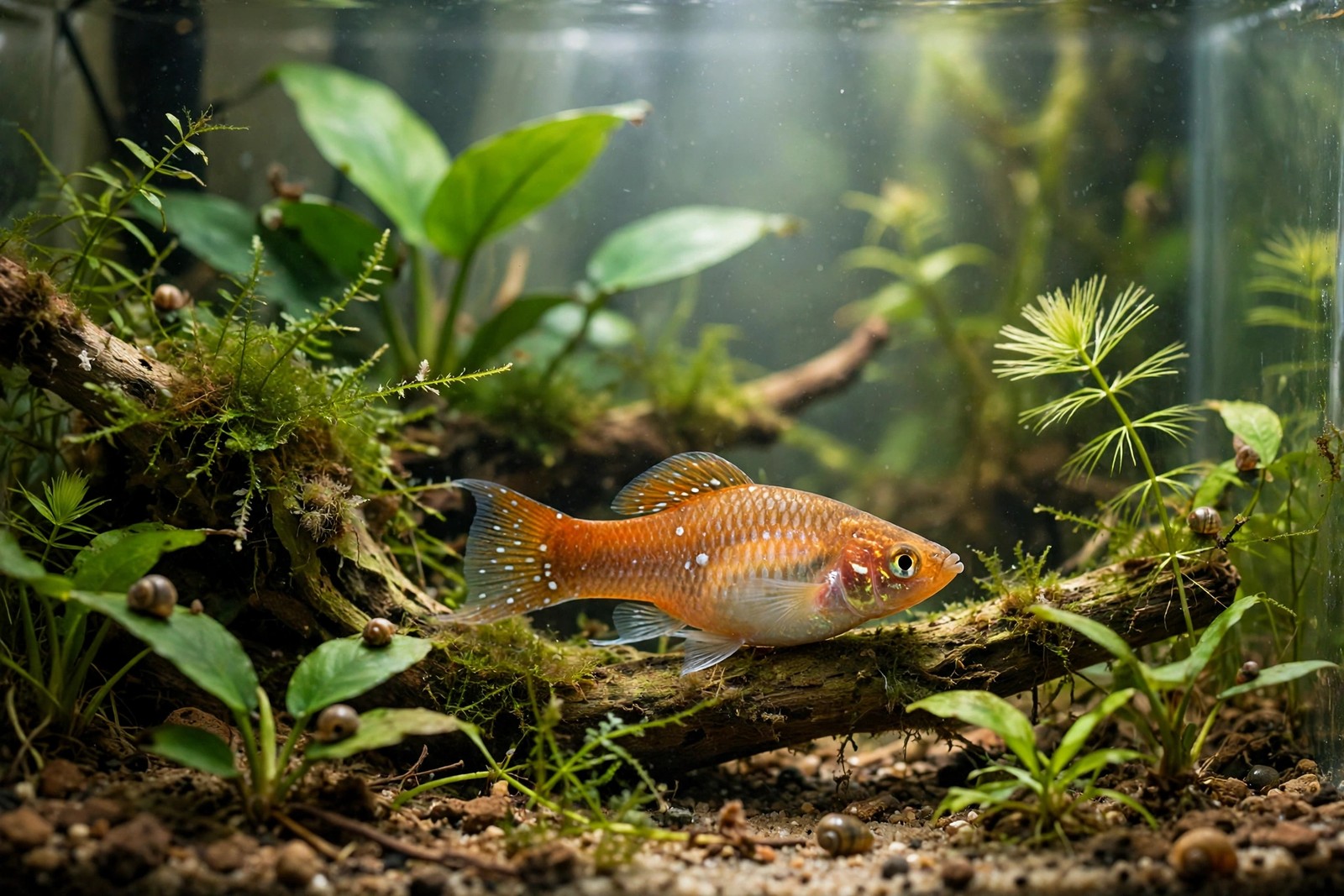
Salt-like grains scattered over fins and body point first to white spot disease — ich — in which each visible dot is a parasite stage lodged in the skin. The behaviour usually gives the same warning: fish flicking themselves against decor, fins held tight, food refused, breathing quickened. Pale marks are not automatically ich, though. Breeding males among goldfish grow small white tubercles on their gill covers and front fins in season, and those are harmless; lymphocystis raises larger, cauliflower-like lumps; and bacterial or fungal trouble tends to spread as patches rather than neat, separate grains. Even spacing of the grains, plus the flicking, is what tips the judgement toward ich.
Acting on Ich — Heat, Timing, and the Whole Tank
If it is ich, the whole tank is treated, not just the spotty fish, because most of the parasite's life cycle lives off the fish in the water and substrate — and the free-swimming stage is the only stage treatment can kill, which is why courses run for days beyond the last visible spot. Raising temperature gradually (within your species' tolerance) speeds the parasite's cycle so treatment reaches it sooner; your fish shop or aquatic vet can advise on the right product and schedule for your exact fish, because some species and invertebrates tolerate particular medicines poorly. Test the water first and fix any ammonia or nitrite reading, since poor water is the stress that usually lets ich take hold. Do not improvise with random chemicals or strip the tank down: steady water quality, the right treatment completed in full, and observation of every fish daily are what clear it.
Working With Your Vet
With spots on a fish, the useful order is: look hard, write down what you see, and let a veterinarian or experienced aquatic specialist make the diagnosis. Note which fish are affected, when the first grain appeared, and what your last water tests showed, and take a clear photo or short video — spots, flashing and breathing rate all read better on screen than from a description at the counter. General guidance like this article can help you judge urgency and decide what to record, but it cannot examine your fish, and a parasite, a bacterium and a harmless breeding tubercle can look deceptively alike at the glass.
White spots plus rapid breathing, gasping, or many fish affected is urgent — test the water immediately, start appropriate treatment the same day, and seek aquatic vet or specialist shop advice.
For an ich outbreak, the log that earns its keep is a tank log: ammonia, nitrite and temperature readings, a rough count of spots per fish, who is flashing and who is still feeding, and the day any treatment began and ended. Read back over a fortnight of entries and patterns surface that memory flattens — spots that followed a new arrival by four days, flashing that started the morning after a filter clean. Revisit the log whenever the tank changes: new fish, a new treatment, a heater swapped, a species added. Your baseline is what tells you whether this week’s spots are a fresh outbreak or the tail of the old one.
That record sits in the Pet Passport on KinsLe — the dates spots appeared, the readings you took and the history a vet needs, in a single portable packet carried into every appointment.