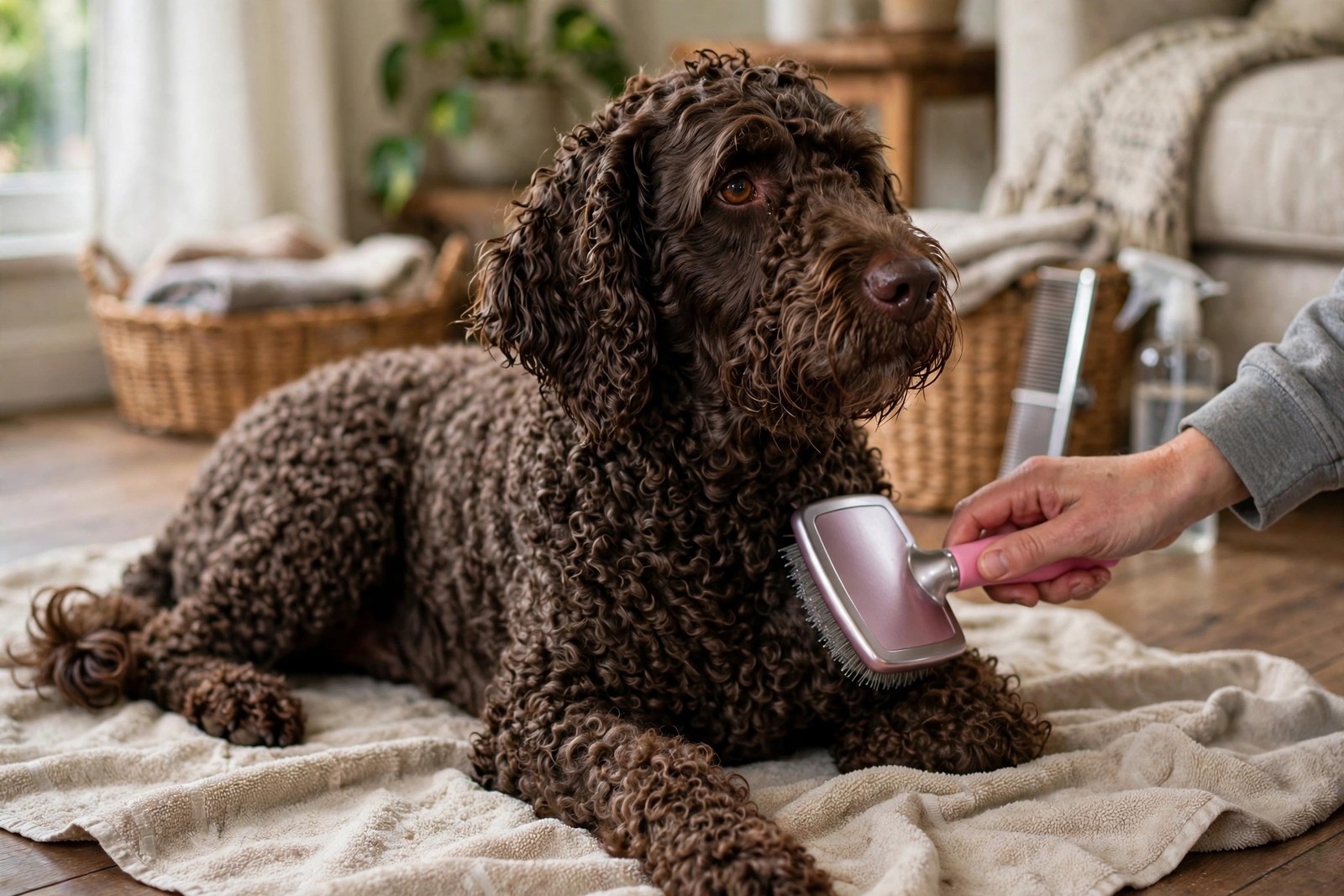
A curly coat can look perfectly brushed while it is quietly felting at the skin underneath, and that gap between appearance and reality is the whole problem this routine solves. Curly, continuously growing coats hold on to their loose hair instead of dropping it, so shed hair stays in the coat, wraps around the hair still growing, and compacts at the base. The routine below is built around one honest check: a comb, taken to the skin, that either passes or tells you the truth.
Slicker First, in Small Sections
Lightly mist the coat before you begin, since brushing dry curls snaps hair and creates more loose ends to tangle later, then take the coat in small sections rather than raking across the whole dog. Work a slicker brush through each section from the base outward, holding the hair above where you are brushing so the pull does not drag on the skin. Small sections feel slow and are actually faster, because a slicker passed over a thick curly coat from the top simply polishes the surface while the bottom layer stays untouched. Move around the dog in a fixed order, legs, body, neck, head, so no region is silently skipped week after week. Keep sessions calm and brief enough that the dog stays cooperative; a curly coat is maintained by rhythm over weeks, not by one heroic sitting.
The Comb Check to the Skin
After the slicker, run a metal comb through the same section, down to the skin. This is the check that matters: if the comb glides to the skin and out again, the section is genuinely clear, and if it snags partway, there is compacting hair at the base that the brush missed. Work a snag gently from the ends inward rather than forcing the comb through it, which hurts and breaks hair. Owners are often surprised the first time they comb immediately after brushing, because the difference is stark, whole areas that looked finished turn out to be felted at the root. Make the comb, not the mirror, decide when a section is done, and give a second pass to any area where the coat is thickest or grows in the tightest curl.
Friction Zones Need Daily Attention
Some areas felt days ahead of the rest because hair there rubs against something with every movement: behind the ears, in the armpits, along the collar line, at the tail base, and anywhere a harness strap sits. Give those zones a brief comb-through every day, even when the rest of the coat is on its every-couple-of-days rhythm, because a single day's small tangle in an armpit becomes a solid mat pressed against thin skin remarkably fast. Check after walks in wet weather too, since damp curls tighten as they dry and can set a forming mat. Dogs that wear a collar all day benefit from the collar coming off for the check, so the hair beneath it is actually reached rather than brushed around.
Felting: What Is Happening, and Removing Mats Promptly
Felting is loose hair wrapping and interlocking at the base until it forms a dense pad against the skin. That pad traps moisture, pulls as the dog moves, and hides the skin completely, which is why mats should be dealt with promptly rather than saved for the groomer weeks away. Small, soft mats can be teased apart with fingers and worked through with the comb from the edges inward. A mat that is tight, large, or tight against the skin in a sensitive place belongs to the groomer, who can remove it safely; pulling or cutting blindly at home risks the skin folded inside it. If mats keep beating you despite daily zone checks, shorten the full routine interval or ask the groomer for a slightly shorter trim, because coat length you can maintain beats length you admire and lose. Through Care Teams in KinsLe, you can log each session against the zones, which makes a skipped armpit check visible before it becomes a mat.