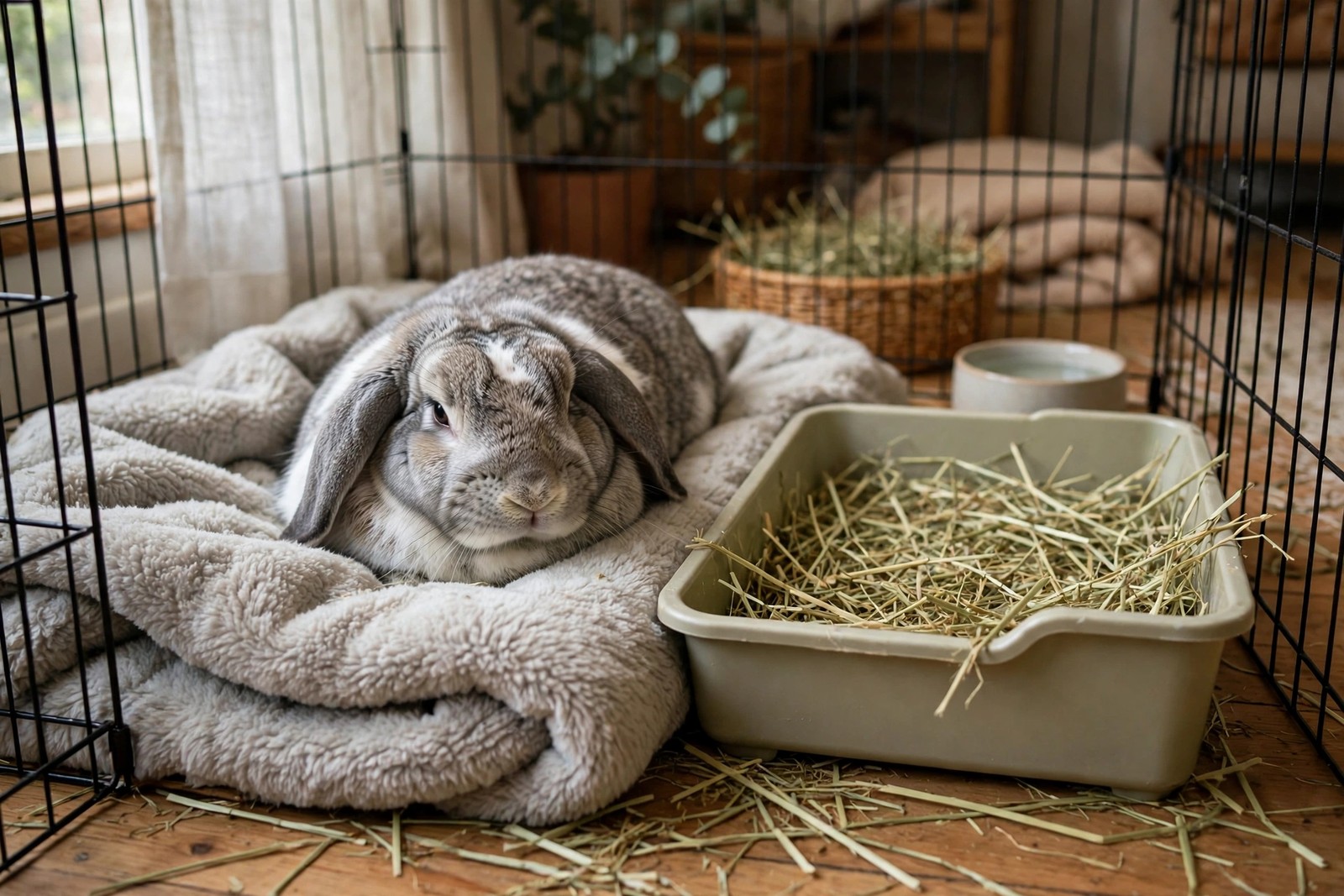
Rebuild the enclosure around floor-level living. An arthritic rabbit is usually coping with stiff hips and spine and, very commonly, sore hocks, because a rabbit who moves less shifts weight onto the back of the hock and the skin there was never designed to bear it. Every change that helps removes one of three things: a jump, a slippery surface, or a long walk to something essential.
Entries, Trays, and Boxes
Start with the litter tray, because it is an obstacle he faces every day. Replace a standard high-sided tray with a genuinely low-entry one he can step into rather than hop into, or cut one long side of his existing tray down low and sand the edge smooth so there is nothing sharp or snagging. Keep the hay rack immediately beside or inside the tray area, since rabbits like to graze while they toilet, and an arthritic rabbit should not have to choose between hay and comfort.
Remove high-sided boxes, hidey houses with raised thresholds, and any level, shelf, or ramp in the setup. Ramps that were easy at two years old become a daily negotiation with stiff joints, and a rabbit who stops using an upper level quietly loses living space. Replace raised hides with ground-level tunnels and houses with wide, low doorways, filled with deep, soft bedding he can burrow into without climbing.
Flooring and the Hock Problem
Cover the enclosure floor completely with soft, non-slip padding: thick fleece blankets, padded mats, or deep bedding over any hard base. Bare plastic, laminate, and wire floors are doubly unkind to arthritic rabbits, because they are hard on the hocks and slippery under stiff legs, so a hind foot slides instead of gripping and every start becomes a strain. Check his hocks weekly — part the fur on the back of each hind foot and look for pinkness, bald patches, broken skin, or swelling. Early hock soreness caught on your weekly check is a bedding problem you can fix; advanced sores are a vet problem, and they develop quietly under a rabbit who is sitting still more than he used to.
Warm the room itself rather than placing any heat source inside the pen, where a stiff rabbit cannot move away from it easily. Keep nails short, too, because overlong nails change the angle of the foot and load the hock further, and an arthritic rabbit wears his nails down far less through movement.
Bring Everything Within a Short Walk
Place hay, pellets, greens, and water in a tight cluster near his favourite sleeping corner, at floor level, so the essentials of the day sit within a few steps. Water in a heavy bowl he cannot tip is often easier for a stiff rabbit than licking a bottle at height, though offering both lets him choose. If he lives with a bonded partner, keep the pair together — companionship matters enormously to rabbits, and a bonded partner grooms the places a stiff rabbit can no longer reach — but watch that a younger partner is not monopolising the warm corner or the food, and provide two of every resting spot.
Note weekly whether he is reaching his caecotrophs, keeping himself clean underneath, and moving to greet you as before; declining grooming and a dirty bottom are welfare signals, not just mess, and they belong in the vet conversation alongside pain relief options. KinsLe Pet Passport keeps those weekly mobility, grooming, and hock notes in one portable packet with his vet records, so the vet reviewing his arthritis sees the whole trend rather than a single stiff morning.