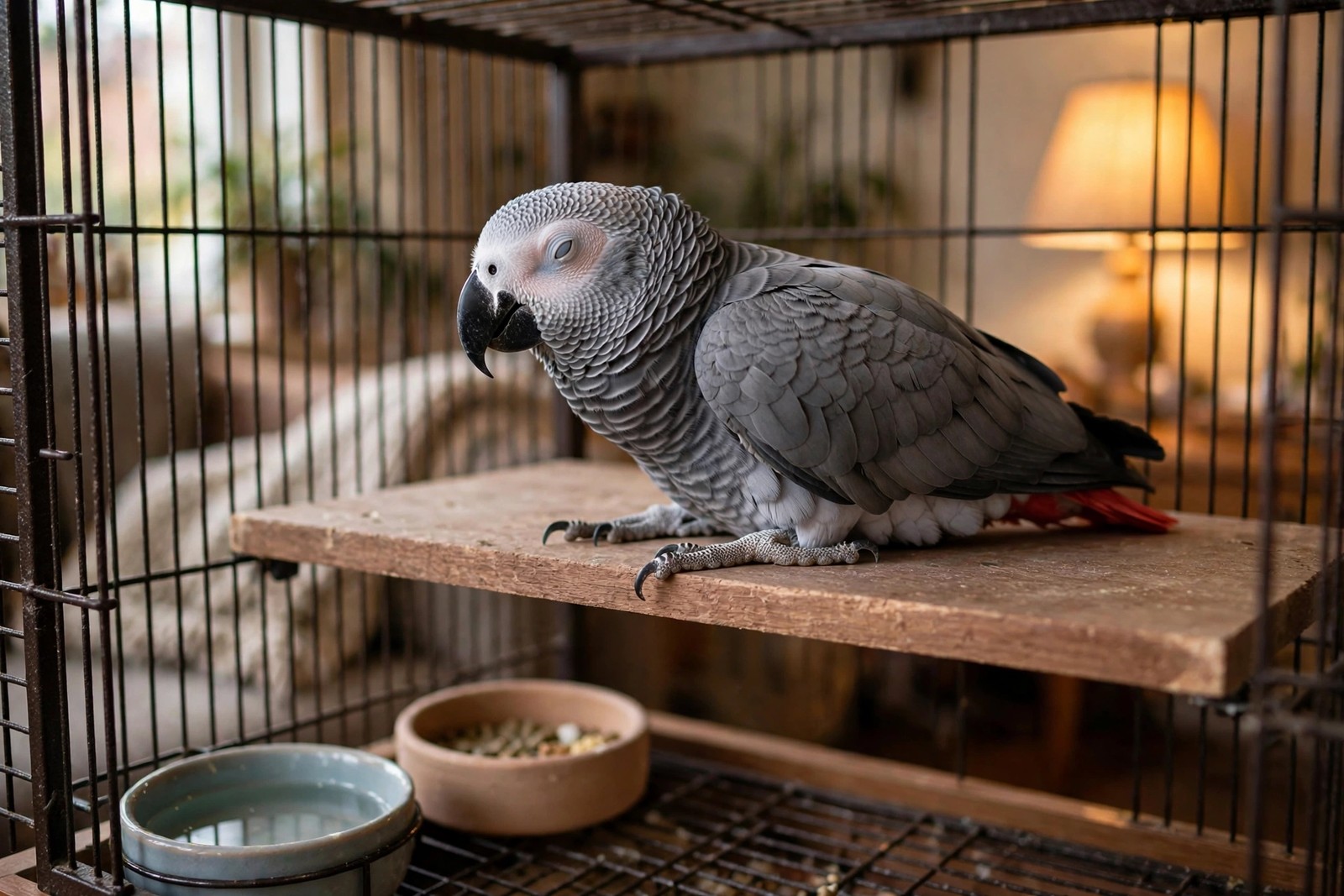
An older bird with stiff joints does not need a smaller life — it needs a cage that stops asking for athletic feats. The changes that matter are specific: how it grips, how high it climbs, how far it can fall, and whether food and water still require a climb it is starting to dread.
Rethink the Perches First
Thin, smooth, uniform dowel perches are the worst footing for sore feet, because the toes wrap the same way, at the same pressure points, all day. Replace the main sleeping perch with a wide natural branch or rope-style perch of a diameter that lets the foot sit flatter, and offer two or three different widths around the cage so your bird can choose where its feet feel best. Most importantly, add at least one flat platform perch — a solid shelf where the bird can stand or even rest with feet fully open and weight spread. Birds with very sore feet often choose the platform for sleeping, which tells you plainly how much it helps.
Wrap a perch with soft, grippy material if your bird slips, and check feet weekly for redness or sores, since stiff joints often travel with pressure problems on the soles.
Lower Everything That Matters
Move the favourite perch, food bowls, water, and a well-loved toy down to one comfortable level, ideally the lower half of the cage. Climbing can remain available for a bird that still enjoys it, but nothing essential should depend on it. Replace long vertical climbs with a ladder or a gently sloped ramp with cross-grips, and position perches close enough together that moving between them is a step, not a leap or a flight.
Then plan for the fall you hope never happens. Lower perches mean shorter drops, and a padded cage floor — soft material safely under the usual liner, out of chewing reach — cushions a slip far better than bare bars or a hard tray. Remove anything with sharp edges from below the sleeping area.
Warmth, Light, and Quiet Positioning
Stiff joints stiffen further in the cold. Site the cage away from draughts, windows that chill at night, and air-conditioning streams, and keep a consistent, comfortably warm room temperature. If your vet agrees, a safe heat source near one end of the cage lets the bird choose warmth for itself. Keep the cage somewhere socially central but calm, because an older bird moved to a quiet back room for its own good often loses the company that was keeping it bright and eating well.
Watch Whether the Changes Worked
Give each change a few days and watch honestly: is your bird reaching food without hesitation, sleeping in its chosen spot without falls, moving in the morning without the long, stiff warm-up you saw before? A bird that stops visiting the top of the cage, drops food it used to hold, or sits fluffed and quiet needs a vet visit, not just more carpentry — stiff joints can signal conditions that cage changes alone cannot address, and only an examination can sort out what is ageing and what is illness. Recording those observations and the vet's advice together in KinsLe's Pet Passport means the next adjustment, and the next appointment, build on a written record of your bird's mobility rather than a fading memory of how it used to climb.