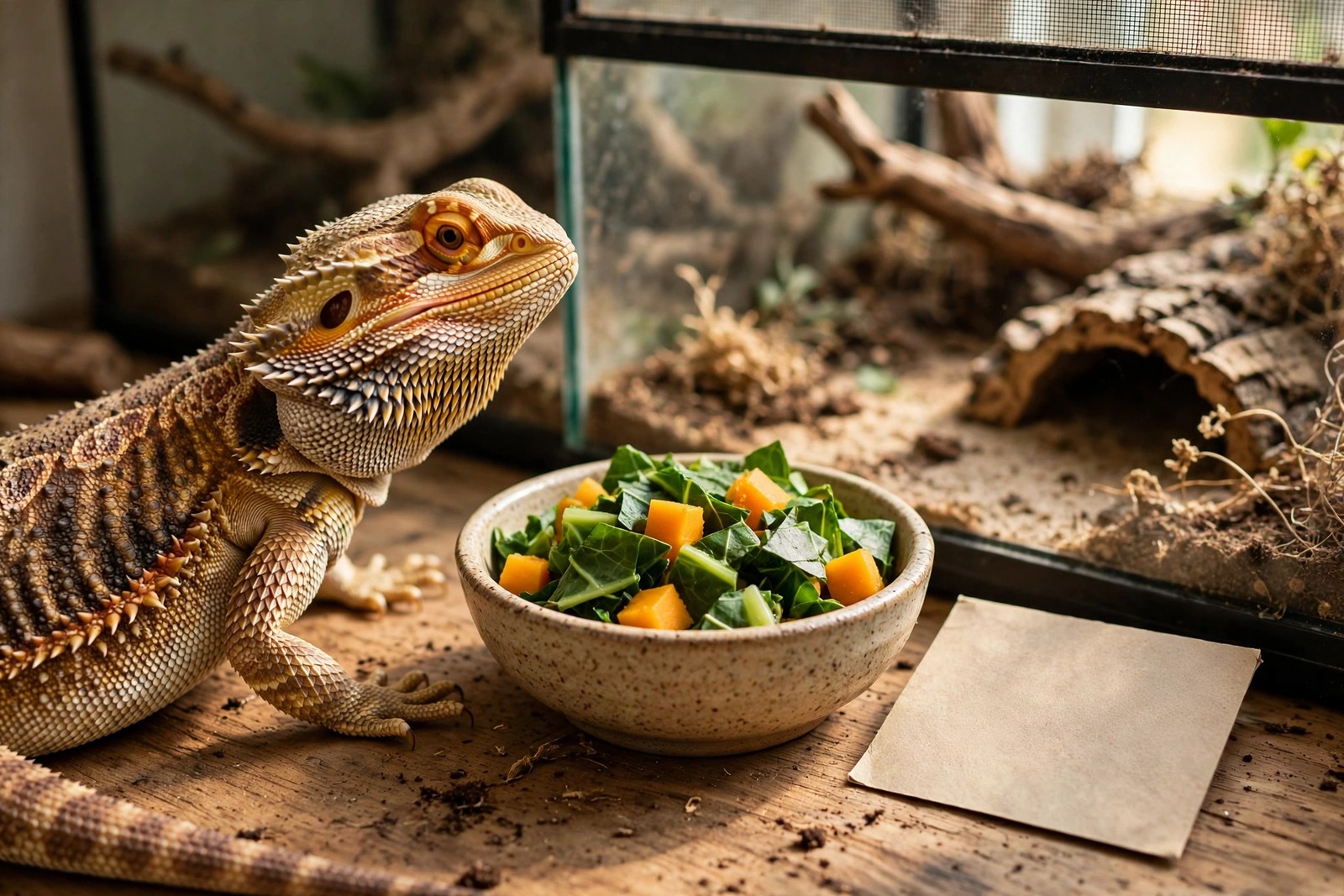
Bearded dragons are enthusiastic, indiscriminate feeders, which puts the whole burden of safety on you. The foods below fall into three groups: a never list that stays absolute, a limit list of foods that cause harm when they become regular staples, and a milder group of safe but nutritionally empty fillers. Keeping the groups separate matters, because the never list allows no exceptions and no small tastes.
The Never List
Never feed avocado in any form — flesh, skin, or stone — as it is toxic to bearded dragons. Never feed rhubarb, either leaves or stalks. Never feed fireflies or lightning bugs, even one: they carry toxins that can kill a dragon quickly, and never feed any wild-caught insect, caterpillar, or spider, because you cannot know what it has eaten or what it was sprayed with. Never feed onion, garlic, or chives, and never offer beet tops. Wild mushrooms, unknown garden plants, and insects collected near roads, lawns, or farmland all belong on this list too, for the same reason: the risk is invisible and the dragon will not refuse them.
The Limit List: Calcium Thieves
Spinach, Swiss chard, and similar high-oxalate greens are not instant poisons, but oxalates bind calcium in the gut, and a bearded dragon — especially a growing juvenile — runs on calcium for bone growth and muscle function. Fed as the main salad most days, these greens quietly undo the calcium in the rest of the diet. Build salads instead on collard greens, mustard greens, turnip greens, and butternut squash, and treat the high-oxalate leaves as a rare garnish or leave them out entirely. Iceberg and other pale lettuces sit in a third, milder category: not dangerous, just mostly water with little nutrition, so they fill a dragon up on almost nothing.
Household Foods That Catch People Out
Dragons beg convincingly, so plates get shared. Keep citrus-heavy and sugary fruit as a tiny occasional treat rather than a daily bowl, never offer anything seasoned, fried, or processed from your own meal, and never feed dog or cat food, which some outdated advice still suggests — its protein and fat profile is wrong for this species. If a food is not a known-safe vegetable, leafy green, or feeder insect from a trusted source, the default answer is no until you have checked it specifically for bearded dragons.
If the Wrong Food Gets Eaten
Act on the never list immediately: note what was eaten, roughly how much, and when, remove any remaining food, and call a reptile vet for guidance rather than waiting for symptoms. For a single mouthful of a limit-list green, simply correct the salad going forward. Writing the never list on the enclosure or the fridge protects the dragon when someone else feeds it. KinsLe's Care Teams makes that protection practical — feeding duties, salad ingredients, and the never list can be assigned and checked off by each person who feeds your dragon, with completions timestamped, so the rules hold even when you are not the one holding the tongs.