
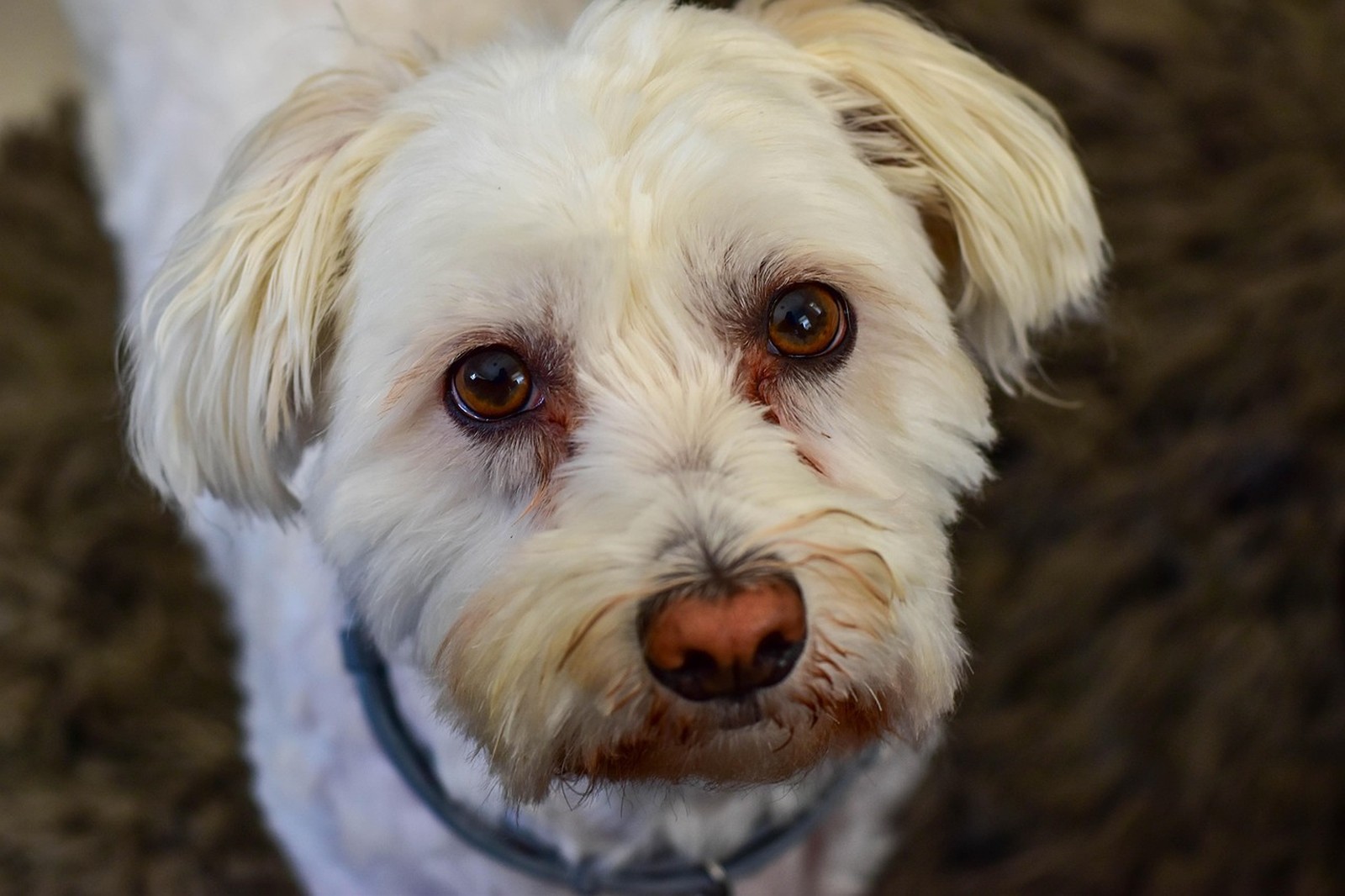
Tear stains are the reddish-brown streaks that appear under a dog's eyes when tears overflow, sit on the fur, and discolor it — the marks are especially visible on white and light-colored coats. Occasional mild staining is common in some breeds and often cosmetic, managed with gentle daily wiping to keep the area dry. But a sudden increase in tearing, or any squinting, redness, or pawing at the eye, is not a grooming issue — that needs a veterinarian, because eyes are delicate and problems there move fast.
Why Tears Overflow in the First Place
Tears normally drain away through tiny ducts at the inner corner of the eye. Staining shows up when more tears are produced than the drainage handles, or when drainage itself is poor. Face shape plays a big role: short-nosed and round-eyed breeds — Maltese, shih tzus, poodles, bichons, and many small white dogs — have shallow eye sockets and ducts that drain less efficiently, so their tears spill onto the fur instead. Hair growing around the eyes can also wick tears onto the face and irritate the eye itself.
Beyond anatomy, irritation of any kind makes eyes water: dust, pollen and other allergies, wind, or a stray eyelash rubbing where it should not. Blocked or narrow tear ducts, and minor infections, can reduce drainage on one or both sides.
Everyday Care for Ordinary Staining
For the common, long-standing, both-eyes-equally kind of staining in an otherwise bright, comfortable dog, management is simple hygiene. Wipe under the eyes once a day with a soft cloth or pad dampened with plain warm water, then dry the area properly — the goal is to stop tears sitting wet on the fur, since a constantly damp patch both stains more and can irritate the skin beneath. Keep the facial hair trimmed short enough that it is not poking into the eyes or channeling tears down the face; if you are not confident trimming near eyes, a groomer can do it in minutes.
Be skeptical of miracle products and home remedies. Anything used around the eye must be genuinely eye-safe, and strong solutions, bleaching agents, or supplements promising to cure staining deserve a conversation with your vet before they go near your dog.
Eye Changes That Mean Vet, Not Wipes
Book a veterinary appointment promptly if you notice:
- A sudden increase in tearing, or staining that is new in an adult dog
- Squinting, holding an eye closed, or pawing and rubbing at the face
- Redness of the eye or surrounding skin, swelling, or discharge that is yellow or green
- Cloudiness, a blue or grey tinge to the eye, or any change in the eye's appearance
- Staining on one side only, especially if it started recently
Eye problems that look minor can be painful or can worsen quickly, and no cosmetic routine should delay getting them checked.
Tracking When the Staining Started
Vets find timelines genuinely useful: "he has always had it" and "it started last month" point them in very different directions. KinsLe's Pet Passport — the records packet holding your dog's vaccines, medications, allergies, and documents, shareable with vets and sitters — is a natural place to note when staining began and any changes you have seen, alongside the rest of their health history. When the note travels with the records, nothing gets forgotten between appointments. Pet Passport on KinsLe holds the dated note of when those stains first appeared, ready for your veterinarian to read beside vaccination and allergy entries.