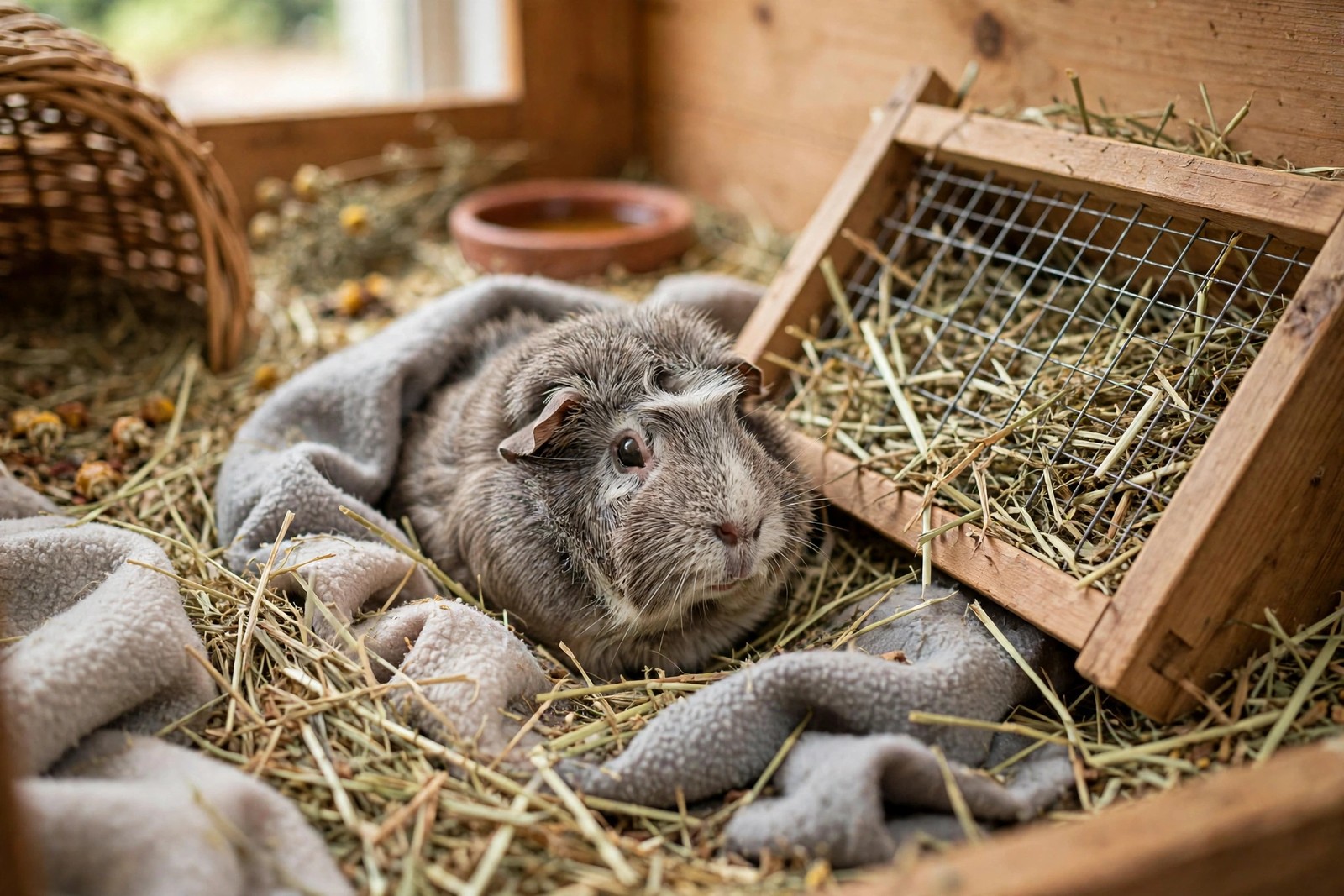
Comfort for an older guinea pig comes from warmth, softness, and a layout that asks very little of stiff joints. Senior guinea pigs slow down gradually: they sleep more, move less between the parts of the enclosure, lose muscle over the hips so the backbone feels more prominent, and cope less well with cold floors and draughts than they did at two years old. Small changes matched to those realities make a visible difference to an old pig's day.
Warmth, Bedding, and One-Level Living
Site the enclosure away from draughts, exterior doors, and cold floors, and keep the room temperature steady rather than letting the cage area chill overnight. Deepen the bedding substantially: a thick layer of hay over soft fleece or paper-based bedding gives him something warm to burrow into, cushions arthritic feet, and lets him rest his body fully supported. Add one extra hide with a wide, low entrance so he has a choice of sleeping spots without any climbing.
Retire ramps, shelves, and upper levels entirely. An old guinea pig who stops using a level has not become lazy; the ramp has become a cost he is no longer willing to pay, and a fall from it could injure him. Bring everything onto the single floor: hay rack lowered so he grazes without stretching up, water bottle spout and a heavy water bowl both at easy head height, food bowl near his favourite sleeping corner, so the essentials of the day sit within a short, flat walk.
Food, Vitamin C, and Teeth
His vitamin C requirement does not retire with him, because guinea pigs cannot make their own at any age. Keep supplying it through his usual diet and fresh vegetables; if chewing slows or he starts leaving harder pieces, shift toward softer vegetables he can manage and mention the change at his next vet visit, since selective eating in an old pig is often a dental signal rather than fussiness. Watch that hay intake stays strong, because hay keeps both the teeth and the gut working, and a senior who quietly eats less hay is heading for trouble on both fronts.
Weigh him weekly, on the same scales and at the same time of day, and write the grams down. Prey animals hide decline well, and a slow weekly slide is often the first hard evidence that pain, teeth, or an internal problem needs attention. A stable weight in a bright, eating, wheeking old pig is genuinely reassuring; a falling one is a vet appointment, not a wait-and-see.
Company and Gentle Handling
Keep his bonded companion with him. Guinea pigs are social to their bones, and separating an elderly pig from a lifelong partner for convenience causes real distress and often appetite loss; if the partner is much younger and boisterous, provide two hides and two feeding spots so the old pig can rest and eat unhurried rather than removing either animal. Handle him with full support under the chest and rump, keep handling sessions short and warm, and let him spend lap time on a towel he can burrow into rather than on a slippery surface.
Check weekly for the small senior problems that hide: overgrown nails he no longer wears down, sore or cracked feet from sitting longer in one place, lumps under the skin, and a grubby underside he can no longer groom well. KinsLe Pet Passport keeps the weekly weights, these check notes, and his senior vet visits together in one portable packet, so the vet sees the trend of his old age rather than a single snapshot.