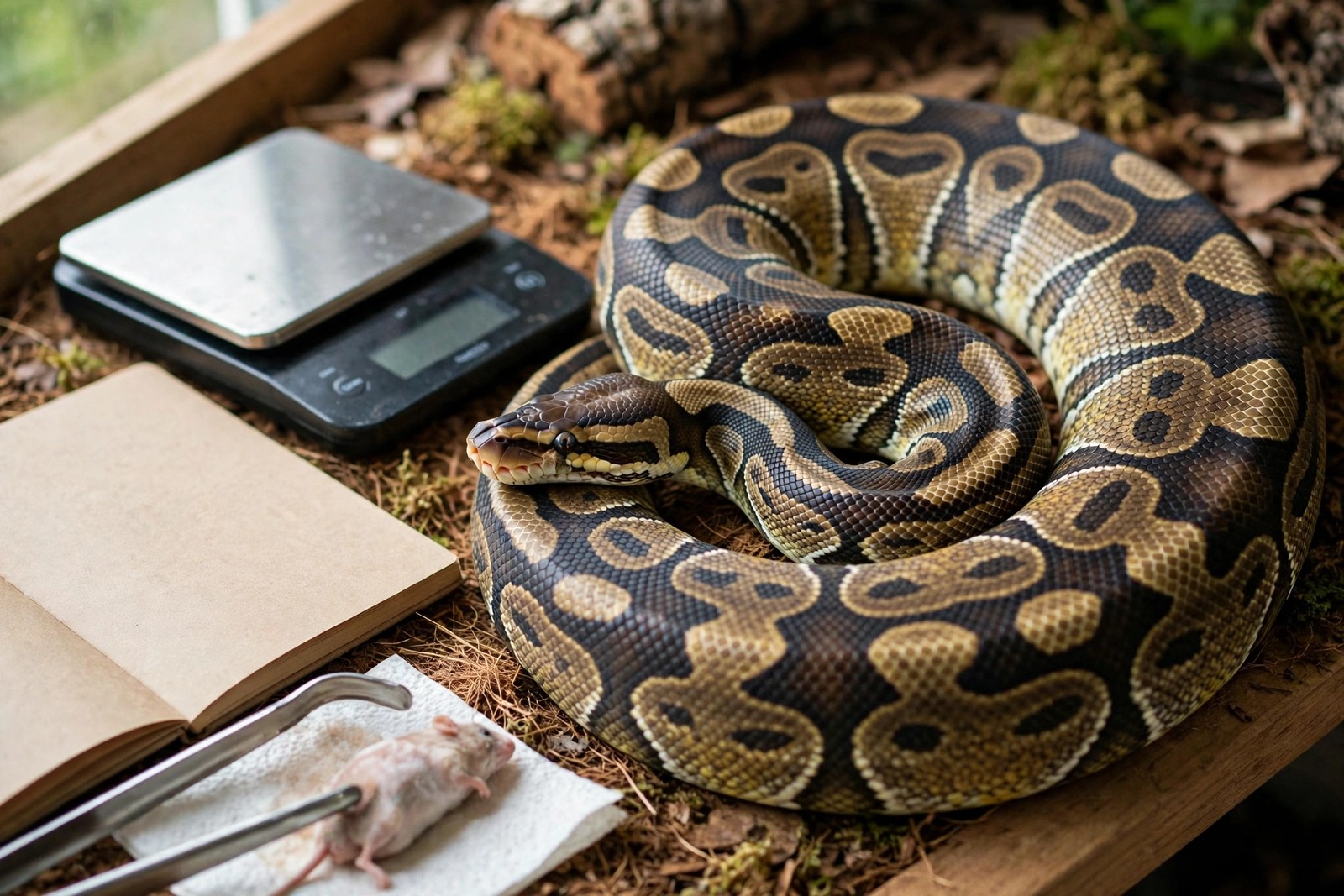
An ageing ball python usually needs less food, offered less often, with closer attention paid to what its body is doing with each meal. Senior snakes move less, hold a slower pace of life inside the same enclosure, and can gain fat steadily on a feeding schedule that suited an active adult. The aim is not to put an old snake on a diet by guesswork; it is to match prey size and interval to body condition, and to treat appetite changes in a senior as information worth recording and, when they persist, discussing with a reptile veterinarian.
Step the Prey Down and Stretch the Interval
The two routine changes that make sense together are smaller prey and longer gaps between meals. If your senior has been taking large rats readily and its body is thickening, stepping down a prey size reduces each meal without changing what the snake recognises as food. Lengthening the interval works alongside that step down; do not do both aggressively in the same month, because you need to see the effect of each change. Make one adjustment, hold it across several feeding cycles, weigh the snake, and then decide whether the second change is still needed.
Judge condition by shape rather than by the scales alone. A healthy ball python has a softly rounded triangular cross-section with the spine slightly visible under the skin. A snake becoming overweight looks round in cross-section, shows fat rolls when it bends, and may develop a visible bulge ahead of the tail. A snake losing condition shows a prominent, sharply ridged spine and loose skin. Weigh on the same scales, in the same container, and record the figure every time, because a slow drift over months is invisible from memory alone.
Present Meals for an Older, Slower Snake
Keep the feeding ritual familiar: thawed prey, thoroughly warmed, offered with tongs in the evening when the snake is naturally alert. A senior may strike more slowly or investigate for longer before committing, so give it time and keep the room quiet rather than repeatedly pushing prey at its face. If a meal is refused, remove the prey, record the refusal, and wait until the next scheduled feeding day instead of offering daily, because frequent re-offers can entrench a fast and tell you nothing about why it began.
Check the enclosure before blaming age for a run of refusals. Confirm the warm end still reaches its usual temperature, the cool end has not drifted, water is fresh, and a shed is not under way, because seniors refuse food for the same husbandry reasons younger snakes do. Appetite loss alongside weight loss, mouth changes, wheezing, or lethargy is a different matter from a contented senior skipping a meal, and that combination belongs in a veterinary conversation promptly rather than in a longer feeding interval.
Record the Pattern, Not Just the Meals
For a senior, the feeding log becomes a health record. Note the date each meal was offered, the prey type and size, whether it was taken or refused, the snake's weight, sheds, and any change in activity or body shape. Across a year, that record separates a normal seasonal pause from a steady decline, and it gives a veterinarian real evidence instead of an owner's worried impression.
Do not change prey type, add supplements, or attempt assisted feeding on the strength of a senior label alone; those are decisions for a reptile veterinarian who has examined the snake. Your job is the steadier routine, the honest weights, and the early conversation. KinsLe's Pet Passport holds that senior feeding record of prey sizes, intervals, weights, and refusals in one packet, ready to hand to a veterinarian when an old snake's appetite changes.