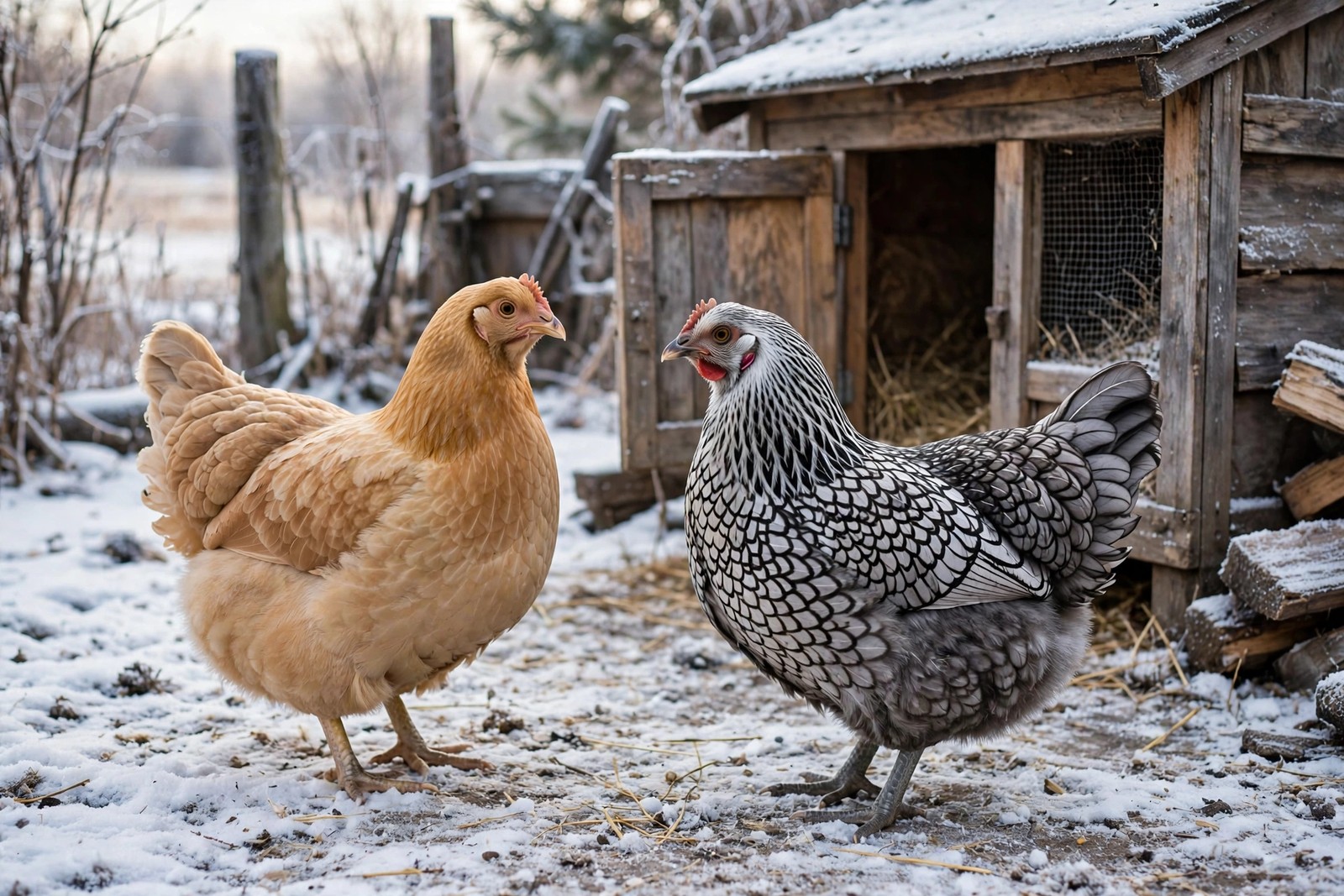
Chickens tolerate cold far better than damp and drafts, and the breeds built for northern winters share a recognisable design: a heavy body, dense feathering that traps warm air, and a comb so small there is little exposed flesh to freeze. Choosing from that proven group at the start saves years of fighting frostbite and lost laying with breeds designed for Mediterranean sun.
The Proven Cold-Hardy Breeds
Buff Orpingtons are the gentle heavyweight of the group — large, loose-feathered, and calm, with hens that lay steadily through much of the winter and tolerate handling well, which suits family farms. Wyandottes bring a compact rose comb that hugs the head and is one of the most frostbite-resistant shapes available, on a round, well-feathered body bred in New York winters; they are reliable winter layers. Plymouth Rocks, barred and hardy, were a farm standard across cold American states for generations and combine steady laying with a robust constitution. Australorps add excellent laying to the same heavy, feathered frame. Brahmas are the giants — very large, heavily feathered, with feathered legs and a small pea comb — slow to mature but exceptionally unbothered by cold. The Chantecler, developed in Canada specifically for severe winters, has a tiny cushion comb and dense plumage and is arguably the purpose-built answer to this exact question.
The Traits Doing the Work
Comb type matters most, because the comb is bare, blood-filled skin. Tall single combs and large wattles, as carried by Leghorns and other Mediterranean breeds, present a big surface for frostbite in hard frosts, and cockerels of any single-combed breed are the usual casualties. Rose, pea, and cushion combs sit low and small, losing little heat. Body mass is the second trait: a heavy hen simply has more warmth to hold, and abundant soft feathering traps it, provided the feathers stay dry — a wet, muddy bird loses that insulation fast. Feathered legs help on snow but collect mud and ice in sloppy runs, so Brahma keepers in wet-winter regions pay for their insulation with extra foot checks. Temperament matters too: calm, less flighty breeds huddle, eat, and lay better through dark months than nervous birds that burn energy startling.
Housing Still Decides the Outcome
No breed out-performs a bad coop. Cold-climate housing needs to be dry above all, draft-free at roost height while still ventilated high up so moisture from droppings and breathing escapes instead of settling on combs — damp air, not cold air, is what drives most frostbite. Roosts should be wide and flat so hens can settle down over their toes and cover them completely with breast feathers on freezing nights. Water freezes before hens suffer from the temperature itself, so checking drinkers at least twice daily, and feeding a little extra energy-dense ration in severe spells, does more than any heater, which most experienced keepers avoid because birds acclimatised to warmth suffer badly in power cuts. Those repetitive winter jobs are easy to drop in a busy household, which is why routing them through KinsLe's Care Teams — assigning morning water-breaking, evening coop checks, and egg collection to named people with each job timestamped — keeps a cold-climate flock properly looked after all winter.