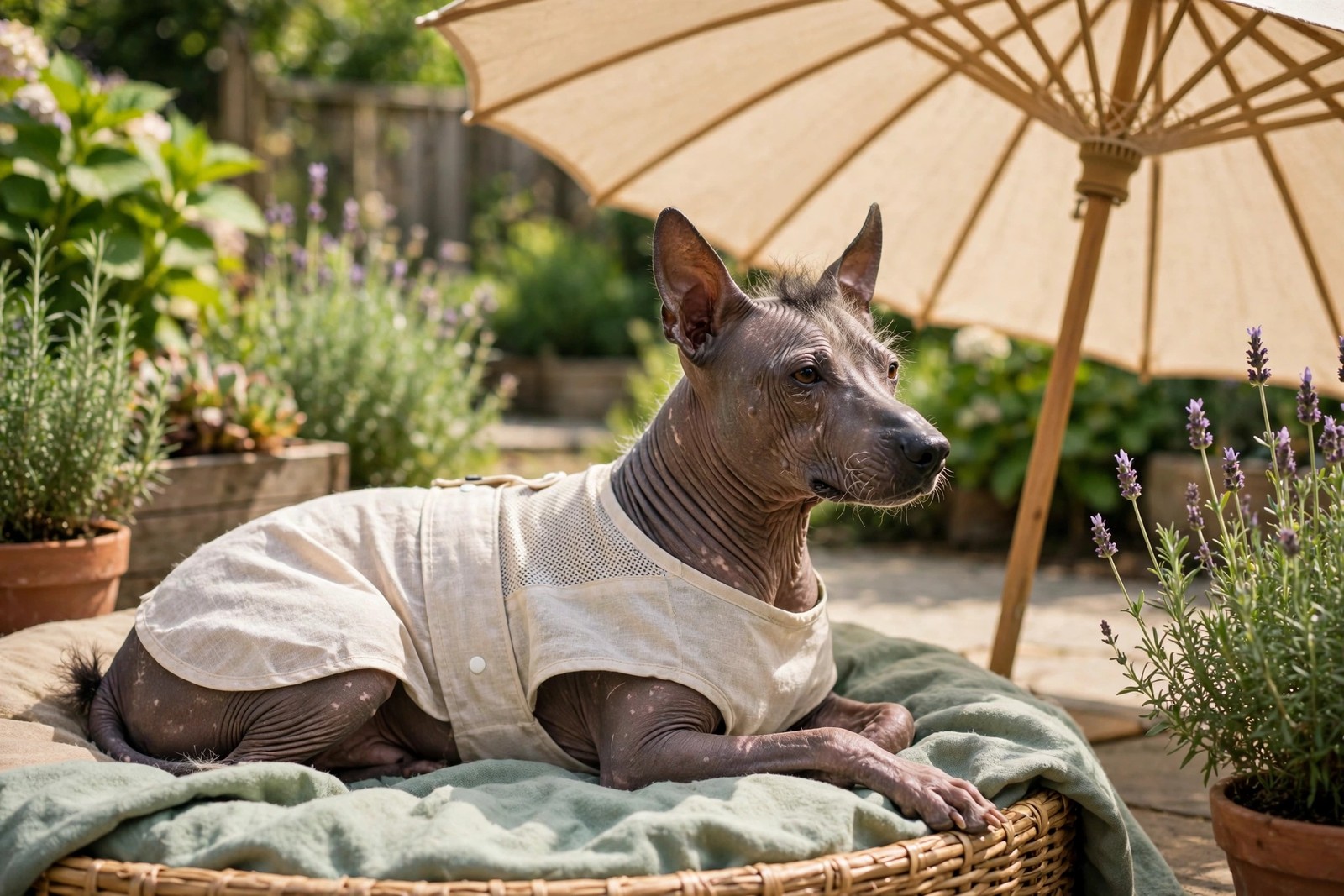
A hairless or nearly hairless dog has no coat to groom in the ordinary sense, and a full skin routine instead. Every job a coat usually does quietly, absorbing oil, blocking sun, trapping warmth, falls to the skin itself, so hairless care is skin care: keeping it clean, comfortable and protected in both summer and winter, and watching it closely because nothing is hidden under fur.
Skin That Dries, Flakes and Reacts
Moisturise when the skin looks dry, using a product made for dogs, applied to clean skin and rubbed in gently; human creams are not formulated for skin a dog will lick, so keep to dog products or what your vet suggests. Dry, flaky patches that keep returning in the same places, or skin that reddens after a new product, are reasons to stop and ask the vet rather than layer on more products. Hairless skin also collects surface dirt and oil in a way coated skin does not, so a wipe-down with a damp cloth between baths keeps the dog comfortable and its bedding cleaner. Nearly hairless dogs with thin, wispy covering need the same routine, because sparse hair offers little real protection. Handle the skin gently throughout: no scrubbing brushes, no harsh exfoliating, and pat dry rather than rubbing after baths.
Sun: Shade, Clothing and Dog Sunscreen
Hairless skin sunburns, and it can burn on bright days faster than owners expect, including during long stretches of strong light through a favourite sunny window spot. Build protection in layers. Shade the dog can choose, and limiting long midday exposure outdoors, does the heavy lifting; a light, well-fitting garment made for dogs covers the back and sides for walks and garden time. For areas clothing cannot cover, use a sunscreen intended for dogs, applied as its label directs, kept away from places the dog can lick off immediately, and reapplied as directed after swimming. Pink, hot or peeling skin means the dog caught too much sun; move it into shade, and ask your vet for advice if the skin looks sore, blistered or weepy rather than treating it at home with human products.
Bathing, Blackheads and Skin Checks
Bathe with a mild dog shampoo about weekly if the skin gets greasy or spotty, rinse thoroughly so no residue sits on bare skin, and dry the dog well, including skin folds. Hairless skin is prone to blocked pores and blackheads, known as comedones, which appear as small dark plugs, often along the back; gentle regular bathing is the main way owners keep them in check, and squeezing them is not. Because the skin is fully visible, you are ideally placed to notice change early, so build a slow look-over into the weekly bath: any new lump, sore, patch that does not settle, or spot that grows, crusts or bleeds goes on the vet list promptly rather than onto a watch-and-wait pile. Exposed skin has no coat to buffer knocks either, so check grazes from rough ground or bramble scratches after country walks and keep them clean.
Cold Matters as Much as Sun
The same missing coat that burns in summer also chills in winter, and cold sensitivity is husbandry, not fussing. A hairless dog needs a well-fitting jumper or coat for winter walks, warm bedding away from draughts, and baths in a warm room with thorough drying so it never sits damp and cold afterwards. Watch for shivering, reluctance to go out, or a dog that burrows constantly, all of which say add a layer rather than push on. Indoors, keep moisturiser and sun plans seasonal: skin often dries more in heated winter homes even as the sun risk fades. Through Care Teams in KinsLe, household members can share the bath, the moisturising and the daily once-over, so a new sore patch gets recorded by whoever spotted it.