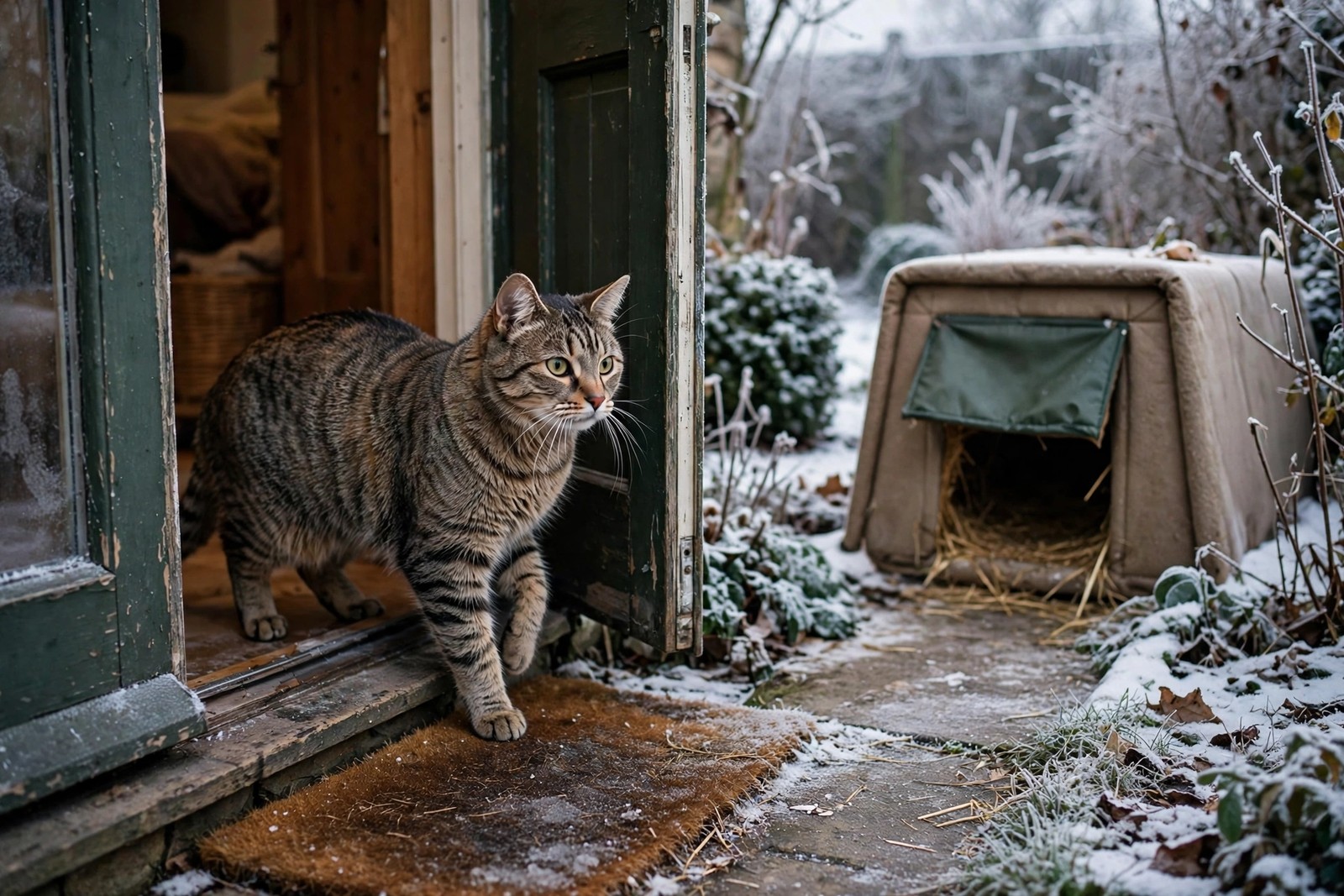
A cat with outdoor access meets winter directly: frozen ground under the paws, road salt on the paths, wind at ear-tip height, and water dishes that skin over with ice. Most winter harm arrives gradually and quietly, which is why a short check each time the cat comes in matters more than any single elaborate precaution.
Ears, Tail, and Paws: The Cold Edges
Ear tips, the tail, and the paws are the parts most exposed to cold, because they sit farthest from the body's warm core and meet frozen surfaces first. After outdoor time, look and feel gently: healthy skin is supple and warm once the cat is back inside, while skin that stays pale, cold, waxy, painful, or blistered after warming deserves a prompt veterinary call. Note which area is affected and when you first saw the change, since a veterinarian will ask both questions.
Paws need a second, separate check for what the cat has walked through. Rinse or wipe them clean after outings on icy or salted ground, because road salt and ice-melting grit irritate the pads and get licked off during grooming, which moves the problem into the mouth and stomach. Check between the toes for packed snow, small cuts, and cracked pads, and dry the feet afterward; sudden limping or persistent licking of one foot deserves a closer look the same day.
Shelter, Water, and the Ribs Under the Coat
A cat who spends real time outside needs a dry, insulated shelter raised off frozen ground, small enough to hold body heat, with bedding that stays dry and an entrance shielded from the wind. Check the shelter after storms and replace damp bedding, because a wet shelter in a cold snap is worse than none. Water matters as much as food in winter: dishes freeze, and a cat who cannot drink at home may drink from puddles and runoff instead. Refresh water through the day, and confirm the cat is actually drinking.
Run your hands over the ribs at least weekly. A thick winter coat is an excellent disguise, and weight can drift in either direction behind it: gain from reduced activity and generous feeding, or loss that signals something else entirely. You should be able to feel the ribs under a light fat layer with gentle pressure. A rib check you can compare against last month's notes is worth far more than a guess based on how round the cat looks in a winter coat.
Antifreeze and the Stiff Older Cat
Garages, driveways, and car parking spots carry winter's sharpest danger. Antifreeze tastes sweet to cats, leaks and spills collect where cars stand, and a cat can pick it up from a puddle or by licking contaminated paws. Suspected licking or swallowing is an emergency: call a veterinarian or an emergency clinic immediately, before any symptoms develop, and do not attempt any home treatment or wait to see how the cat seems. Store containers sealed and clean spills at once, every time, without exception.
Cold also exposes age. A stiff older cat who manages well in summer may struggle in a cold snap: jumping less, moving slowly after rest, hesitating at the cat flap, or sleeping in unusual low spots rather than climbing to a favorite perch. Watch those changes during cold weather specifically, shorten outdoor time for a struggling senior, and raise persistent stiffness at the next veterinary visit rather than writing the change off as weather alone.
Keeping the Winter Record Straight
A dated note after each notable check turns scattered worry into a pattern a veterinarian can use: the day a paw crack appeared, the week the ribs felt different, the cold snap when stiffness started. Pet Passport on KinsLe is the carried packet for exactly this, because the Pet Passport record on KinsLe holds a cat's health notes, visit history, and observations in one place that travels to every appointment. Carry the dated winter notes inside the Pet Passport packet on KinsLe, and each appointment builds on the last outdoor season rather than starting cold.