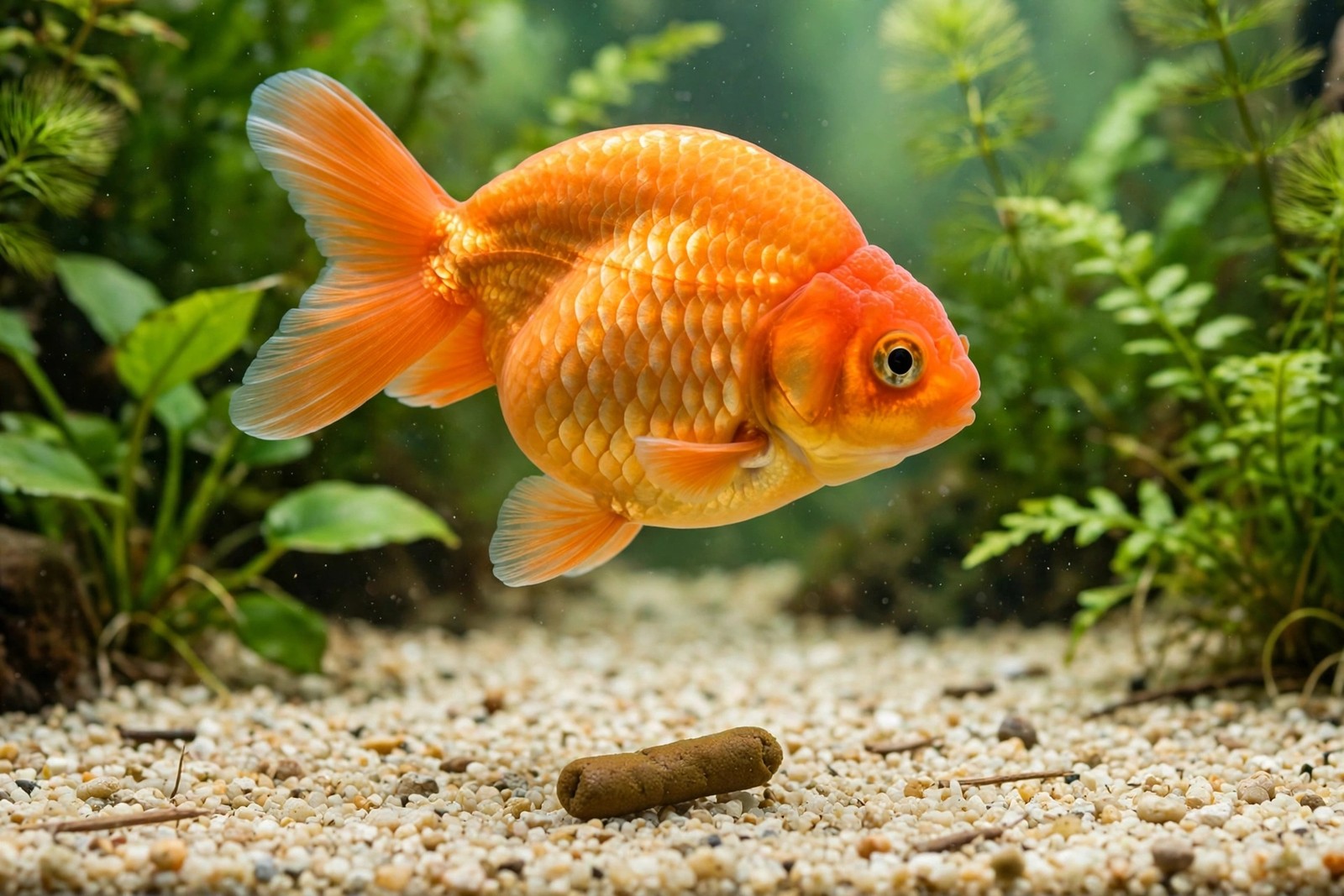
Healthy goldfish poop is brown — usually a firm, brown or greenish-brown strand about the thickness of the food going in, which sinks or breaks apart fairly soon after being passed. It is not glamorous, but for a goldfish keeper it is one of the quickest daily health checks available, because goldfish digest in the open and their droppings report on diet and gut health honestly.
Normal Colours and Why Food Changes Them
Expect the colour to follow the menu. A goldfish that has been grazing algae or eating peas and other greens passes greener droppings. Colour-enhancing foods with reddish ingredients can tint waste orange-red. Flake and pellet diets typically produce the standard brown. None of these variations is a problem by itself; a change that matches a change in diet, in a fish that is eating eagerly and swimming normally, is simply digestion made visible.
Texture matters as much as colour. Normal waste is reasonably solid and breaks up. Very long, thin trails that stay attached to the fish for an extended period are less typical, even when the colour looks right, and are worth noting along with how much the fish is being fed — overfeeding alone can produce pale, trailing waste and foul the water at the same time.
The Pattern Worth Paying Attention To
White, pale, or clear stringy strands — thin, mucus-like threads that trail from the fish — are the classic change to take seriously, particularly when they arrive with other signs: reduced appetite, lethargy, a swollen or hollow-looking belly, or clamped fins. General information only goes so far here: that pattern can accompany constipation, dietary problems, or internal illness, and no keeper can tell which from droppings alone. What you can do is note when it started, what the fish has eaten, and how it is behaving, test the water, and seek advice from an aquatic veterinarian or experienced aquatic specialist if the pattern persists or the fish's behaviour changes. Do not start adding treatments to the tank on the strength of poop colour alone.
Water and Feeding Checks to Run First
Before worrying, run the two checks that explain most odd droppings. First, water quality: test for ammonia and nitrite and confirm the filter is running properly, because poor water stresses digestion and immunity together. Second, the feeding diary in your head: goldfish are enthusiastic beggars and are very commonly overfed, which produces excess, paler waste and dirty water in a loop. Measured portions the fish finish within a couple of minutes, with variety across the week, usually normalise what you see within days if food was the whole story.
Making the Check a Daily Habit
Glance at your goldfish during feeding, when waste and appetite are both on display, and note anything unusual with the date rather than relying on remembering it at the weekend. A short written log — food given, droppings seen, behaviour — is what turns a vague worry into useful evidence for a specialist. Keeping that log on shared feeding duties in KinsLe's Care Teams means whoever fed the fish that day records what they saw, so white stringy waste appearing three days running is noticed as a pattern, not missed as three separate maybes.