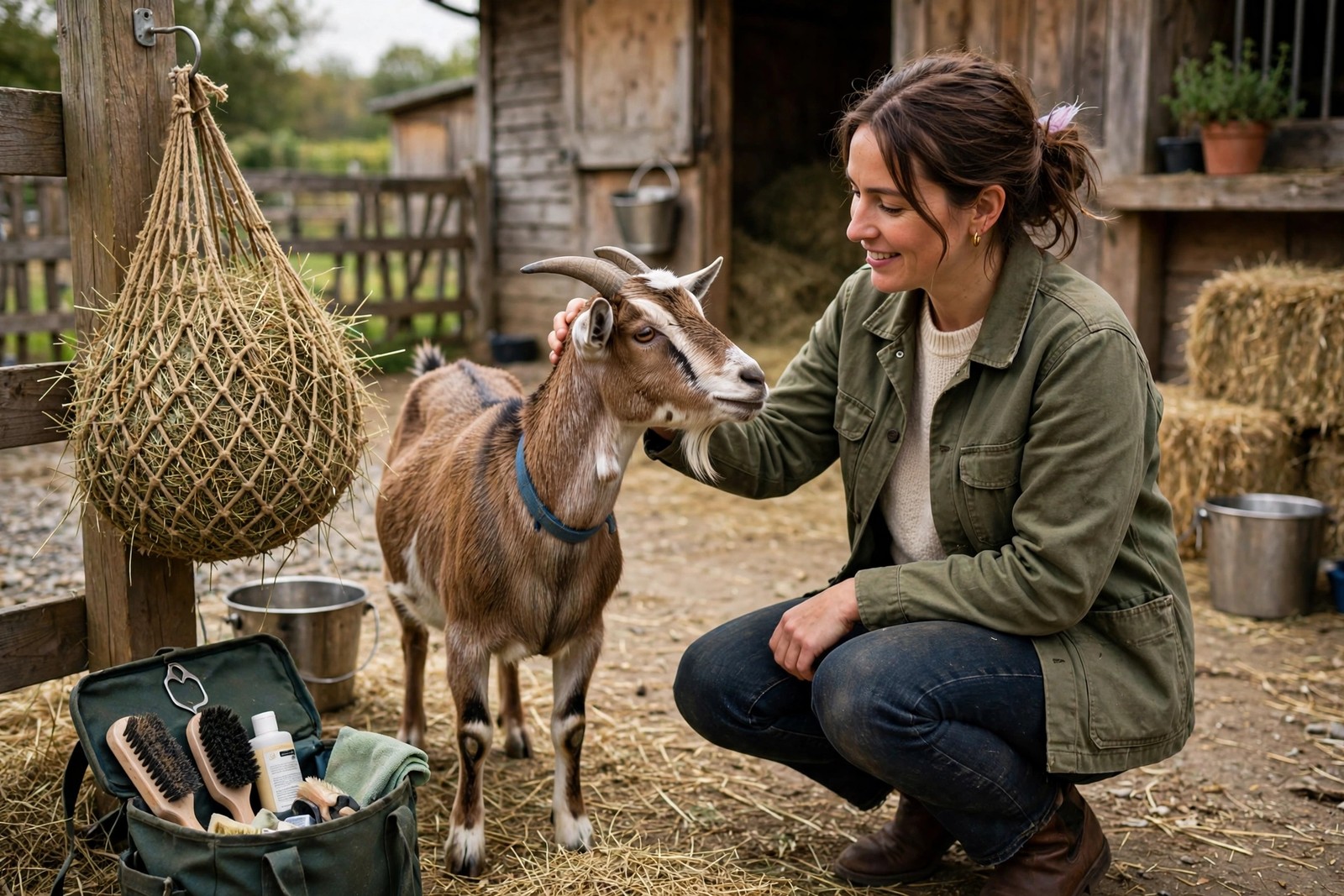
For goats, the watch-list starts with internal parasites — the barber's pole worm chief among them, and the species' deadliest routine parasite. It drains blood, causing anaemia — judge it by the inner eyelid, pale there signalling blood loss, scored under the FAMACHA system where that method is used — along with weight loss and swelling under the chin, the sign keepers call bottle jaw. Next come bloat (a swollen, drum-tight left flank — an emergency), pneumonia (goats are very susceptible, especially with poor ventilation and damp), foot rot and foot scald (lameness in wet conditions), enterotoxemia ('pulping kidney', linked to rich feed and sudden diet changes, often prevented by vaccination), urinary stones in males fed high-concentrate diets, and — for breeding does — pregnancy toxaemia and milk fever around kidding.
The Goat Keeper's Weekly Pattern
Hands-on weekly: body condition by feel (goats hide fat internally, so learn spine and rib feel), eyelid colour for anaemia, feet checked and trimmed regularly (every few weeks to a couple of months depending on ground), and droppings observed — goats should produce dry pellets; scouring is always a finding. Management prevents most of the list: worm on evidence (faecal counts and FAMACHA scoring) rather than by calendar, because goat worms are famously drug-resistant; change diets gradually over a week or more; keep housing airy above all — goats need ventilation more than warmth; and keep minerals formulated for goats available (sheep minerals are wrong for goats, who need the copper sheep cannot tolerate — and never feed goat rations to sheep for the same reason).
Deciding what cannot wait
Goats deteriorate quickly, so the watch-list above divides into problems that tolerate a phone call in the morning and problems that cannot. Bloat with a drum-tight left flank, laboured breathing, a goat standing apart and off food, pale eyelids with weakness, or a doe who stops eating in late pregnancy all belong in the same-day category. For the slower questions — a rising faecal count, a doe losing condition, feet that keep flaring — what persuades a vet is a run of evidence: eyelid scores by date, worming given and when, appetite and droppings noted as they changed. Guesswork over the phone helps nobody; a fortnight of dated observations lets the vet judge whether this is a trend or a blip.
One packet per goat
Herd animals blur together in memory, which is precisely why the record has to live outside it. Keep each goat's worming history, faecal results, vaccinations, kidding outcomes and treatments in a single packet that can be handed over at the surgery or read out accurately during a call. A goat's whole health story, kept that way in KinsLe's Pet Passport, means every appointment opens with its worming record, kidding outcomes and past treatments already assembled.