
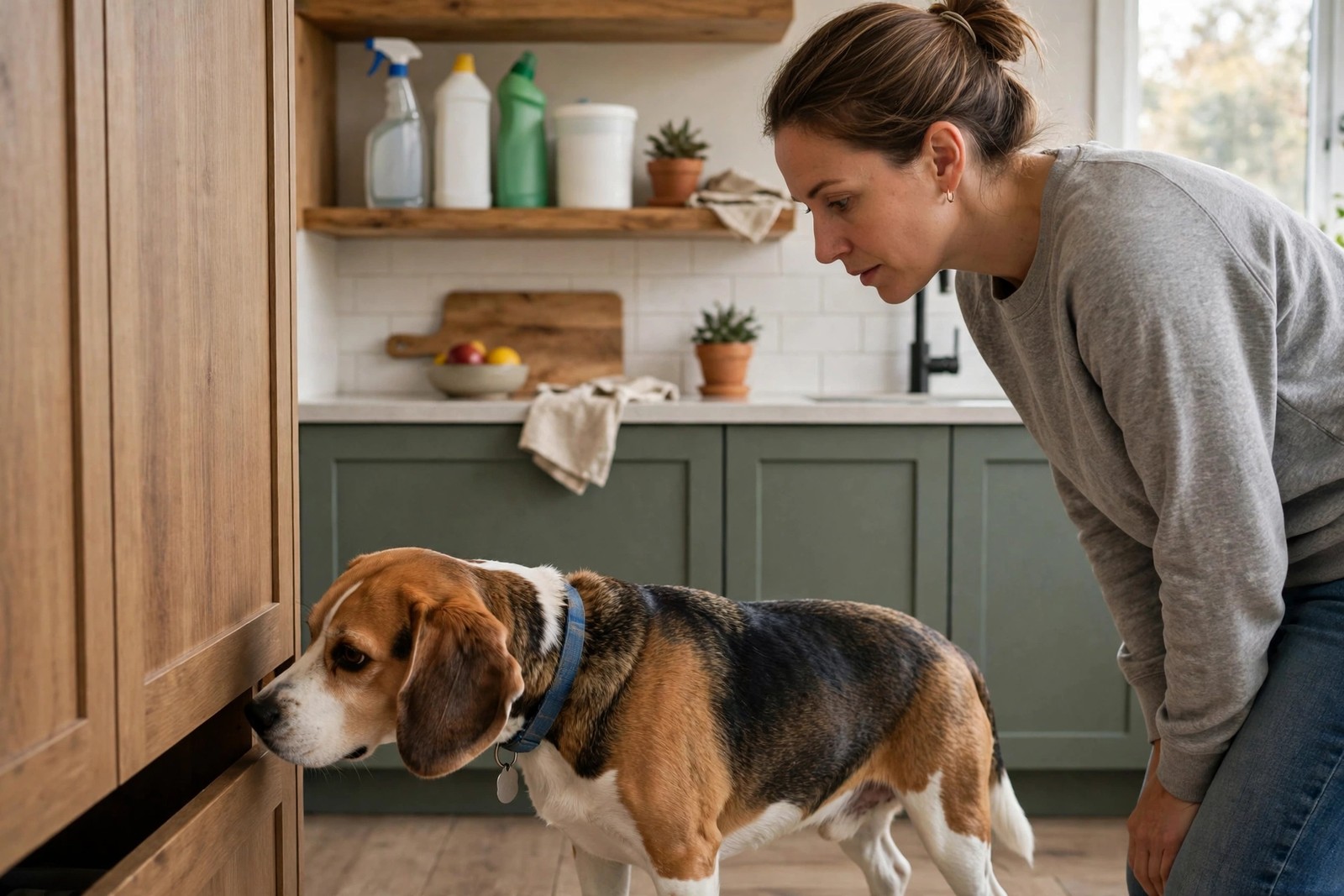
The most dangerous household items for dogs are everyday ones: human medications, cleaning products, certain human foods, small objects that can be swallowed, and electrical cords. Most household poisoning and blockage emergencies do not come from anything exotic — they come from a purse left open, a dropped pill, a trash can a clever nose learned to open, or a sock that smelled irresistible.
Medications and cleaning products
Human medicines are a leading cause of pet poisoning calls. Pain relievers, antidepressants, and many other common prescriptions can seriously harm dogs even in small amounts, and flavored chewable medications are especially tempting. Store all medicines in closed cabinets or high drawers — never in a bag on the floor or a low nightstand. Cleaning products carry the same logic: bleach, laundry pods, floor cleaners, and disinfectants should live behind closed, latched doors, and dogs should stay off freshly cleaned floors until they are dry. Never assume a childproof cap slows down determined teeth.
Foods that do not belong in dogs
Several ordinary foods are dangerous for dogs, including chocolate, grapes and raisins, onions and garlic, xylitol (often listed as birch sugar in sugar-free gum and some peanut butters), macadamia nuts, and cooked bones, which can splinter. Keep food prep scraps out of reach, check ingredient labels before sharing anything, and secure the kitchen trash — many food emergencies start with a dog raiding the bin while everyone is out. When guests visit, remind them too; well-meaning visitors slip dogs table scraps without thinking.
Small objects, cords, and the swallow risk
Dogs explore with their mouths, and socks, underwear, hair ties, children's toys, batteries, and food wrappers are classic causes of intestinal blockages. Batteries deserve special mention because they can also cause chemical burns. Walk each room at dog level and ask what a curious mouth could reach, grab, and swallow. Cover or route electrical cords out of chewing reach, especially for puppies and young dogs, and tidy chargers away when they are not in use.
If you think your dog ate something unsafe
Act fast and do not wait for symptoms. Call your veterinarian or a pet poison helpline right away, and tell them what your dog got into, how much, and when. Keep the packaging — the ingredient list is exactly what the professional on the phone needs. Do not induce vomiting unless a veterinarian specifically tells you to, because with some substances vomiting makes things worse. Minutes matter, so make the call first and ask questions second.
Brief everyone who cares for your dog
Household rules only work if sitters, walkers, and family members follow them too. With KinsLe, Care Pass is a temporary scoped link you can share so a sitter sees exactly what stays out of reach in your home — and the recipient needs no account or app to view it. A two-minute hazards note can prevent the one mistake nobody thought to mention. Care Pass on KinsLe lets your named dog sitter open, only during the booked sitting hours, the hazard list naming medicines, cleaners, risky foods, cords, and small objects that must stay locked away.